

Think about the last time you went to a clinic. If you’re lucky, it was a clean room, a short wait, and a doctor who actually looked you in the eye. But for millions of people around the world, “going to the doctor” feels less like a path to healing and more like a test of endurance. We’re talking about twelve-hour waits in scorching hallways, zero privacy, and facilities that look like they haven’t been touched since the 70s.
When you’re treated like a “charity case,” it chips away at your spirit. It’s a subtle message that says: Your time isn’t valuable, and your comfort is a luxury you didn’t pay for.
But there is a group of rebels—engineers, local doctors, and community leaders—who are calling “time out” on this. They are using something called Frugal Innovation. It’s the art of looking at a massive problem and solving it with grit, smarts, and whatever is laying around. It’s proving that you don’t need a billion-dollar hospital to treat someone like a human being.
1. The “McGyver” Mindset: What is Frugal Innovation?
To understand this, we have to clear one thing up: “Frugal” does NOT mean “cheap.” It means being resourceful.
Imagine a $50,000 heart monitor. It’s amazing, right? But if that machine needs a special $200 cable that has to be shipped from Germany every time it breaks, and it only works in an air-conditioned room with 24/7 electricity—it’s actually pretty useless in a rural village.
Frugal innovation is the “McGyver” version of healthcare. It’s about creating tools that are:
- Simple to use: You don’t need a PhD, or highly technical certifications to fix them.
- Tough: They can handle dust, heat, and power cuts.
- Human-centric: They are designed to make the patient feel respected, not like a number.
The Three Rules of Dignity
When these innovators build something, they aren’t just thinking about biology; they are thinking about how the person feels.
- Giving Power Back: When you move care into the hands of a mother or a local neighbor (a Community Health Worker), the patient stops being a “victim” of their illness. They become a partner in the cure.
- Keeping it Private: Dignity is lost when you’re examined in a crowded room. If a smartphone can do a check-up at a local clinic instead of a massive city hospital, you get your privacy back.
- Staying Reliable: There is nothing dignified about a surgery happening by the light of a phone screen because the power went out. Solar power and battery backups ensure the lights stay on for everyone.
2. World-Changing Ideas (That Don’t Cost a Fortune)
The coolest part about this is that it’s happening everywhere. These aren’t just “poor country” ideas; they are smart ideas that the whole world is starting to copy.
The “Kangaroo” Miracle (Colombia)
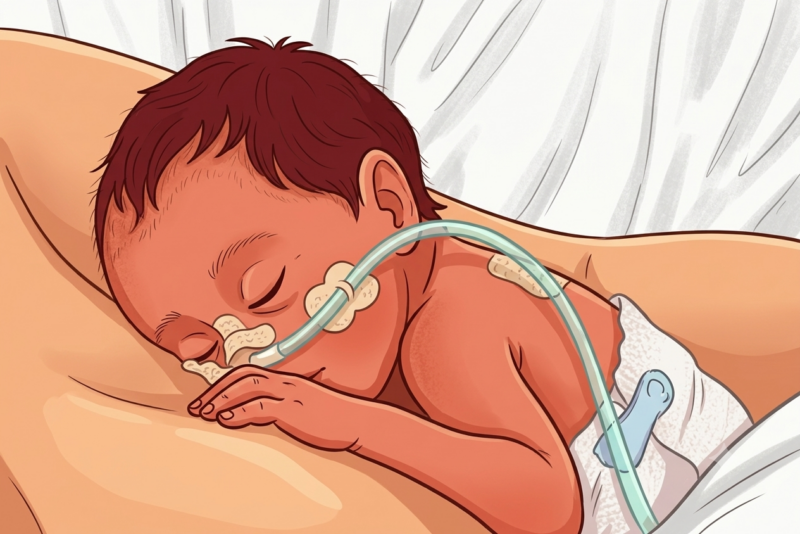
Back in the 70s, a hospital in Bogotá didn’t have enough incubators for premature babies. Instead of giving up, the doctors tried something “old school.” They had the mothers strap the babies directly to their bare chests—skin-to-skin.
- Why it’s genius: It turns out, a mother’s body is a better thermostat than a $30,000 machine. It keeps the baby warm, stabilizes their heart rate, and—most importantly—it keeps the family together.
- The Dignity Factor: Instead of watching her baby through a glass box, a mother is literally the one saving her child’s life. That bond is priceless.
The Indian Sanitary Pad Revolutionary
In rural India, Arunachalam Muruganantham discovered that many women used unhygienic materials like rags, sand, or ash during menstruation because they couldn’t afford commercial pads. Approximately 70% of reproductive diseases in India are linked to poor menstrual hygiene.
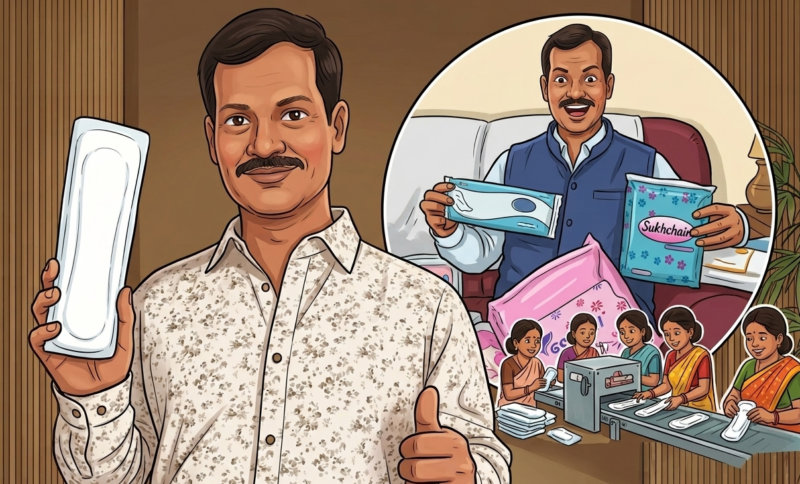
- Why it’s genius: After years of self-testing—even wearing a “uterus” made of a football bladder filled with goat blood—he invented a simple, low-cost machine to produce sanitary pads. The process uses four easy steps and can be learned in an hour.
- The Dignity Factor: His goal was to create jobs for rural women while increasing hygiene. By allowing women to produce and sell their own brands, he empowered them to take control of their health and finances, helping girls stay in school rather than dropping out at puberty.
The 3D-Printed Stethoscope (Gaza)
In places where supplies are blocked by war or red tape, you can’t just “order” new gear. Dr. Tarek Loubani decided to make his own. He designed a stethoscope that can be 3D-printed for about $3.
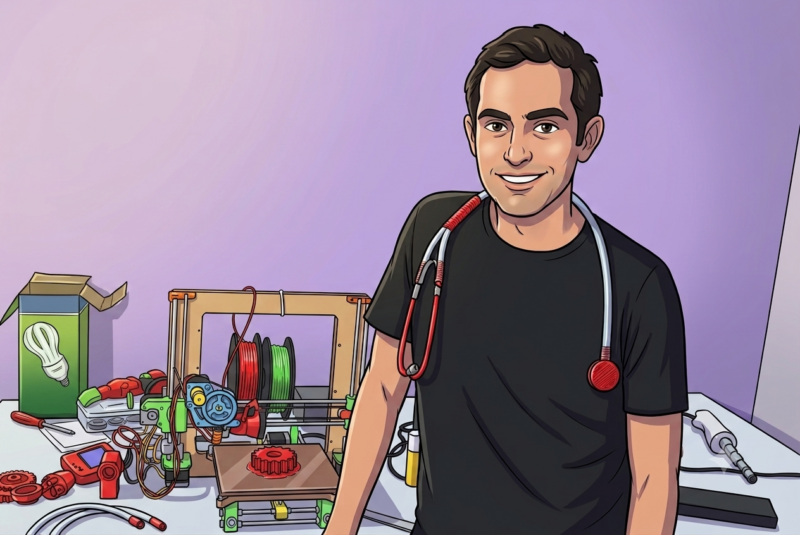
- Why it’s genius: It’s made of plastic, it’s cheap, and—here’s the kicker—it works just as well as the top-tier $200 versions doctors use in New York.
- The Dignity Factor: It means a doctor in a disaster zone isn’t using “trash” gear. They have high-quality tools, which means the patient gets a high-quality check-up.
The Jaipur Foot (India)
Most high-tech prosthetics are made for paved sidewalks and air-conditioned offices. They break in the mud. The Jaipur Foot is made of rubber and wood, and it’s basically indestructible.
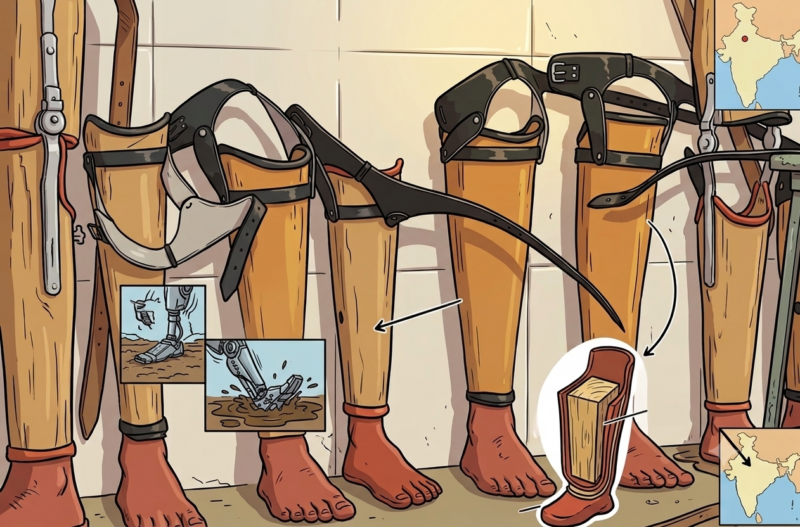
- Why it’s genius: It’s waterproof and flexible enough to let a farmer go back into the mud and work their fields.
- The Dignity Factor: Being able to work and provide for your family is the ultimate form of self-respect. This foot gives people their lives back for less than the cost of a pair of sneakers.
The Paper Microscope (Global)
The Foldscope is literally a microscope made of waterproof paper. It costs less than $2 and you put it together like origami.
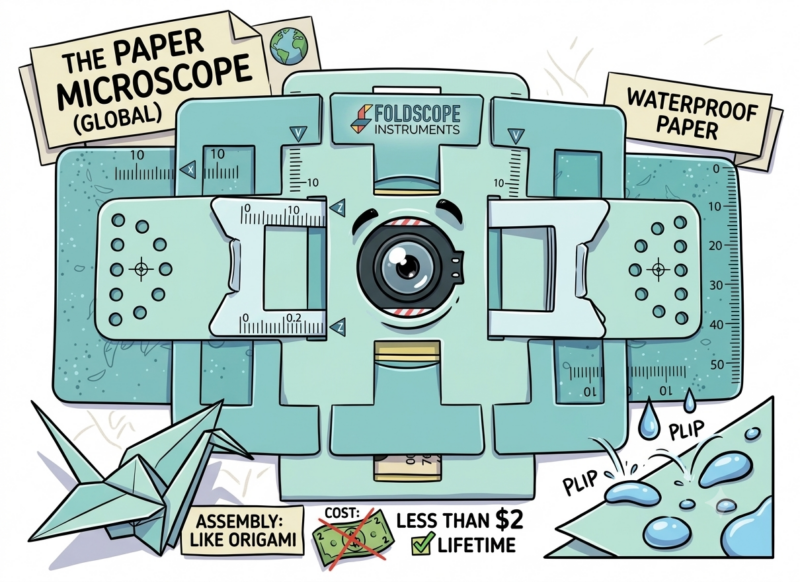
- Why it’s genius: It can see malaria parasites just as clearly as a heavy metal microscope. Because it’s paper, a health worker can carry it in their pocket to the most remote village on earth.
- The Dignity Factor: It gives a patient an answer right now. No more waiting weeks for a result from a city lab. Getting an answer quickly is a sign of respect for a patient’s anxiety.
3. How This Actually Works in a Clinic
So, what does a “Frugal” clinic look like in real life? It’s not just a room full of gadgets; it’s a totally different way of doing business.
Step 1: The Smartphone Lab
Imagine a nurse with a smartphone. By plugging in a $50 attachment, she can look deep into a child’s ear or take a high-res photo of a skin rash. She sends that photo to a specialist in the city, and boom—diagnosis done. This stops “referral fatigue,” which is just a fancy way of saying a patient gets so tired of being sent to different hospitals that they just give up and go home.
Step 2: Sharing the Work
In a “standard” hospital, the doctor does everything. That’s why the lines are so long. In a dignified model, we use “Task-Shifting.” Trained neighbors and nurses handle the routine stuff—like checking blood pressure or blood sugar.
The Result: The doctor has more time for the hard cases, and the patient doesn’t have to spend their whole day in a waiting room. Cutting down a wait time is the easiest way to show a patient you value them.
Step 3: Solar-Powered Safety
By using solar panels and LED lights, a small clinic can run all night. They can have a “Maternal Corner” where new moms feel safe and warm. It feels like a home, but it’s backed by modern science. It’s a “safe haven” where the “big city” stress doesn’t exist.
4. Why Grit and Determination Win
The reason this is working isn’t because of the technology—it’s because of the human spirit. In Kenya and across Africa, there is a massive culture of “making it work.” We see it every day. When a problem comes up, people don’t wait for a billion-dollar grant; they look at what they have and they build a bridge. This “Resourceful Mindset” is our greatest asset.
We are moving away from the “charity” mindset. You know the one—where the world thinks poor people should just be happy with whatever leftovers they get. That’s over. We are moving toward Agency-Based Medicine. That’s a big term for a simple idea: the patient is a human being with a life, a family, and a brain, and they deserve a healthcare system that treats them that way.
The Bottom Line
Frugal innovation is the tool, but Dignity is the finish line.
When we design a paper test for cancer or a $3 stethoscope, we aren’t just saving money. We are saving a father from going into debt. We are saving a mother from a terrifying journey to a distant city. We are saving a child from a life of disability.
The revolution is happening right now. It’s being built by people who refuse to let a small budget get in the way of big respect. Every single person—no matter how much is in their wallet—deserves to walk into a clinic and feel like they matter.
By picking tools that are smart, local, and reliable, we aren’t just fixing bodies. We are fixing the soul of healthcare. And that is something everyone should find interesting.
Article by Michael Nyairo
Partagez cette histoire, choisissez votre plateforme !
Votre voyage vers l'excellence commerciale commence ici. Abonnez-vous dès aujourd'hui et soyez à la pointe de l'innovation et du leadership.







 English (United States)
  English (UK)
  French