

As economies across Africa continue to grow in size and stature, global leaders who understand the region’s business realities and market nuances will have a distinct advantage, says Strathmore University Business School’s James Njuguna. Here, he makes the case for co-designed international immersion programmes.
In global business education today, relevance is everything. MBA programmes are under increasing pressure to move beyond theory and immerse students in the realities shaping the next wave of economic and business growth. Increasingly, that reality points to Africa – a continent that is dynamic, complex and rich with opportunity. One fundamental question is gaining urgency: can MBA degrees and equivalent postgraduate programmes in business still claim to be “global” without meaningful engagement with Africa?
For decades, the continent has often been treated as a peripheral topic in management education that is referenced in case studies but rarely integrated into the core learning journey. Yet this framing is becoming increasingly difficult to sustain.
Africa by the Numbers (2050 Projections)
- $38.3 Trillion: Estimated collective GDP
- 9%: Expected share of global GDP (tripling from current levels)
- 2.5 Billion: Projected population (1 in 4 people globally)
- 740 Million: Workforce entrants by 2050
A region of opportunity & invention
Africa’s demographic momentum, expanding consumer markets and growing institutional capacity are positioning it as one of the most consequential regions shaping the future of business.
The world’s second-largest continent is geographically vast enough to accommodate the US, China, India and much of Western Europe within its borders. It should, therefore, come as no surprise that it is far from a single, unified market, with each of its 54 countries shaped by distinct regulatory environments, cultures and economic systems.
In doing business with Africa, therefore, a one-size-fits-all strategy will frequently fall short. Instead, success requires a deeper understanding of local nuance, alongside an ability to identify patterns and possibilities that cut across diverse markets. In a region marked by both opportunity and complexity, one must also appreciate the role of the continent’s history, encompassing the legacy of colonialism and a global narrative that has often framed Africa primarily through the lens of hardship.
With a more balanced perspective, the meaningful transformation taking place in economies across Africa becomes more evident. In many markets, improving governance, regional integration, technological adoption and strengthening institutions are gradually reshaping the trajectory of growth.
“It is also within the continent’s complexities that the most compelling innovations are emerging. From fintech solutions that leapfrog traditional banking systems to new models in agribusiness, energy and infrastructure, Africa has become a testing ground for scalable, adaptive solutions.”
The region’s dynamism is reflected in long-term economic projections that put the continent’s collective GDP at an estimated $38.3 trillion by 2050, with its share of global GDP expected to triple from three to nearly nine per cent between now and then.
Capturing business realities
Characterised by high growth potential alongside structural complexity, market conditions across Africa demand a distinct set of managerial capabilities. These include navigating regulatory diversity, operating across formal and informal systems and developing strategies that are both locally grounded and globally informed. Yet, acquiring such capabilities from a distance is challenging. While traditional classroom approaches can provide analytical frameworks, they often fall short of capturing how decisions are made and implemented in reality. As a result, business schools are increasingly recognising that direct exposure to local ecosystems is not a learning enhancement, but a necessity.
This is why partnerships with local institutions in Africa are taking on growing significance. Across the continent, a number of business schools have strengthened their academic standards, international alignment and connections to industry. Crucially, they are also deeply embedded in their local economies – engaging with entrepreneurs, corporates, policymakers and investors on a daily basis.
This positioning enables them to offer insights that are difficult to replicate elsewhere. For these reasons, cross-continental partnerships are also changing, from those centred largely on student mobility to those that co-design and co-deliver programmes. This approach emphasises mutual learning and shared value creation, provides international students with access to lived business realities and maintains alignment with global academic standards.
Key Drivers of Africa’s Growth Story
- Demographic momentum: Currently estimated at approximately 1.5 billion people (of whom around 60 per cent are under the age of 25), Africa’s population is projected to reach 2.5 billion by 2050. By then, more than one in four people globally will be African.
- Workplace composition: An estimated 740 million people are set to enter workforces across Africa by 2050, driven by growth in countries such as Nigeria, Egypt and the Democratic Republic of Congo. This rate of expansion heralds a fundamental transformation in innovation potential, productivity and economic dynamism.
- The burgeoning middle class: Today, an estimated 350 million Africans fall within the middle-income segment – a figure that is expected to exceed 500 million by 2030. Such numbers are fuelled by rising incomes, accelerating urbanisation and widespread digital adoption, redefining how people live, work and consume. Africa’s middle class is also increasingly young, connected and aspirational, driving demand for quality, convenience and innovation at an unprecedented rate.
- Natural resources: Africa is home to an abundance of resources that are critical to global industrial and technological development. The continent contains approximately 30 per cent of the world’s mineral reserves, including around 70 per cent of global cobalt production and more than 40 per cent of the world’s gold reserves. As global demand for these resources accelerates, Africa’s strategic importance in shaping future industries continues to grow, creating a need for thoughtful, sustainable leadership.
Co-designed, collaborative learning
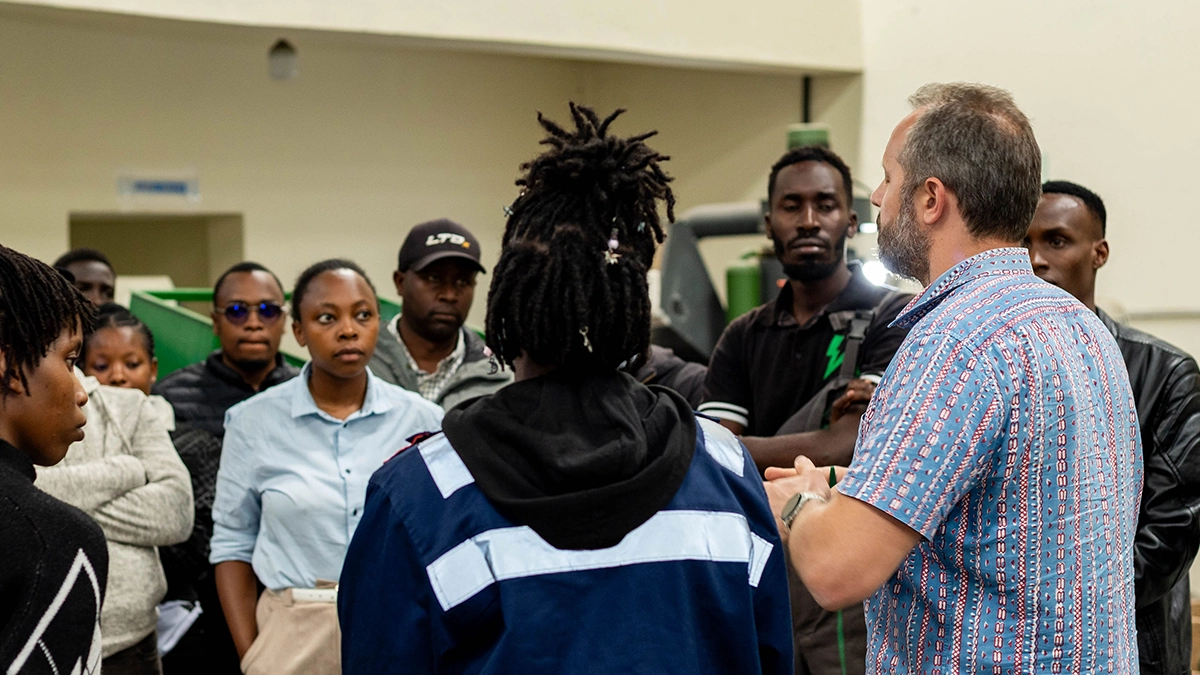
A useful illustration of this model in practice can be found in Strathmore Business School’s Doing Business in Africa Programme (DBAP). Since its inception in 2013, the DBAP has brought structured interactions with business leaders, entrepreneurs, policymakers and investors to more than 800 MBA students from a wide array of global backgrounds. In so doing, participants have also gained first-hand exposure to decision-making in real-world contexts and practical insights rooted in local realities.
Structured as a short, intensive immersion, the DBAP combines faculty-led sessions with company visits, industry expert panel sessions, fieldwork and collaborative projects, along with carefully curated cultural engagements. These activities allow participants to engage in case-based discussions and problem-solving exercises that challenge them to develop contextually relevant strategies, evaluate investment opportunities and understand the operational realities of entering and scaling within African markets.
The focus is not on high-level theory, but on understanding how business operates within diverse African contexts. Participants, for example, may examine how companies navigate regulatory complexity, adapt to infrastructure constraints or leverage digital innovation to reach underserved markets. In this way, they are challenged to test conventional assumptions and develop strategies that respond to context, rather than simply applying imported models. This includes not just comprehending the market opportunity, but also how differently you have to think about risk, partnerships and what ‘scale’ means in practice.
Crucially, initiatives such as the DBAP are co-developed between partner institutions so that they complement broader MBA curricula rather than functioning as standalone experiences. This reflects a wider shift in global business education from one-directional knowledge transfer to collaborative, experience-driven learning.
The new context
The benefits of this approach extend beyond individual student outcomes. For business schools, such partnerships offer a way to differentiate their programmes while responding to the changing demands of employers, who increasingly value graduates with cross-cultural agility and the ability to operate in complex environments. More broadly, engaging directly with Africa provides greater insights into the trends that are shaping business globally. The innovative approaches emerging across the continent are redefining how markets develop under constraints and often have relevance far beyond regional boundaries. Recognising and responding to such developments early is becoming a defining leadership capability.
In this sense, Africa should not be viewed as a region to be studied, but as a context through which new forms of business innovation and leadership are being developed. The implication for any institution that wishes to remain relevant in a rapidly evolving global landscape appears clear: engaging with institutions based in Africa should no longer be optional; it must be viewed as essential. By embedding impactful learning experiences, such as the DBAP, into the core of MBA education, in partnership with leading schools in the region, business schools can better prepare their graduates for a world in which growth, opportunity and complexity are increasingly intertwined.
Ultimately, it is about preparing future leaders to see opportunity where others perceive only difficulties. As Africa’s role in the global economy continues to expand, those who understand its dynamics will play a defining role in shaping the next generation of global enterprise.
About the Author
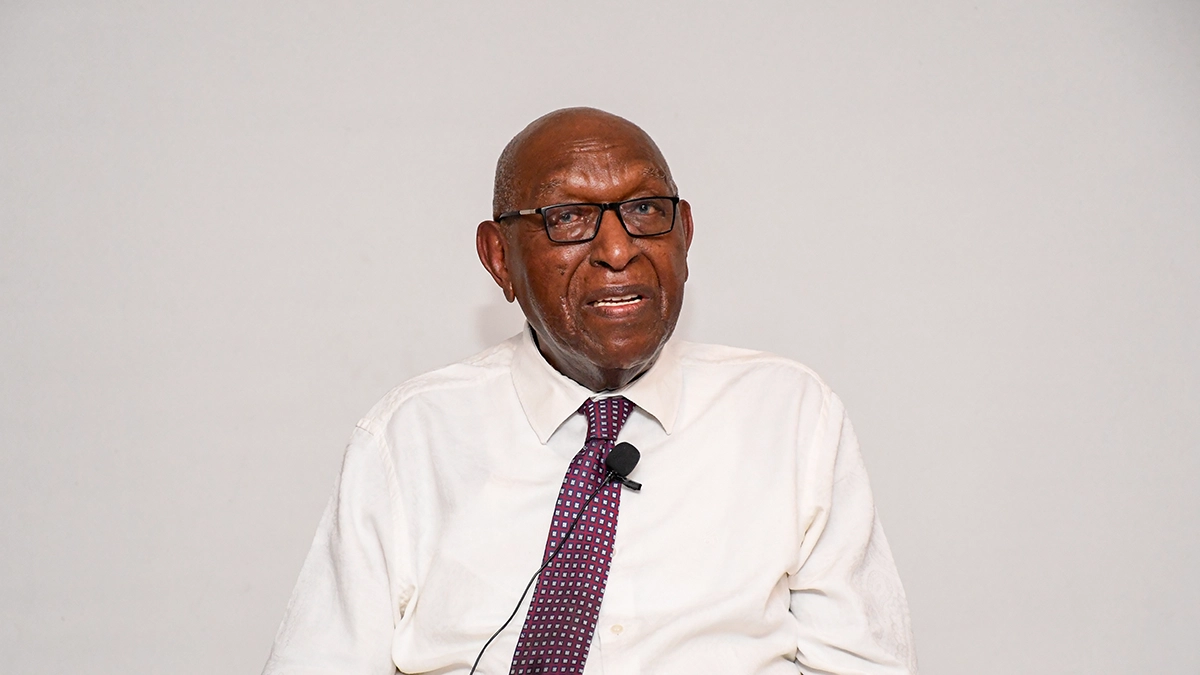
Dr. James Njuguna is the Academic Lead for the MBA and Doing Business in Africa Programme at Strathmore University Business School, Kenya. He is also a Faculty member in corporate strategy and marketing. Before joining academia, Njuguna was a senior manager at Kenya Power & Lighting Company. He holds a PhD in Business Administration and an MBA from the University of Nairobi; he is also an alumnus of Harvard Business School’s Leading Change and Organisational Renewal programme.
Article by Dr. James Njuguna | Strathmore University Business School
Adapted from Business Graduates Association’s (BGA’s) Business Impact Magazine on 11th August 2026 at 12.39 pm. Source: https://online.flippingbook.com/view/535676875/22/
Partagez cette histoire, choisissez votre plateforme !
Votre voyage vers l'excellence commerciale commence ici. Abonnez-vous dès aujourd'hui et soyez à la pointe de l'innovation et du leadership.






 English (United States)
  English (UK)
  French