

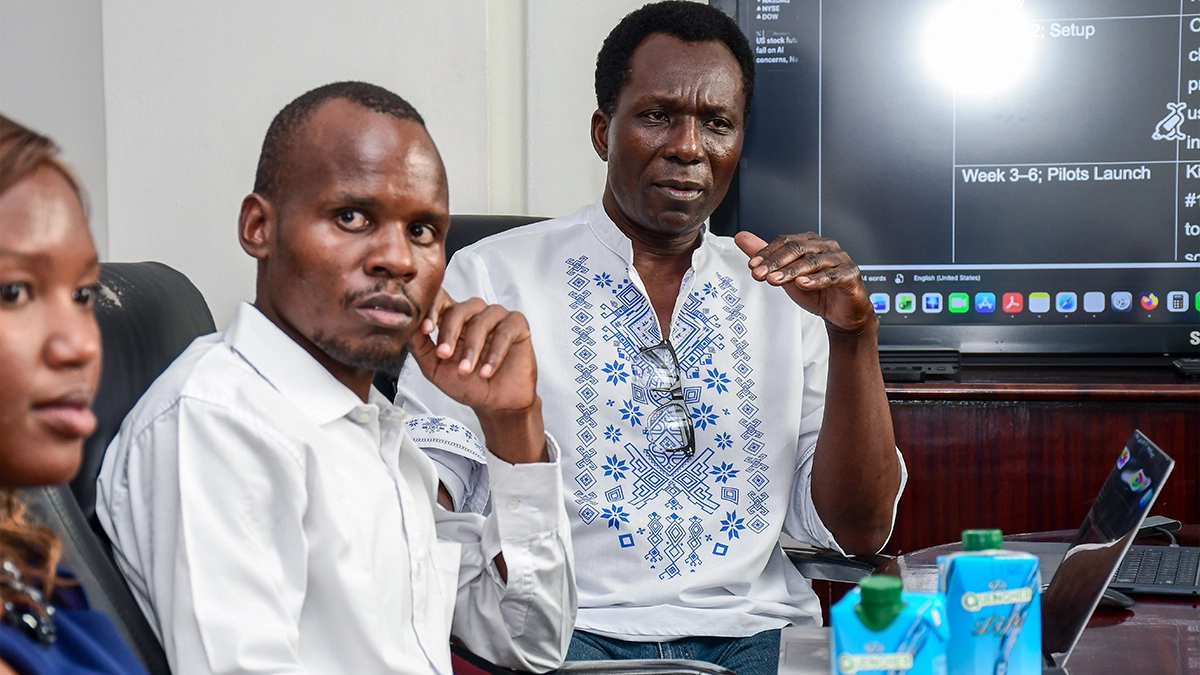
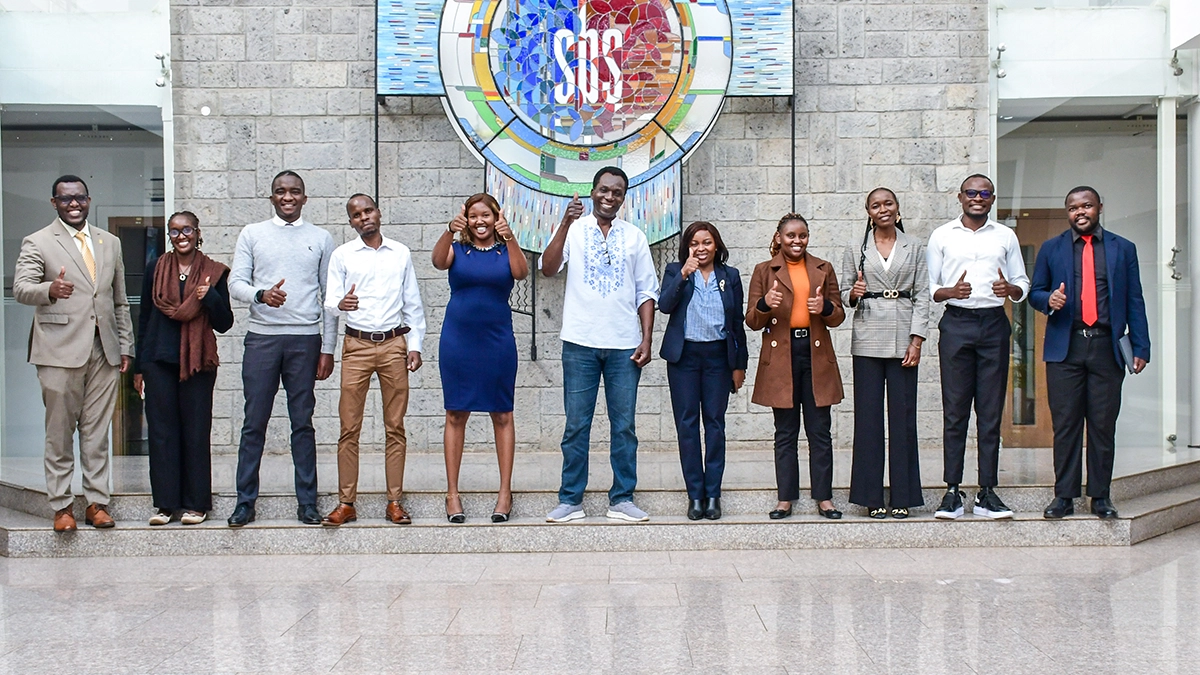
On Friday, 27th February at 2:00 pm, a strategic partnership between Angaza Center and Strathmore University was officially launched at the Strathmore Business School Building. The partnership brings together Strathmore University Nonprofits, Social Enterprises and Philanthropy (SUNSEP) Hub, hosted at the Strathmore Business School, the School of Computing and Engineering Sciences (SCES), and Angaza Centre, reflecting a shared commitment to advancing technology-driven social impact.
The launch builds on an existing relationship between the partners and marks a transition from pilot collaborations to a more structured and scalable approach to digital literacy and digital inclusion across Kenya.
Addressing the Digital Literacy Challenge
Despite rapid technological advancement, access to digital skills, tools, and structured digital education remains uneven, particularly among high school students and underserved communities. Many institutions face challenges related to outdated curricula, limited access to digital devices, and insufficient capacity among teachers and learners to use technology effectively. UNICEF estimates that more than two-thirds of school-going children, or 1.3 billion children, lack internet access[1]. Additionally, Global Alliance for ICT Development estimates that 450,000 schools and over 250,000 students in Africa lack tech skills[2]
This partnership responds to these gaps by combining Angaza Center’s community-based digital literacy expertise with Strathmore University’s academic, technical, and innovation capabilities. The collaboration emphasizes both skills development and access to digital tools, ensuring that learning is practical, inclusive, and sustainable.
Université de Strathmore
Strathmore University’s strategic pillars are focused on providing students and staff with transformative experiences, advancing research and innovation, and serving society. Strathmore University’s collaboration with the Angaza Centre provides an opportunity for students to engage with community initiatives through Service-Based Learning (SBL) and gain work experience through problem-based learning and work placements. Additionally, staff will have an opportunity to engage with learners within Angaza’s ecosystems to deepen their understanding of how digital skills training can contribute to socio-economic development and national growth, thereby enabling research and innovation. This collaboration also provides both students and staff with an opportunity to serve society through various initiatives. Ultimately, the initiative will enable Strathmore Business School to exemplify its vision as a leading world-class business school, spearheading Africa’s transformation by developing ethical and transformational leaders.
About Angaza Center and Its Digital Literacy Programs
Angaza Center is a social enterprise dedicated to advancing digital inclusion through practical, accessible, and community-focused digital literacy initiatives. Its programs combine training, curriculum development, and the provision of digital tools such as laptops to ensure meaningful learning outcomes.
A core initiative is the Essential Digital Literacy (EDL) program, which equips learners and educators with foundational digital skills while promoting responsible and productive use of technology. Angaza centre is positioned as a reginal actor in digital empowerment, with plans for continued continental expansion. At the launch, Founder Michael Odongo reinforced the philosophy guiding the initiative: “Let Africans solve other Africans’ problems instead of relying on the West.”
This ethos of locally driven, contextually grounded solutions forms the foundation of the partnership.
Through continuous learning and partnerships, Angaza Center regularly updates its curriculum to reflect emerging technologies, including artificial intelligence and modern digital tools.
Partnership Objectives
The partnership between Angaza Center and Strathmore University is guided by the following strategic objectives:
- Expand access to digital literacy programs in Nairobi and progressively across Kenya.
- Provide integrated digital skills training and essential digital tools, including laptops.
- Strengthen student engagement through structured internships, service-based learning, and peer-led outreach.
- Co-develop future-ready digital literacy curricula.
- Enhance institutional capacity through joint fundraising and grant proposal development.
Implementation and Collaborative Approach
The partnership adopts a collaborative, phased implementation model, bringing together Angaza Center, SCES, and SUNSEP Hub. In this framework, SUNSEP Hub plays a facilitative role, ensuring seamless alignment between academic goals, social impact priorities, and execution.
A key outcome of this initiative is the collaboration with Lang’ata Boys High School, which will benefit from digital skills training for over 800 students, alongside the donation of 40 computers to its computer lab by Angaza centre. . This partnership builds on Angaza Centre’s track record of successful digital literacy interventions in various schools, where it and its affiliated partners have consistently supported the rollout of innovative digital initiatives. Angaza Centre, Strathmore University and its affiliated partners will support digital literacy through:
- Teacher training.
- Provision of laptops.
- On-site engagement and contextual needs assessment.
Lessons learned from this earlier partnership will directly inform future programs, with an increased focus on scale, sustainability, and rural outreach.
During the launch, Dr. William Murithi, leader of SUNSEP Hub, articulated a forward-looking vision:
“Let us have a plane that goes village by village, teaching computer science to high school students.”
Joan Kanja, the partnership lead for SCES, expressed her support for ensuring that Strathmore Students are engaged in supporting the rollout of the initiative and can take up their Service-based learning and work-based learning projects. She expressed that
“We are committed to ensuring that students benefit from the partnership between Angaza Centre and Strathmore University”
The project is coordinated by Urbanus Maina, a lead software developer at SBS, and Joseph Ngoma.
Expected Impact and Beneficiaries
The partnership is designed to generate multi-level impact:
- High school students, particularly in underserved and rural areas, will gain access to digital education, laptops, and IT exposure.
- Strathmore University students will benefit from Angaza-led training, internships, and participation in peer education programs, including emerging technologies such as AI.
- Strathmore University will strengthen its capacity to co-develop competitive fundraising and grant proposals, increasing acceptance rates.
- Angaza Center will expand its reach, refine its curriculum, and scale proven models based on prior successful partnerships.
Geographically, the initiative initially focuses on Nairobi, with planned expansion across Kenya in future phases.
Skills and Institutional Learning
The partnership strengthens several institutional and operational capabilities:
- Cross-sector collaboration between academia and social enterprises.
- Practical student engagement through community-based learning.
- Program design that integrates technology access with capacity building.
- Fundraising, co-design, and grant proposal development.
Experience from the current collaborations with Langata Boys High School will reinforce the value of aligning digital tools with training and local context.
Looking Ahead
In future phases, the partnership aims to:
- Scale digital literacy programs to more schools.
- Increase deployment of laptops and digital tools.
- Expand peer-led IT education models in rural areas.
- Roll out updated digital literacy and AI-focused curricula.
- Deepen collaboration in fundraising and social innovation.
- Strengthen the role of research and innovation in enhancing industry-academia linkages in community projects and engagement.
- Enhancing evidence-based decision-making to deepen understanding of digital interventions on the socio-economic development of communities around African countries.
- Explore measuring and evaluation measures that not only capture immediate outcomes but also long-term social impact.
During the launch, it was agreed that the initiatives would emphasise sustainability, scalability, and long-term impact.
Conclusion
The partnership between Angaza Center and Strathmore University exemplifies a dynamic and evolving model for technology-driven social impact. Through collaborations, such as the Langata Boys High School’s digital skills programme, the initiative demonstrates how access to digital tools, skills development, and strategic partnerships can collectively help bridge the digital divide. By prioritising African-led solutions and future-oriented education, this partnership lays a foundation for inclusive digital transformation in Kenya.
The article is written by Joseph Ngoma, project coordinator for Technology for Social Good at SUNSEP
[1] UNICEF (2025) Childhood in a Digital World, accessed from https://www.unicef.org/innocenti/media/11296/file/UNICEF-Innocenti-Childhood-in-a-Digital%20World-report-2025.pdf, on 2nd March 2026.
[2] Global Alliance for ICT Development (GAID) (2023) 450K Schools, 250M Kids in Africa Lack Tech, accessed from https://www.gaid.org/publications/africa/nearly-100-million-children-in-africa-out-of-school-and-450-000-schools-without-electricity, on 2nd March 2026.
Partagez cette histoire, choisissez votre plateforme !
Votre voyage vers l'excellence commerciale commence ici. Abonnez-vous dès aujourd'hui et soyez à la pointe de l'innovation et du leadership.






 English (United States)
  English (UK)
  French