

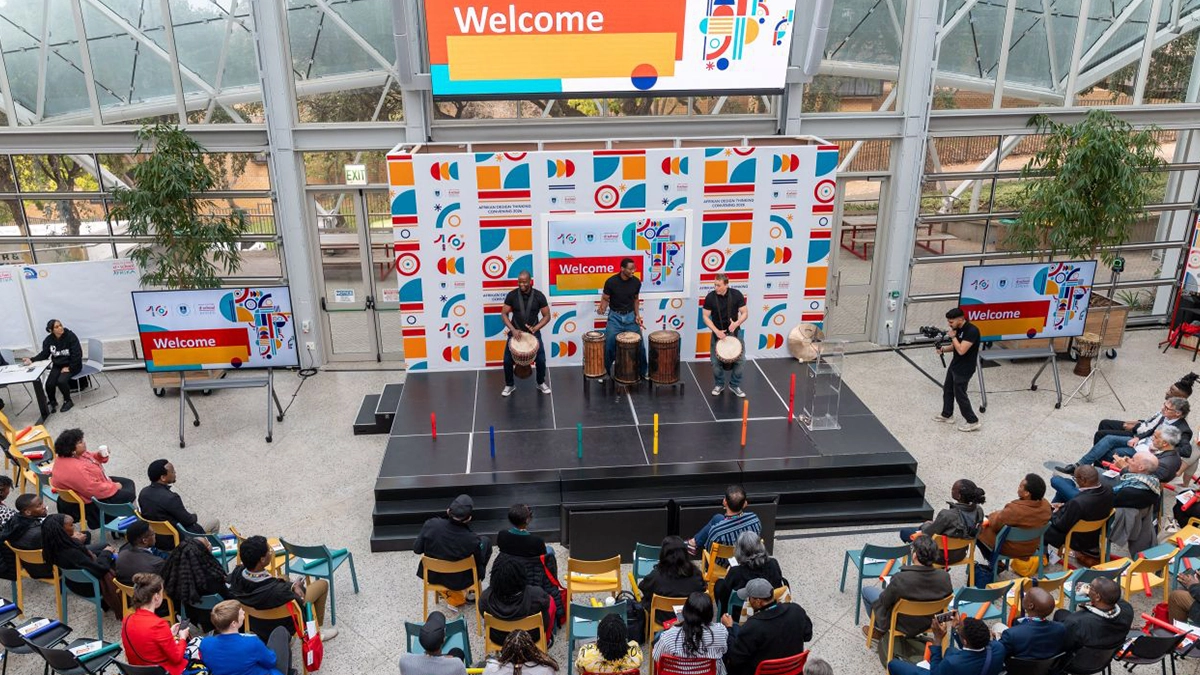

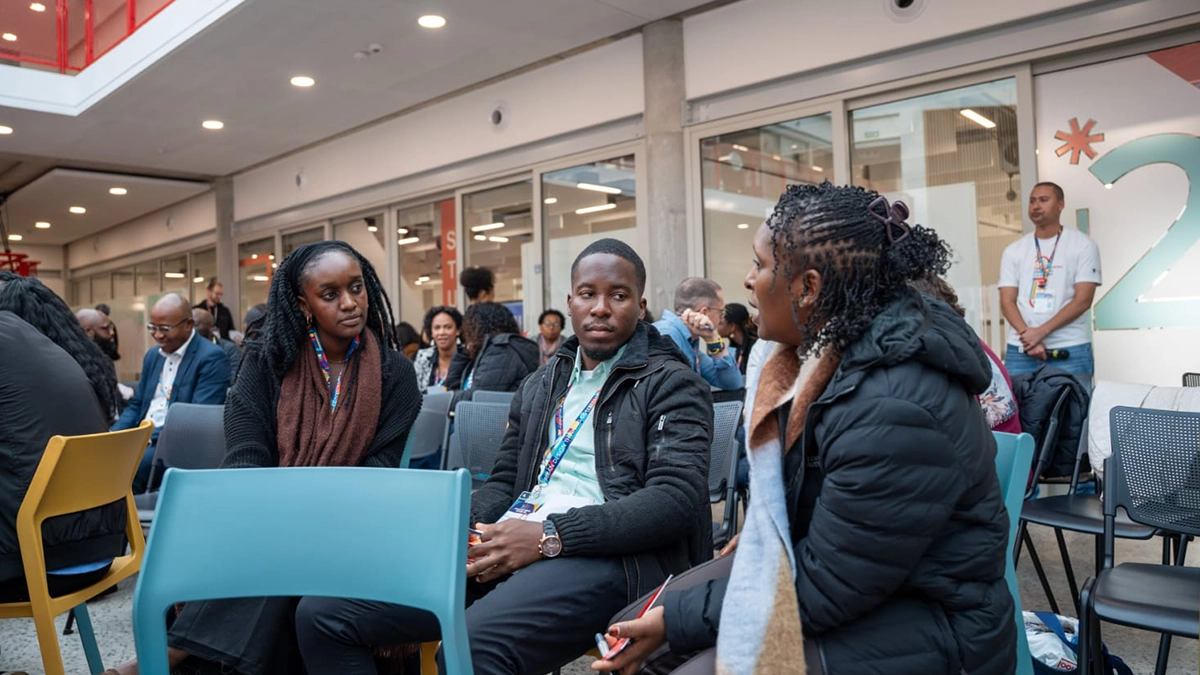
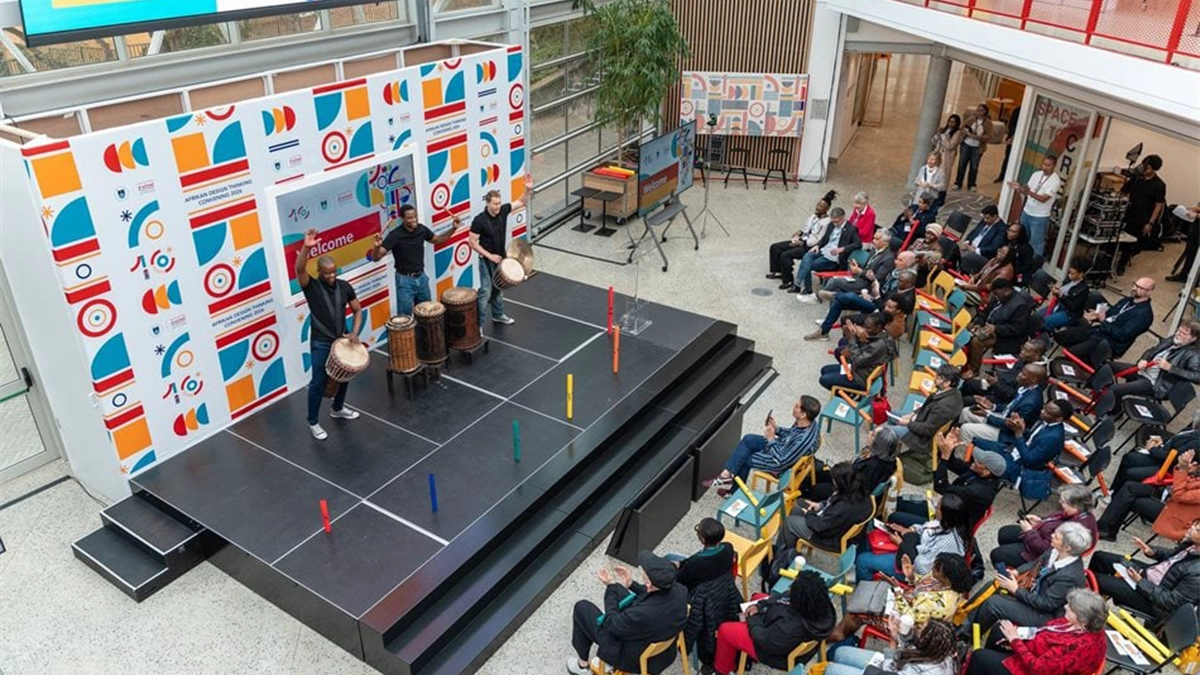
From 1st to 4th June 2026, Strathmore University joined educators, students, practitioners, and leaders in Cape Town for the Afrikan Design Thinking Convening 2026, hosted by the Hasso Plattner d-school Afrika at the University of Cape Town. The university was represented by Dr. William Murithi, Senior Lecturer at Strathmore Business School and lead of the Strathmore University Non-Profits, Social Enterprises and Philanthropy (SUNSEP) Hub, alongside Victoria Gichuki, Research Assistant at the SUNSEP Hub.
The convening marked ten years of d-school Afrika, the continent’s first dedicated school of design thinking, supported by the Hasso Plattner Foundation. Over that decade, more than 12,000 students, professionals, academics, and leaders have engaged with its ecosystem. Representatives from over 25 institutions across more than 10 African countries were in attendance, reflecting the growing reach of design thinking education and practice across the continent.
Reflecting Together
The convening was built around the theme of Reflect understood not as an individual exercise, but as a shared process of looking back honestly and orienting toward better futures. Five lenses guided conversations throughout the three days: Remember, Reframe, Rethink, Resolve, et Regenerate. These themes invited participants to honour the roots of design thinking on the continent, challenge existing assumptions, commit to action, and imagine futures grounded in African knowledge, values, and lived experience.
The tenth anniversary celebrations were graced by distinguished guests including Tina Plattner, daughter of Hasso Plattner, UCT Vice Chancellor Professor Mosa Moshabela, and Ms. Patricia de Lille a fitting acknowledgement of the milestone d-school Afrika has reached and the broader significance of its work.
Key Takeaways
Several ideas stood out as particularly significant. Africa’s complexity, often framed as a challenge, is increasingly being recognised as a genuine source of innovation. Communities across the continent have long demonstrated resilience, creativity, and collective problem-solving qualities that are central to design thinking at its best.
The conversation has also shifted in an important way. The focus is no longer only on what design thinking can offer Africa, but on what Africa can contribute to the global evolution of design thinking through its knowledge systems, cultures, and lived realities. This reframing was present in nearly every session.
There was also strong consensus that addressing Africa’s most pressing challenges, from climate change to inequality to public health, requires collaboration across disciplines, institutions, and borders. No single approach or institution can do this alone.
African Life-Centric Design
One of the most compelling presentations came from Pumla Maswanganyi, who introduced the concept of African Life-Centric Design (ALCD). Moving beyond the widely known framework of human-centred design, ALCD brings together life-centred design principles, African creation philosophies, and the depth of knowledge held across the continent.
What makes ALCD distinct is its insistence that the futures being designed must be rooted in the lived experiences and cultural practices of Africans themselves not shaped by external perceptions of what the continent needs.
A New Network and a Student Circle
The convening marked the launch of the Global Design Thinking Alliance (GDTA) Afrika Chapter and the Afrikan Design Thinking Network, spearheaded by Jenni van Niekerk. This brings together institutions across the continent under a shared commitment to growing design thinking from within Africa. Global figures including Prof. Uli Weinberg, President of the GDTA, Richard Perez, GDTA General Secretary and d-school Afrika Director, Louie Montoya from Stanford d.school, and Monika Frech from D-School Potsdam were among those in attendance.
Importantly for Strathmore, the convening led to the creation of the Student Circle of the Afrikan Design Thinking Network, now formally part of D-school UCT. Founding members include students from Kenya, Ghana, Uganda, and Tanzania. Strathmore University is proud to be part of this founding cohort.
Looking Ahead
The team from Strathmore University returns from Cape Town with new connections, fresh perspectives, and a clearer sense of where the continent’s design thinking community is headed. The work of the SUNSEP Hub supporting social enterprises, nurturing philanthropic culture, and developing purpose-driven leaders is closely aligned with the values at the heart of this convening.
At Strathmore, this work is already underway. The SUNSEP Hub has been actively introducing design thinking as a methodology to students and is currently running a Design Thinking Acceleration Programme with 30 students developing ideas to address compelling societal problems. The programme builds the skills and capabilities students need to bring viable ideas to life, whether through the University-Wide Ideas Challenge or through incubation at iBiz Africa at Strathmore University.
The future of design thinking in Africa will be shaped by relationships and communities willing to work together toward something better. Strathmore is committed to being part of that effort, building a future centred on African-led design for African problems. Because if Africa already has the knowledge, the creativity, and the people what future could we not design?
Strathmore University was represented at the Afrikan Design Thinking Convening 2026 by Dr. William Murithi, Senior Lecturer and lead of the SUNSEP Hub at Strathmore Business School, and Victoria Gichuki, Research Assistant at the SUNSEP Hub.
Partagez cette histoire, choisissez votre plateforme !
Votre voyage vers l'excellence commerciale commence ici. Abonnez-vous dès aujourd'hui et soyez à la pointe de l'innovation et du leadership.







 English (United States)
  English (UK)
  French