



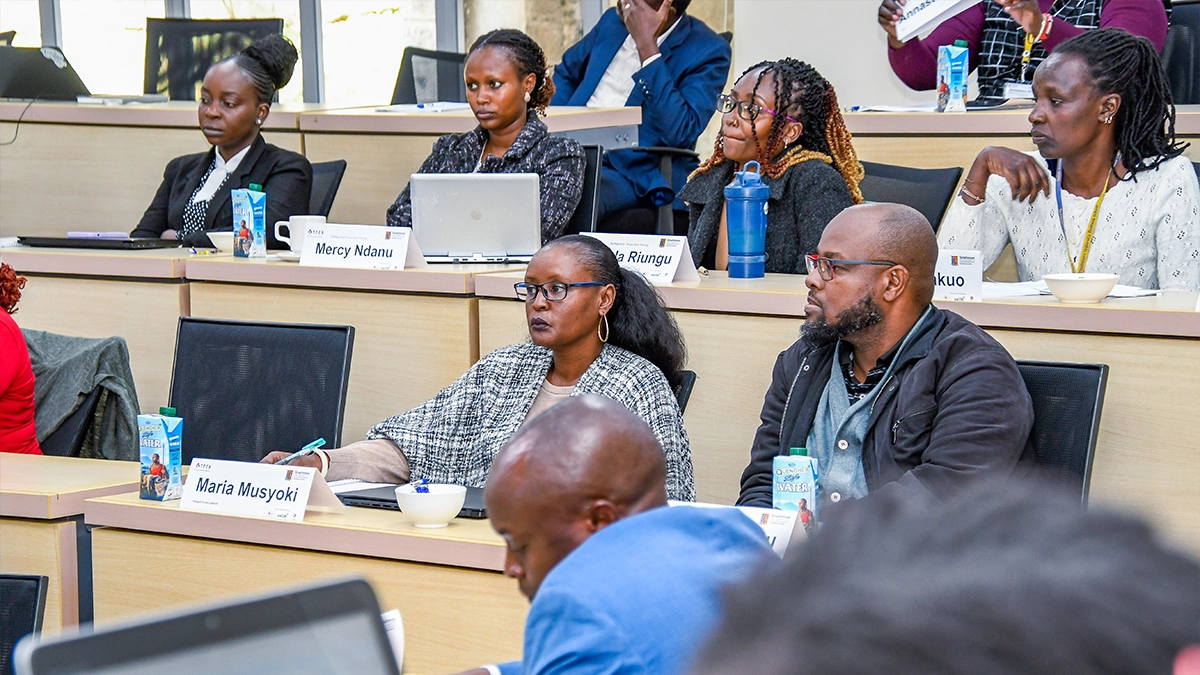
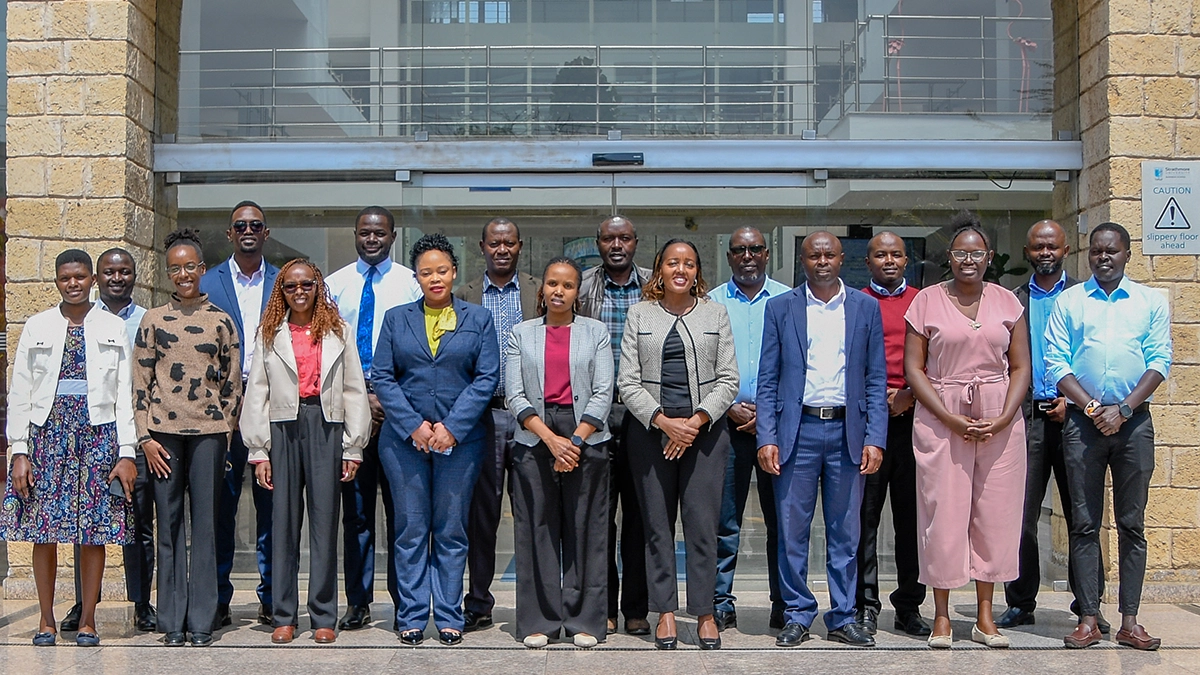
Soil doesn’t send an invoice. Neither do pollinators nor the trust a cooperative builds with its members over the years. Yet these invisible flows quietly shape the profitability, resilience, and market access of Kenya’s agribusinesses long before they appear on a balance sheet. This was the key takeaway from the TEEBAgriFood Kenya Project’s Private Sector Training held in July 2026.
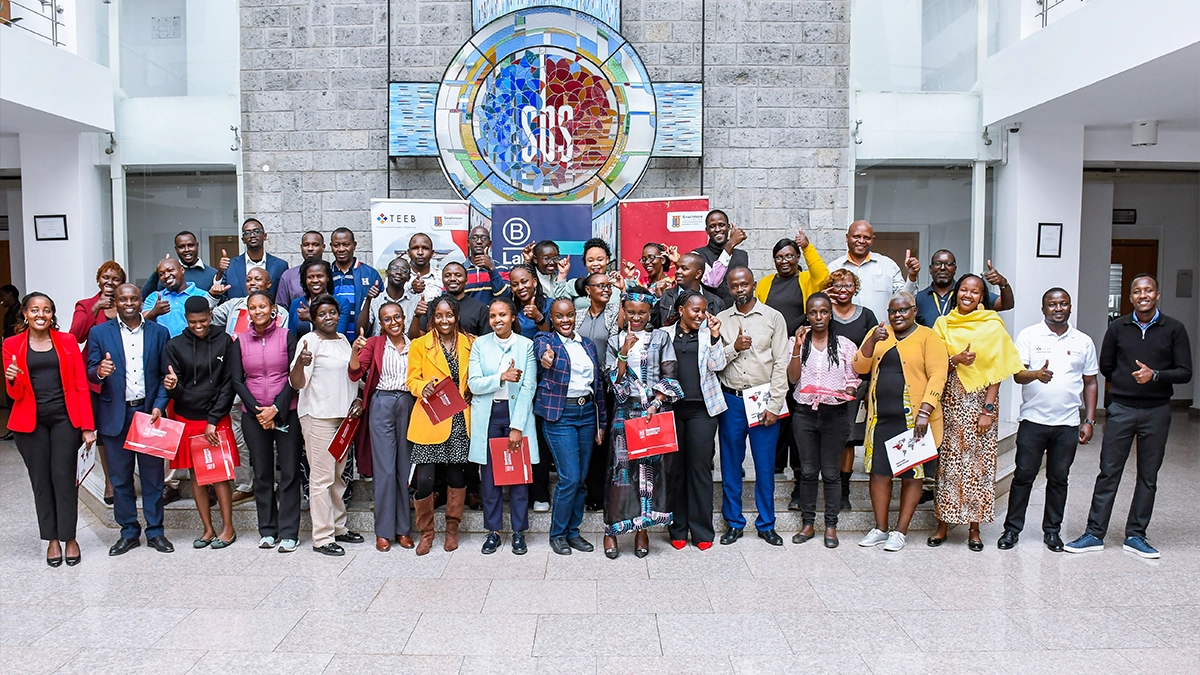
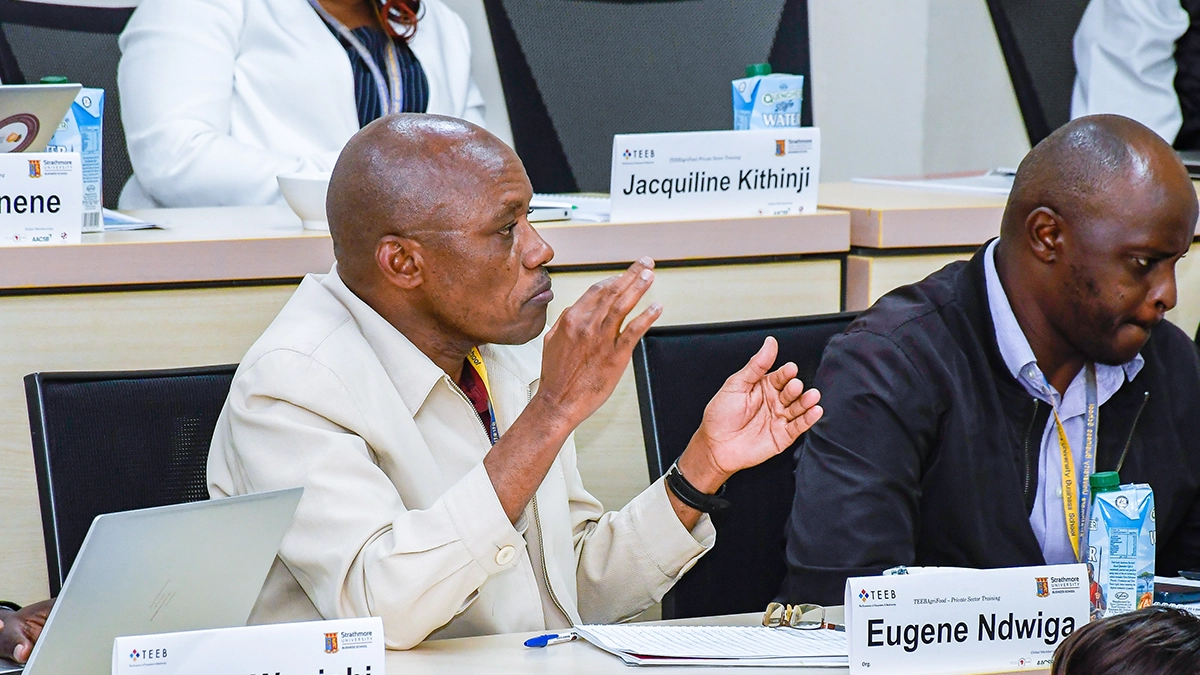
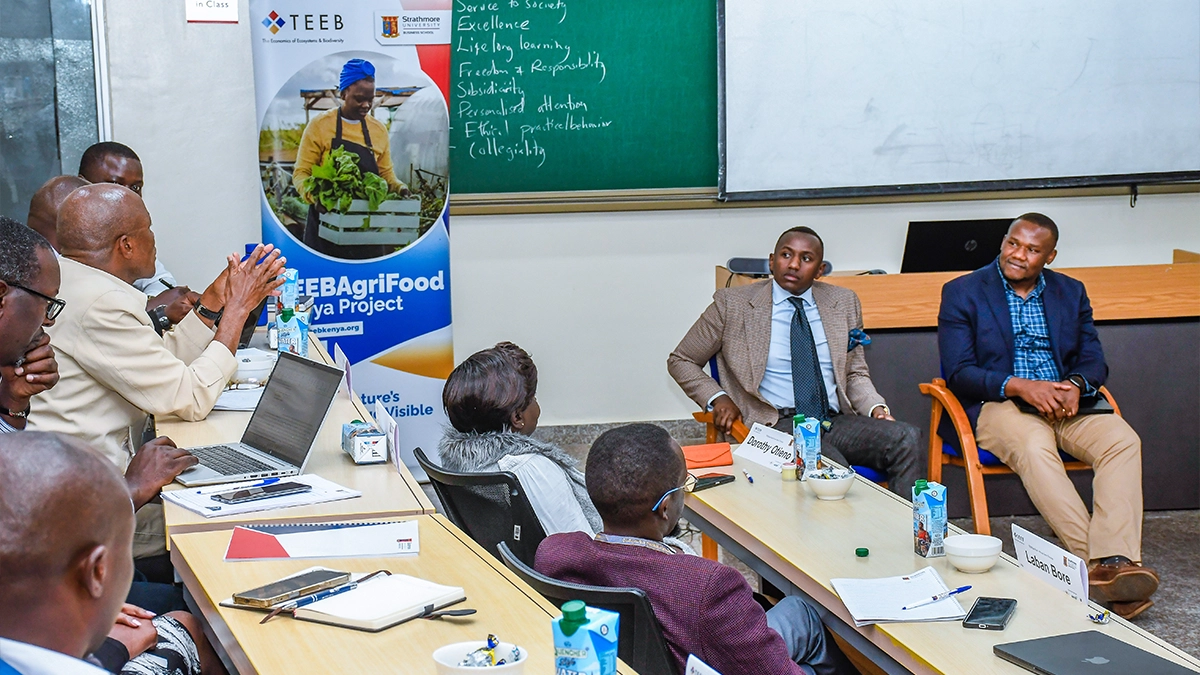
The training, delivered by the TEEBAgriFood Kenya team in partnership with B Lab Africa, brought together 19 representatives from 14 private-sector organisations. The organisations represented value chains such as dairy, coffee, tea, poultry, meat processing, horticulture, agri-tech, farmer cooperatives, and academia, all operating in or around the Cherang’any Hills, the Mau Forest Complex, and the Loita Hills.
Sustainability and climate resilience are not peripheral concerns for Kenya’s food systems; they are strategic ones. Prof. Jacqueline McGlade, Principal Investigator of the TEEBAgriFood Kenya Project, and the project team introduced participants to the TEEBAgriFood Framework and the Four Capitals: Natural, Human, Social, and Produced.
The session showed how each capital generates real operational, legal, financial, reputational, and societal risks for a business, whether or not it has measured them. Participants also learned about True Value Accounting (TVA), a practical four-stage methodology: Frame, Scope, Measure, and Value, for integrating these capitals into everyday business decisions.
Perhaps the most striking material presented was not conceptual but on-the-ground evidence. Farm-level data collected across the project’s counties showed that soil degradation, cited by 40% of surveyed farmers, water run-off and topsoil loss, cited by 35%, and lost soil organic matter, cited by 32%, are the most reported natural capital problems. These issues directly translate into the most cited hidden cost: rising fertiliser use and increasingly expensive inputs.
The data revealed a second, more urgent insight: regenerative farming practices do not necessarily boost short-term income but protect it from collapse. Among producers with complete seasonal records, every farmer applying at least 17 of 35 assessed regenerative practices maintained a minimum income floor of roughly KES 28,800, regardless of overall performance. In a sector where crop failure is the biggest threat to supply reliability, this is not a marginal finding; it is a resilience dividend and a business case in its own right.
Day two shifted from field evidence to market reality. Fabian Sukulu of B Lab Africa explained what B Corp Certification requires: a rigorous, third-party-verified standard spanning seven Impact Topics, from climate action to fair work, and why more than 10,000 companies globally, including over 100 in Africa, have pursued it. The business case, as certified leaders like Sunshine Nut Company’s Donald Larson and Spring Valley Coffee’s Ritesh Doshi have found, is not abstract: certification builds “unshakeable trust” with increasingly sceptical consumers, helps attract mission-driven talent, and, critically for Kenyan exporters, future-proofs a business against tightening regulation.
That regulation is arriving fast. Participants learned about the expanding landscape of nature and climate disclosure standards now reaching agricultural supply chains: TNFD, IFRS S2, the GHG Protocol, ISO 14054, SEEA, the EU Deforestation Regulation, and the SBTi Corporate Net-Zero Standard. Each has different requirements but shares one demand: standardised, credible, farm-level data. For Kenyan agribusinesses that export, borrow, or supply multinational buyers, that data is becoming less a compliance exercise and more a competitive requirement.
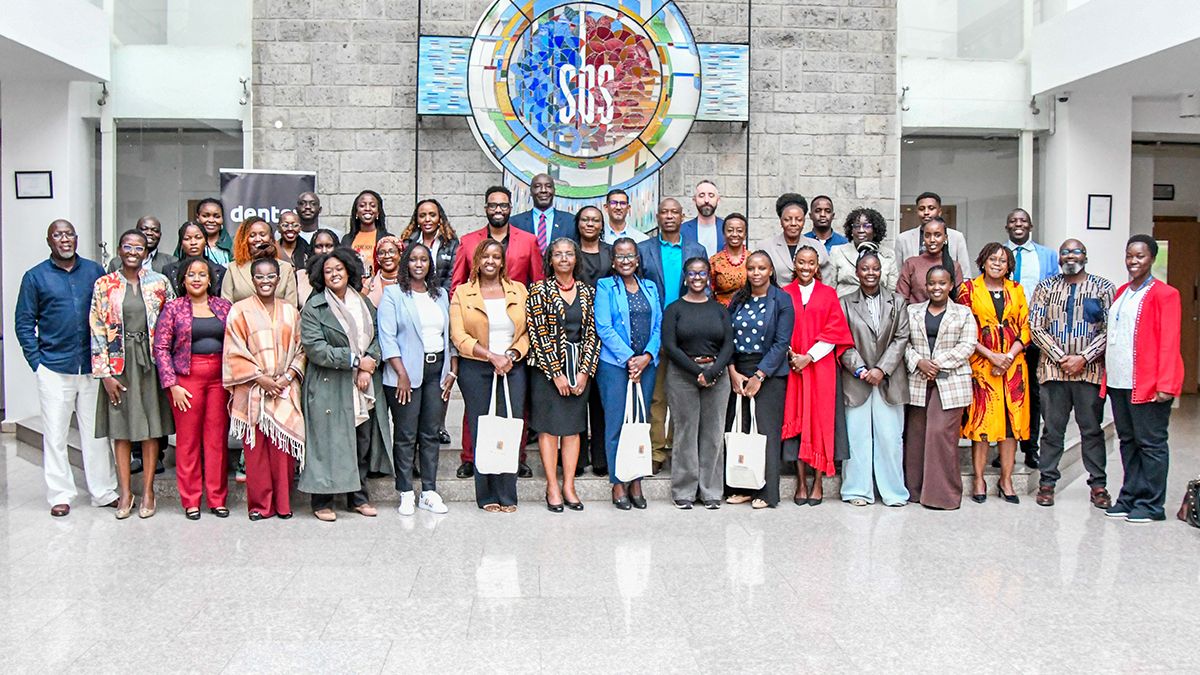
The momentum continued into Module 2, held at the end of July, which brought Cohort 1 and Cohort 2 together for the first time. Participants compared their capital assessments from Module 1 and explored how the Four Capitals framework applies across different agricultural contexts. The session demonstrated how issues such as soil health, water availability and social capital can manifest differently across a dairy operation, tea estate or grain cooperative, while highlighting the value of applying a common framework across diverse value chains.
That cross-value-chain mix matters. Soil degradation manifests differently on a livestock ranch than on a coffee plantation. Water stress affects a grain cooperative on a different timeline from that of a tea processor. Bringing these value chains into the same conversation made Module 2 an early, live test of whether True Value Accounting can work across Kenya’s agricultural landscape, not just within a single sector.
It also created space for participants from different sectors and stages of the training journey to compare experiences, challenge assumptions and see how the same framework can reveal different risks and opportunities depending on the value chain.
If there was a single thread tying the two modules and cohorts together, it was this: no single certification or disclosure framework is the point. The real goal is to build the capability to collect consistent, multi-season, farm-level data on soil health, water use, worker conditions and community trust. That data is increasingly becoming the binding constraint on both compliance and market access.
As sustainability standards continue to converge, producers who build this capability now will be better positioned to become preferred partners for buyers, lenders and investors. Ultimately, what Kenya’s farms aren’t telling their balance sheets may be precisely what will determine their future competitiveness.
Article de Juliet Hinga
Partagez cette histoire, choisissez votre plateforme !
Votre voyage vers l'excellence commerciale commence ici. Abonnez-vous dès aujourd'hui et soyez à la pointe de l'innovation et du leadership.







 English (United States)
  English (UK)
  French