








In the quiet halls of monasteries and convents across the globe, religious sisters have long devoted themselves to the service of the marginalized, becoming pillars of compassion and caretakers of human dignity. Their dedication to the sick, the poor, and the downtrodden has spanned centuries, but as the world around them shifts, so too must their approaches to social development. A new era calls for innovative thinking, resourcefulness, and entrepreneurial spirit — a journey that the Sisters Blended Value Project (SBVP) empowers Catholic sisters to embrace.
For generations, congregations survived on the goodwill of benefactors in Europe and America, communities that knew the hardships of missionary lands and supported their “daughters and sons” without question. Donations flowed without the bureaucratic barriers we see today; verbal appeals and shared faith sufficed. But as those lifelines dwindle and external aid becomes increasingly conditional on formal proposals and competitive funding processes, the religious sisters need to adapt. They should find renewed purpose in social entrepreneurship, a path that is both an extension of their mission and a bridge to financial sustainability.
Benedictine Legacy of Social Enterprise
One need only look at the Benedictine monasteries, where social enterprise has long been embedded in their way of life. Benedictine communities transform whatever land they inhabit, creating value that serves both their congregation and the local population. They have seamlessly integrated wealth generation into their ministry, understanding that financial stability enhances their ministering ability. Yet this spirit is not exclusive to the Benedictines. Across congregations, sisters are increasingly asking, “How can we sustainably support our ministries?” The answer, time and again, returns to social entrepreneurship.
Social entrepreneurship blends business principles with social missions, focusing on sustainable impact rather than mere profit. For religious sisters, this does not mean abandoning their mission or compromising their faith; rather, it strengthens their work. By learning economic principles and embracing innovation, they are better equipped to serve their communities, particularly in an age where traditional funding sources are often out of reach.
From Mirages to Miracles: Facing the Financial Reality
In the landscape of modern philanthropy, funding can sometimes feel like a mirage. Just when a congregation believes it has secured resources, those funds seem to dissipate. For sisters, this instability poses a constant challenge, requiring them to be resourceful and creative — even in budgeting. The SBVP recognizes these struggles and encourages sisters to adopt a strategic approach to social entrepreneurship.
The barriers are real. Sisters must navigate complex issues such as leadership, financial management, and project oversight — skills that might seem foreign within the context of their religious vocations. But these are precisely the skills required for effective social entrepreneurship, and the SBVP has set out to support them with four pillars: individual and capacity building, research, collaborative networks, and integrated financial solutions. Through training and mentorship, sisters are not only encouraged to dream big but are given the practical tools to realize those dreams.
Faith Meets Enterprise: A Harmonious Union
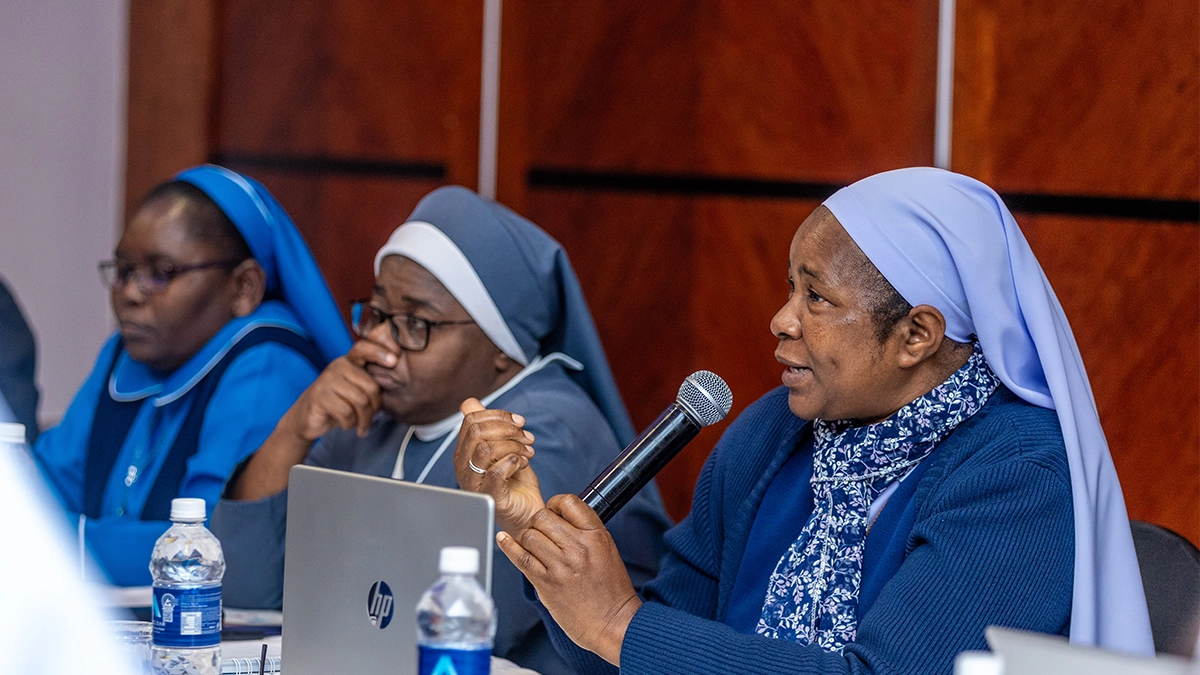
As speakers at recent SBVP graduations emphasized, social enterprises are an extension of faith. Sisters have already demonstrated, time and again, their capacity to impact society — educating children, providing healthcare, and inspiring hope. Their actions speak to the transformative power of faith. Now, as they venture into social entrepreneurship, they continue this legacy, proving that faith and business can coexist harmoniously.
The blend of spirituality and business acumen does not dilute their religious identity; it amplifies it. By creating sustainable social enterprises, sisters ensure that their mission endures long after their tenure. They are not just building projects; they are building legacies. This sustainable approach to ministry, grounded in strategic thinking, safeguards the work they have done and the communities they serve.
During the SBVP SEP Scale graduation in Tanzania, Fr. Charles Kitima -General Secretary
Tanzania Episcopal Conference (TEC) – highlighted that social entrepreneurship is “business for the well-being of society, not just for personal gain.” This distinction is fundamental for the sisters, whose enterprises are a means of upholding their charisms. Whether it’s through artisanal crafts, educational programs, or healthcare services, their ventures reflect a deep commitment to societal welfare.
The Role of Leadership in Sustaining the Mission
As sisters venture into social entrepreneurship, effective leadership becomes essential. For congregations, this means cultivating a culture of collaboration, accountability, and innovation. Sisters are called to lead with a vision that extends beyond their immediate ministries, involving succession planning and institutional strength-building. These are not typical skills one might expect in religious life, yet they are critical for the sustainability of social enterprises.
A recurring message by Prof. Silvanus Ochuodho – Pro-Chancellor, Strathmore University- was that leadership should prepare social enterprises for the future. Just as sisters have long passed down their religious traditions, they are now called to pass down their business acumen, ensuring that their initiatives continue to thrive in their absence. This approach to leadership strengthens not only their congregations but also the communities that rely on their services.
Social Entrepreneurship as Ministry
Perhaps the most striking aspect of social entrepreneurship among religious sisters is that it does not detract from their mission. Instead, it enhances it. Sisters are not in this work for personal gain but for the benefit of their communities. By creating sustainable enterprises, they can reach more people, provide more resources, and have a lasting impact on society.
The story of St. Francis of Assisi resonates here. Though he sought to live in poverty, his family was enterprising, using their resources to protect and provide for him. His choice was one of solidarity, not desperation. In much the same way, sisters today see social entrepreneurship as an alignment with their values rather than a departure from them. By becoming financially self-sufficient, they can minister more effectively and reach even further.
Today, the sisters’ work reflects a profound shift from charity-based assistance to a model of empowerment. They are reimagining their role in social development, not by abandoning their spiritual roots but by embracing entrepreneurship as a means of service. This transformation ensures that they are meeting their communities’ immediate needs and paving the way for sustainable change.
A Vision of the Future
The SBVP participants carry with them a powerful lesson: social entrepreneurship is a way to ensure that their ministries remain relevant, resilient, and impactful. They are reminded that while they may not see the full fruits of their labour, they are planting seeds for generations to come. The choice to venture into social entrepreneurship is not simply a financial strategy; it is a commitment to the future.
Religious sisters, often seen as humble servants, are emerging as community leaders, changemakers, and social entrepreneurs. Their commitment to faith and action — a dual dedication to prayer and progress — challenges traditional narratives. They are proving that sustainability in ministry is achievable, that business can be a vessel for social good, and that their faith is as vibrant as ever.
As sisters continue to reimagine their role in social development, their work will inspire others to see beyond the confines of tradition. They are proving that religious life, with its deep roots in spirituality, can flourish in new soil. The call to serve the marginalized has not changed; only the methods have evolved. And in this evolution, the sisters are finding new ways to be stewards of change, guardians of hope, and agents of sustainable transformation. The journey of social entrepreneurship may be challenging, but for the SBVP graduates, it is a journey worth taking.
Partagez cette histoire, choisissez votre plateforme !
Votre voyage vers l'excellence commerciale commence ici. Abonnez-vous dès aujourd'hui et soyez à la pointe de l'innovation et du leadership.

Fondation Conrad N. Hilton
La Fondation Conrad N. Hilton envisage un monde dans lequel l'amélioration de la condition humaine est un objectif commun et durable. “Aimez-vous les uns les autres, car c'est là toute la loi”, a écrit Conrad Hilton dans son testament. Les peuples du monde “méritent d'être aimés et encouragés - jamais d'être abandonnés à leur solitude dans la pauvreté et l'obscurité”. Telle est notre détermination.







 English (United States)
  English (UK)
  French