

A TIME TO INVEST
Introduction
To those who anticipate the year 2026 with trepidation: The question is, how will you make money or invest in a profitable business within a 5-year spectrum? Someone may also be thinking about near-future policies or political strategies that will strengthen economic performance in their favour, or for our Country and Continent, this year. For many Kenyans, 5 years is too long. Only a few can afford such mental exertion or investment prognosis. The truth is, even though most people in Kenya are thinking about the near future, many live from ‘hand to mouth’. Many are often fraught with the panorama of a complex administration of their resources in comparison to their economic needs or hopes. But whoever you are, and whatever possibilities are present before you, it is reasonable to be positive and to build upon some opportunities. Our available digital capacity, potential satellite connectivity, Artificial Intelligence, and partnerships. These opportunities will mean so much for you in 2026, because they must lay the foundations for the next five years.
The ‘peoples’ are often measured by ‘culture’ and ‘education’. Notwithstanding the historical injustices most nations are fraught with, including Kenya, culture, education, and skills will make you attractive to investors or, on the other hand, label you risky, unwieldy, and not worthy of partnership. Luckily, Kenya stands on the positive side of these issues. We are lucky, but we face serious impediments that cannot be underestimated.
Governance is a critical factor that is measured against culture, education, and performance. The 2025 Gen Z ‘moment’ made it perfectly clear that we have serious governance gaps. This may be said of the County Governors, their county leadership, up to the last assistant chief in the county. Significantly, this will also encourage more scrutiny of the legislative function (MPs and Administrators), and of the Justiciary function. The Gen Zs are asking us to think carefully about improving governance across every sector of the nation. They are also looking at Family Businesses and inclusive international policies. To disregard this phenomenon would be foolhardy. Parents should consider how they will involve their children and relatives in managing their resources to promote productivity and sustainability. The application of technology tools and open communication will attract youth into productivity in this nation’s lowest economic function.
That said, corruption will not change much in 2026, despite the rhetoric about efforts to combat this entrenched vice, because it is not the time to send ministers and administrators to prison for stealing public resources, or to moderate the inefficiencies caused by public and private sector interference with public resources for their benefit. Not even the Social Health Insurance or Government contracts. Neither will most counties nurture formal public and private institutions at the subsidiary level to enable constituents’ economic participation in government contracts or to keep money in the Counties.
Effectively, most of the County Expenditure will be administered at the National government level and largely remain in Nairobi (and its environs) and a few other cities such as Mombasa, Eldoret, Nakuru, and Kisumu, among others. However, in either case, Gen Z’s uproar will make it more predictable and significantly open to scrutiny. According to the African Development Bank, Kenya is losing more than Kes 600 billion, or USD $1.5 billion, to corruption. This is nearly 8% of our GDP, which can be used to transform 60% of the population in the agricultural sector (2019, Government Kilimo statistics). Given the pastoralist population statistics, which may be critically underestimated in these age-old records, and given that we may have a relatively paltry growth in manufacturing capacity in the country, lowering corruption can significantly and positively transform the nation’s wealth. Especially, in efficiently using government revenue and government loans, both local and international borrowing. Let’s ensure that every shilling borrowed yields an almost 5 times return on investment rather than passing on the cost of money to future generations. We will all gain.
Political lobbying, scrutiny, and the election cycle are also here with us in 2026, and we need to think about how they will affect our investment or work. Several reasons make me think it will NOT be an upheaval, but it will create an arduous investment climate and unreasonably foster fear. This foresight will certainly be more important at the turn of the new year. Nevertheless, the scales are tipping towards reasonable economic stability in the year 2026 rather than instability..
Forward-looking macroeconomic indicators.
Intra-African trade grew by 9.6% in the year 2025. We are trading more within our own African region, but it is fraught with impunity, Non-Tariff-Barriers, and poor transport and communication infrastructure and integration. We are trading agricultural products, energy, especially petroleum refining, digital solutions, e-commerce-trade, creatives, culture, and entertainment, cross-border trade, agro-processing, financial services, engineering services, tourism, hospitality, transportation, to Investment funds from Areximbank, AfDB, and the African Union Commission for the AfCFTA policy and implementation.
This means that private companies need to think positively about expanding business into other African countries from Kenya. This is not easy and will require significant integration with local communities in other countries through mergers, acquisitions, and collaborations. We can invest in Ethiopia, Uganda, Tanzania, and the DRC, and this is an important consideration with a 5–10-year patient capital perspective. The simple reason is that Kenya is ahead in production technology and services, and wherever one goes into the rest of the East African Countries, margins are higher than usual because of lower levels of competition. The alternative is to keep looking towards the EU, USA, China, and Russia. But we need time to skill our neighbours significantly and bring them to Kenya for local cultural integration.
Relying on the old model of grants from colonial relations or international funding of our current expenditure, especially in Education and Health, will not fly. Excellency, Trump has made that clear, and he is allocating most of the US Treasury’s funds to military might. Ukraine and the Middle East are asking the same from the EU countries (that is, if they continue as a union). Afreximbank shows that global capital flows to Africa are volatile and fragmented, and that there is a shift from deglobalization towards protectionism. Whilst there is still opportunity for ‘cheaper’ Foreign Direct Investment, it cannot be the basis of long-term business strategies. Effectively, one will need to choose which geopolitical position they need to choose from a market supply perspective. For instance, money from the EU or USA, may require disconnecting trade with other ‘enemy’ nations. This position can change from time to time, and therefore, consistency and growth become unpredictable. But again, there is a silver lining in the cloud. Investment money is flowing to Africa due to high yields and a growing predictive economic environment. Côte d’Ivoire has made this clear. And so is South Africa through its aggressive merger and acquisition of Financial Institutions. NED Bank has announced its intention to acquire a 66% stake in NCBA Kenya for approximately USD 855 million.
That is not the interesting part. In the intended purchase across the first three quarters of this year, the intention is to expand into the entire EAC, including a massive investment in DRC. We also see that Capital flows through Afreximbank will double in 2026 from USD 17.5 billion to USD 40 billion. One can gather that stable financing policy objectives and industrialisation will come from a partnership with large funding organisations from Africa and the BRICS. Dangote’s oil refinery is well underway to expand its petroleum processing capacity from 650,000 barrels per day to 1.4 million barrels per day. This is a $350 million partnership deal with Indian corporation Engineers India Ltd (EIL). More is coming.
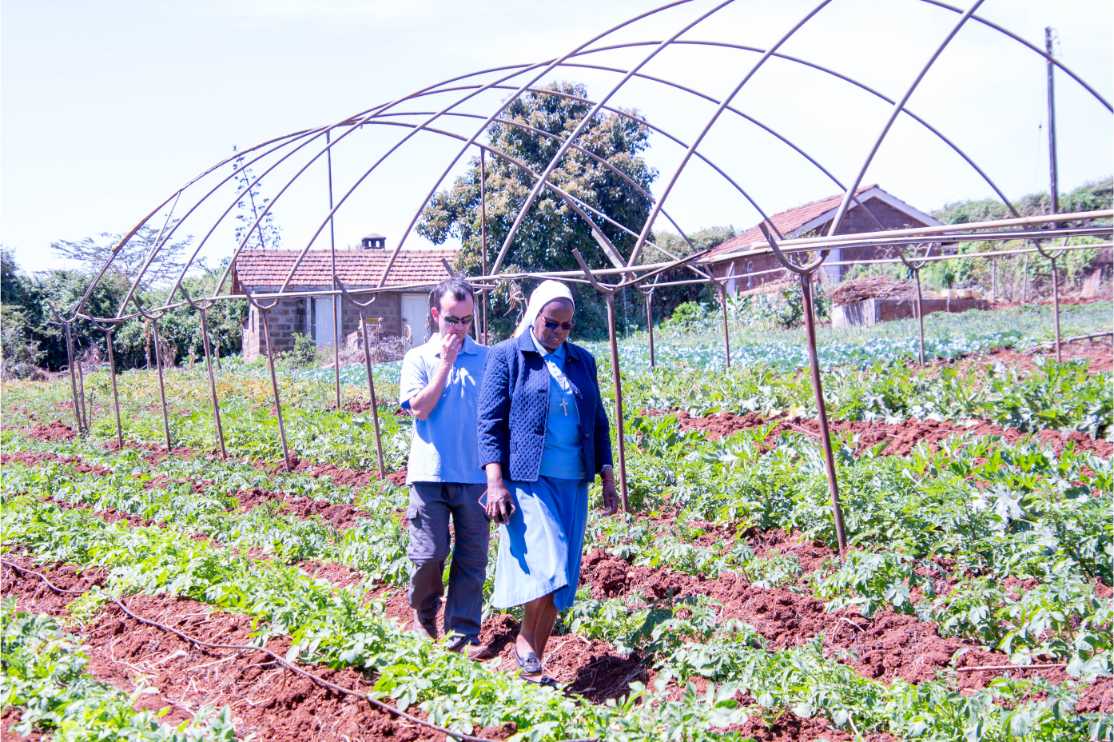
In Western Kenya, Kisumu, Kakamega, and the lake region, Gross County growth across many economic sectors will most likely be 10-20%. Pastoralists in the 32 Arid and Semi-Arid lands of Kenya are contributing, without adequate technology, a significant 42% of the Agricultural growth in the Country. Imagine what would happen if we undertook to streamline land tenure systems (integrating community lands through cooperatives and SACCOs), encourage GPS technologies, promote climate sustainability, Strengthen Water resources, and build traceability ecosystems. We would double or triple the economies in these counties. Moreover, we would not have to import wheat, cooking oil, and mineral resources in the quantities we do. Especially, wheat from Russia. And maize (corn) to enhance animal feed.
If the central region became one of the most amazing value-addition and processing centers of the country, Kenya would certainly contribute more than 50% of the goods sold in retail outlets. This is reasonable because, based on current statistics for the possible County Aggregation Industrial Parks (CAIPS), Special Economic Zones (SEZs), and Export Processing Zones (EPZs), investing in these zones will provide an Internal Rate of Return of more than 20%. But these will not be possible unless we take money to farmers and fisherfolk through SACCOs. Improving Governance in SACCOs will make Domestic Direct Investments from Remittances, whose growth is estimated to reach USD 5.5 billion in 2026.
In the Coastal Region, (notwithstanding electoral complexities) tourism is estimated to grow by nearly 300%, and the blue economy is set to receive investments that will catapult productivity by a whopping 10%. This is without counting Coastal and marine mining, GPS control of illegal fishing, where a few wealthy people have taken control of public resources. The whole region’s growth rate will likely be 7-8%, contributing above 9% to Kenya’s GDP. That is a far cry from the 27-30% in Nairobi and environs, but it sure presents opportunities in Mangrove Forest development, mining, fruit farming, and Palm Oil. Deep-sea fishing for export has a good story to tell. The Fisheries annual Statistics demonstrate that the coastal region has a potential of 150,000 to 300,000 metric tonnes of fish annually, but is currently operating at only about 6% capacity, generating approximately USD 80 million. The opportunity is obvious, and the investment capital is available. We can give a significant boost to quality employment services in the coastal region.
Effectively, more money will be available for well-thought-out manufacturing and value-addition opportunities in Kenya. Both the Kenyan political and private wings need to prepare themselves well and make the most of these opportunities. Growth will be seen in increased investment in land productivity for animal feeds, the blue economy, industry, and in strengthening, processing, and engineering capacity within SACCOs. For instance, Engineering services will require a large number of skilled personnel for mechanical maintenance. Dangote Group cannot keep using Indian skills to stabilise production. The Kenyan Government and private sector need to invest in upgrading skills across the entire Technical Training Sector. Quality skills and labour characteristics are fundamental for growth in private-sector industrial jobs.
Briefly put, the estimated Kenyan Real GDP growth for 2026-2027 is 4.9%. Formal employment is falling by 18.5% (from 15.5% in 2024). This means that informal jobs are contributing more to employment. An analysis of the informal employment contribution reveals a significant opportunity to establish a strong value-add capability across all sectors of the economy.
Global GDP is slowing down to a 20-year low of 2.6%. This will be lower in 2026-2027. According to the Kenya Economic Landscape published in November 2025, “growth in advanced economies is expected to decelerate to 1.6 percent or lower, while growth in Emerging Markets and Developing Economies is driving 75% of the global economic output.
The vantage point and incentive for growth in Kenya would be that, on average, gross margins for manufacturers and services are higher than the Emerging Market’s Gross Operating Surplus Ratio (GOSR).
In conclusion, our market focus should target Emerging and Low-income Countries across all levels of productivity. Secondly, there are many State-Owned Enterprises (200 SOEs) without a significant reason or purpose for their existence. Governance in these corporations is subpar and questionable. We need good governance and privatization. If we do not do this, fiscal expenditure will continue to grow, exacerbated by poor governance.
Partagez cette histoire, choisissez votre plateforme !
Votre voyage vers l'excellence commerciale commence ici. Abonnez-vous dès aujourd'hui et soyez à la pointe de l'innovation et du leadership.







 English (United States)
  English (UK)
  French