

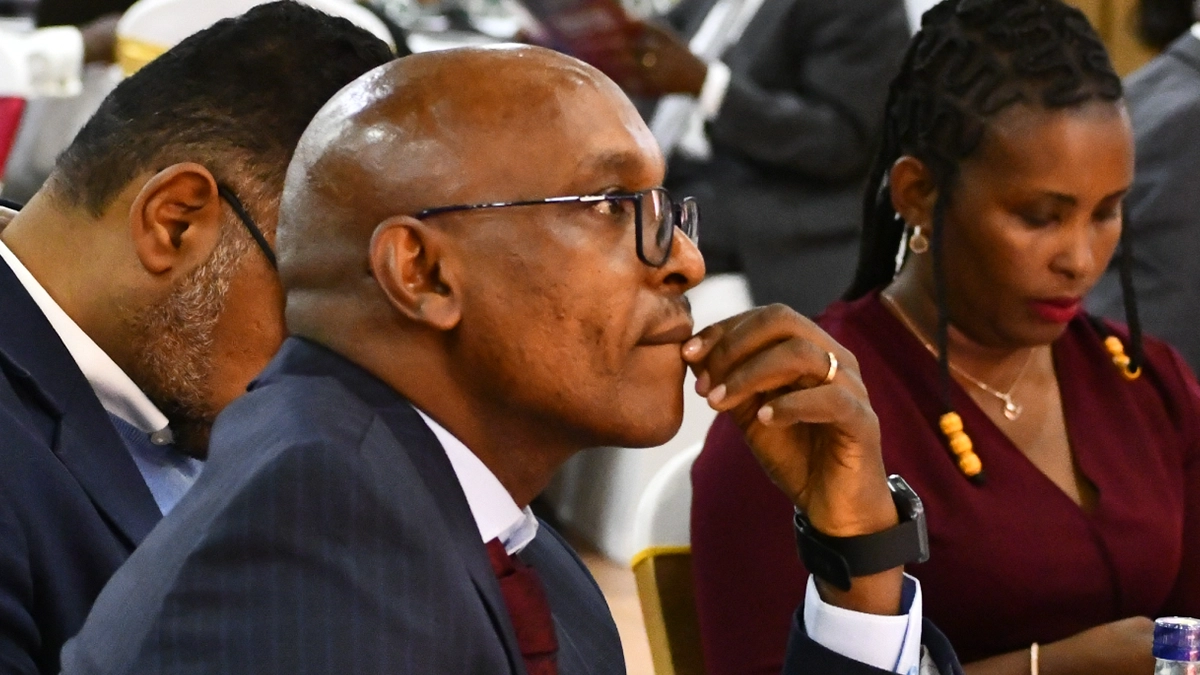
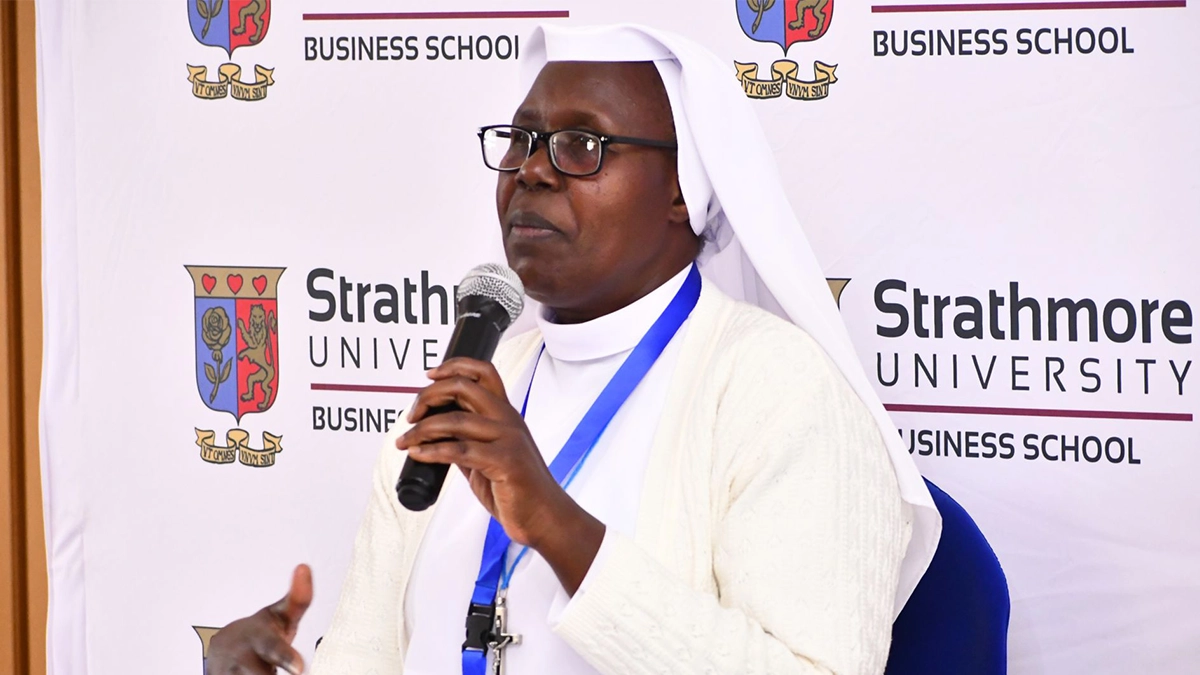
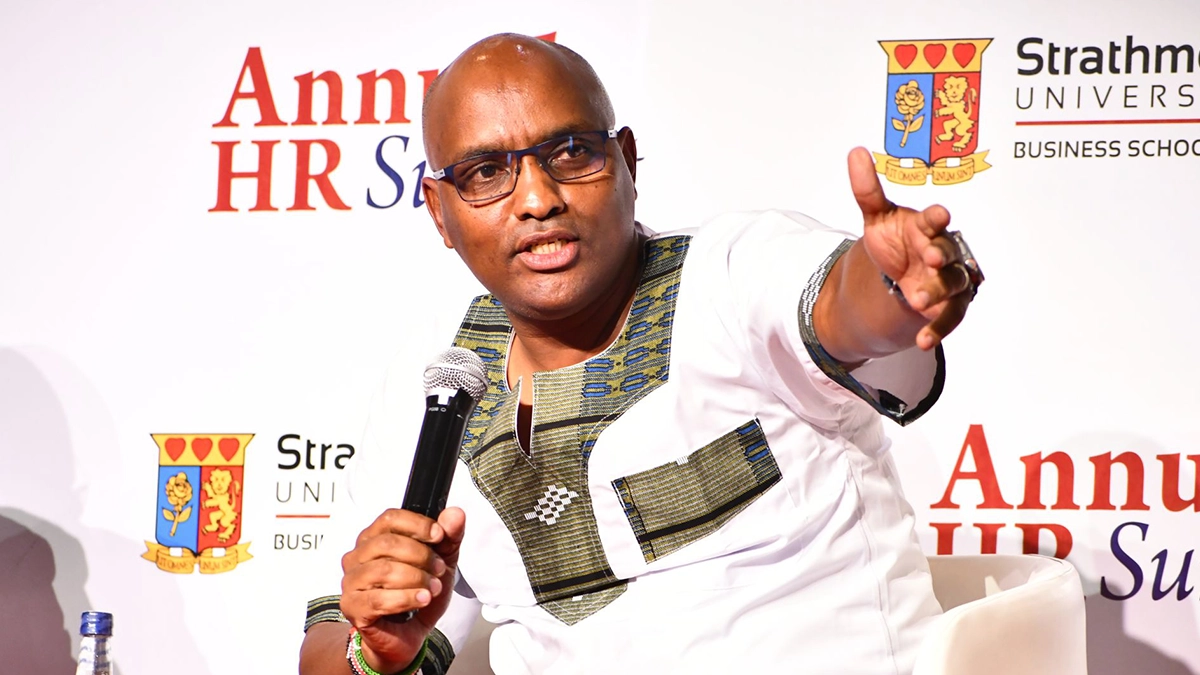
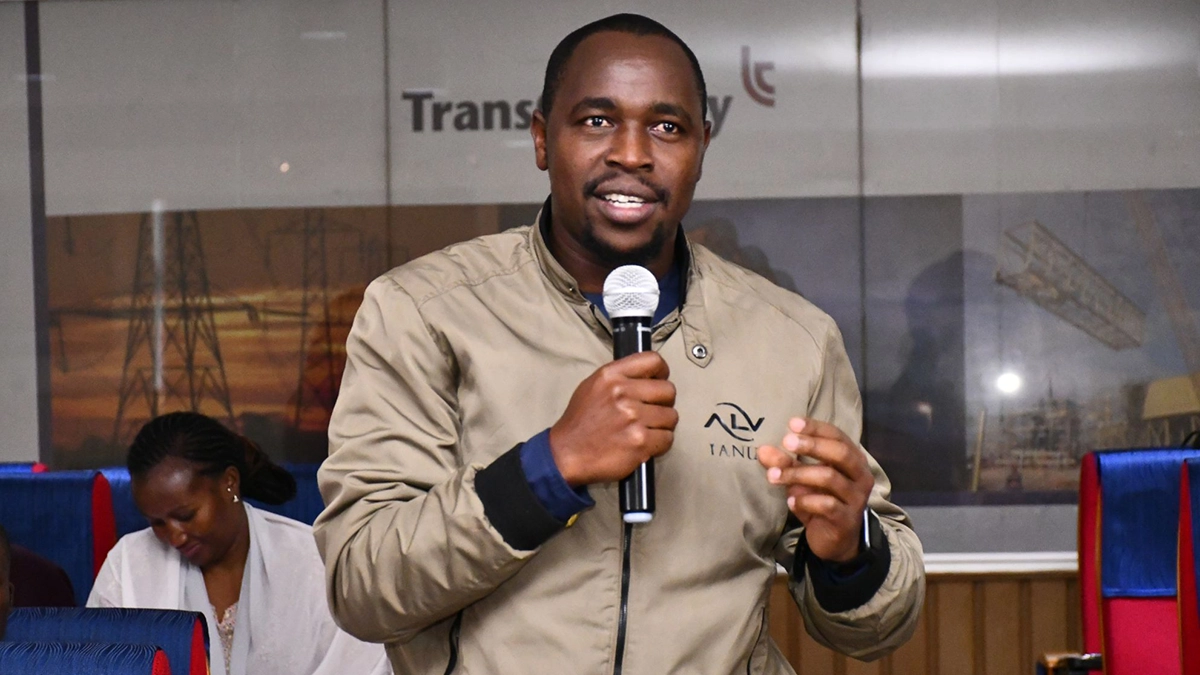
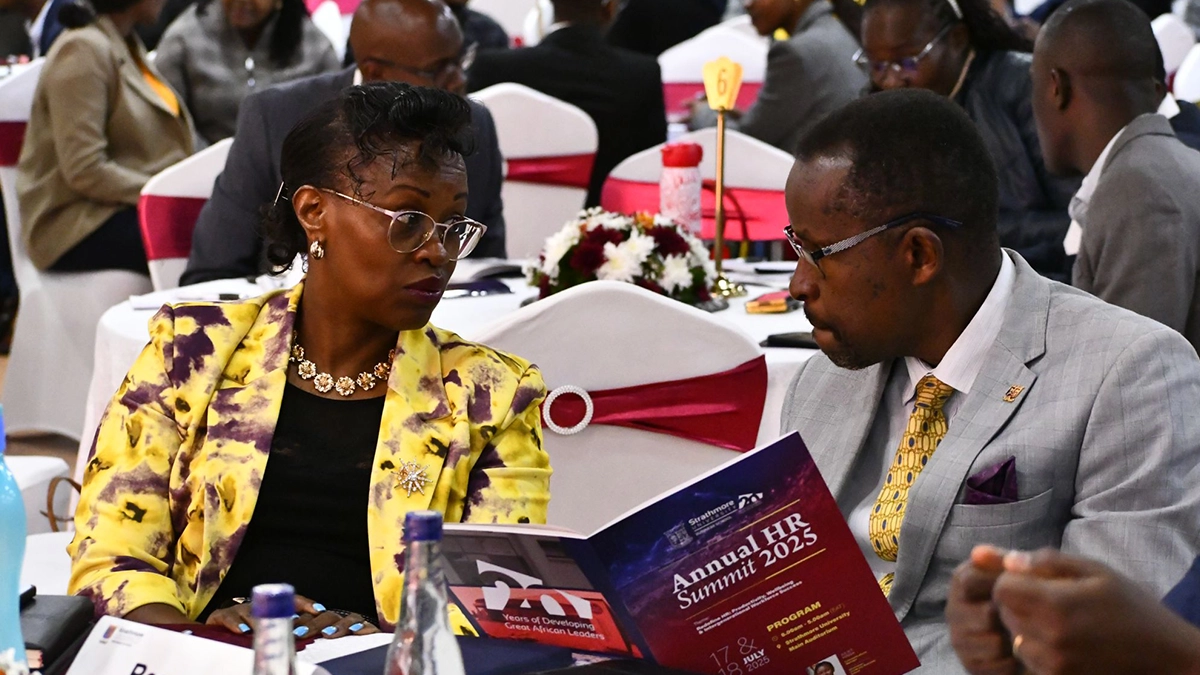
As industries reel from disruption and generational friction redefines workplace dynamics, École de commerce de Strathmore convened over 100 HR professionals, business leaders, policymakers, and researchers for a two-day dialogue and collaboration. With bold conversations around productivity, wellbeing, and the power of a multigenerational workforce, the 2025 Annual HR Summit delivered a new playbook for the future of work.
Themed “Redefine HR: Productivity, Wellbeing & Intergenerational Workforce Success,” the summit became a compass toward a more humane, strategic, and future-ready world of work.
Opening the summit, Dr. Caesar Mwangi, Executive Dean of Strathmore Business School, emphasized that HR is the soul and strategic nucleus of modern organizations.
“HR is of extreme importance since it shapes the strategic direction of an organisation,” Dr. Mwangi stated. “As we push for productivity, we must equally consider the well-being of people, especially in a workforce that spans across generations.”
He highlighted Strathmore Business School’s broader mission of equipping leaders with ethical and transformational skills to navigate today’s evolving business terrain. “We are committed to building a generation of leaders who will spearhead Africa’s transformation,” he added.
The summit, he affirmed, was a platform for knowledge exchange, reflection, and reimagination.
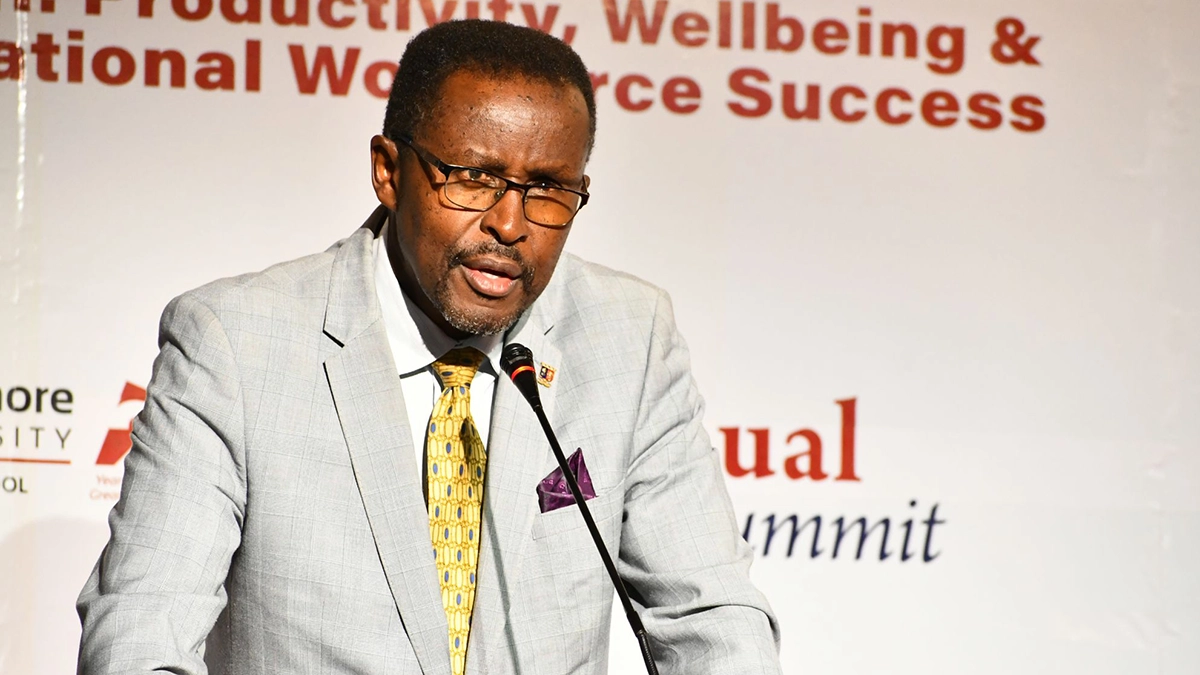
The day’s tone shifted as Dr. Julius Kipng’etich, Group CEO of Jubilee Holdings and Chief Guest, stepped up for his keynote address, an exploration of what it means to be productive in an age defined by AI, remote work, and Gen Z disruptors.
“Productivity is no longer about clocking hours,” he said, quoting Paul Meyer: ‘Productivity is never an accident. It is always the result of a commitment to excellence, intelligent planning, and focused effort.’
Dr. Kipng’etich called for a radical departure from outdated practices and challenged attendees to embrace what he termed “creative destruction”, a continuous rethinking of structures and strategies.
The new productivity matrix, he proposed, revolves around purpose, autonomy, trust, talent, tools, and culture. High-performing teams, he noted, are those with clear goals, strong feedback loops, and a culture of integrity and clarity, qualities Gen Z demands unapologetically.
His final charge to academia was that universities must go beyond teaching. Solve real societal problems. Help build organisations that are fit for the new world.
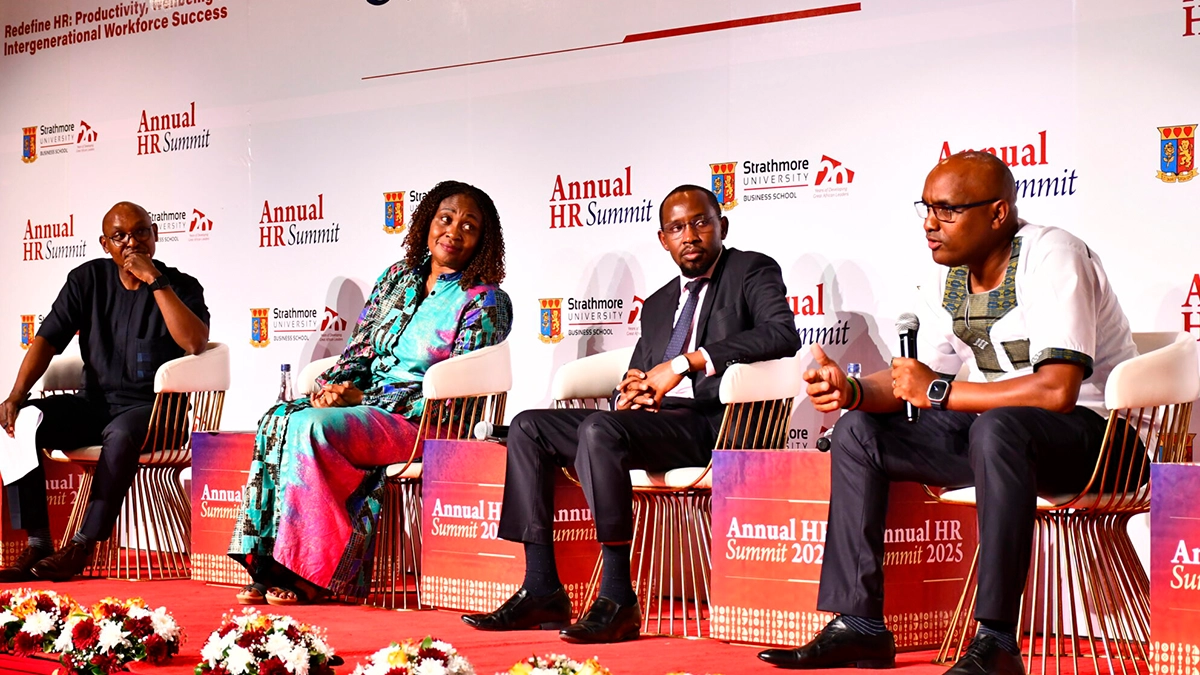
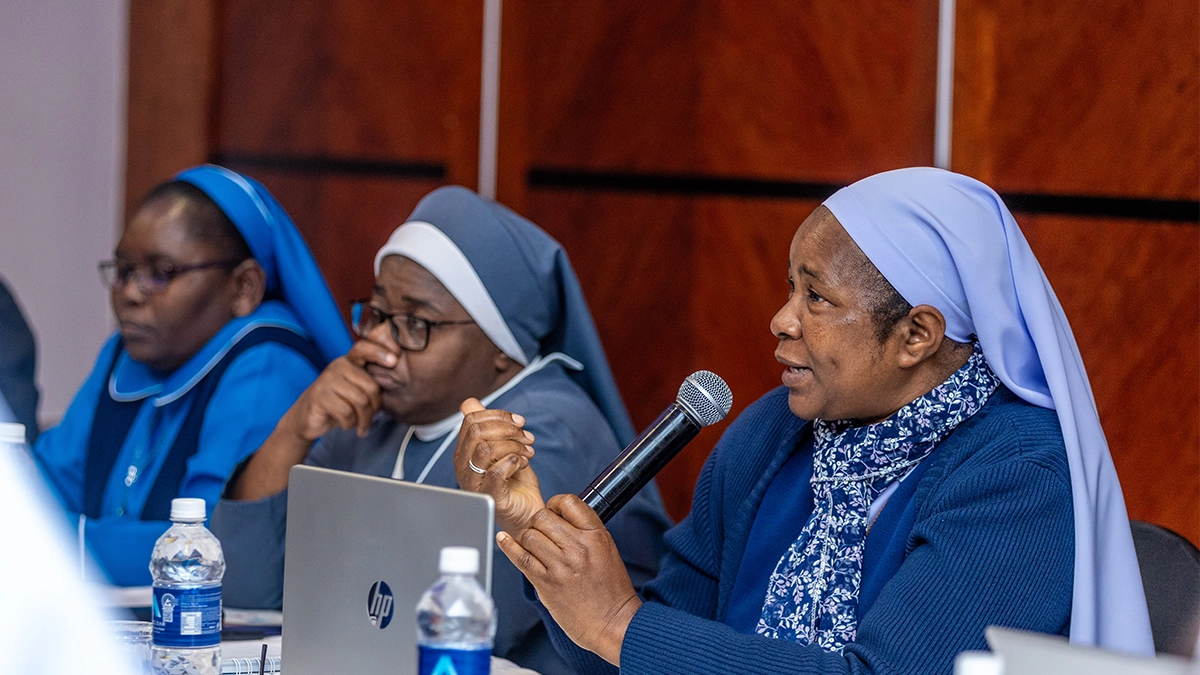
A panel session during the Summit
Throughout the summit, sessions and breakout discussions tackled urgent questions:
- How do we measure performance in a hybrid workplace?
- Can we design cultures that breed both trust and innovation?
- What does employee wellbeing mean in 2025?
- How do we leverage the strengths of four working generations without conflict?
Panel discussions examined culture as strategy, the rise of coaching for productivity, and performance management in times of change.
Jour 2
Day 2 shifted the lens to employee wellbeing and intergenerational collaboration, stressing that the future belongs to organisations that choose both people and performance, not one at the expense of the other.
Dr. Susan Koech, Deputy Governor of the Central Bank of Kenya, emphasized that today’s organisations are built on a foundation of generational diversity, an asset often overlooked.
“Our organisations are diverse,” she said. “They are made up of five generations, each bringing distinct knowledge, strengths, and creative potential. This is the greatest untapped asset of our time.”
Dr. Koech urged leaders to move beyond transactional HR and embrace transformational leadership that harmonizes performance with well-being.
“Technology is expanding at a neck-breaking speed, but people remain at the heart of these changes,” she noted.
Dr. Koech called for inclusive leadership that values every voice, promotes lifelong learning, fosters open communication, and builds cultures of trust. By aligning purpose, people, and performance, organisations can unlock the full potential of their diverse teams.
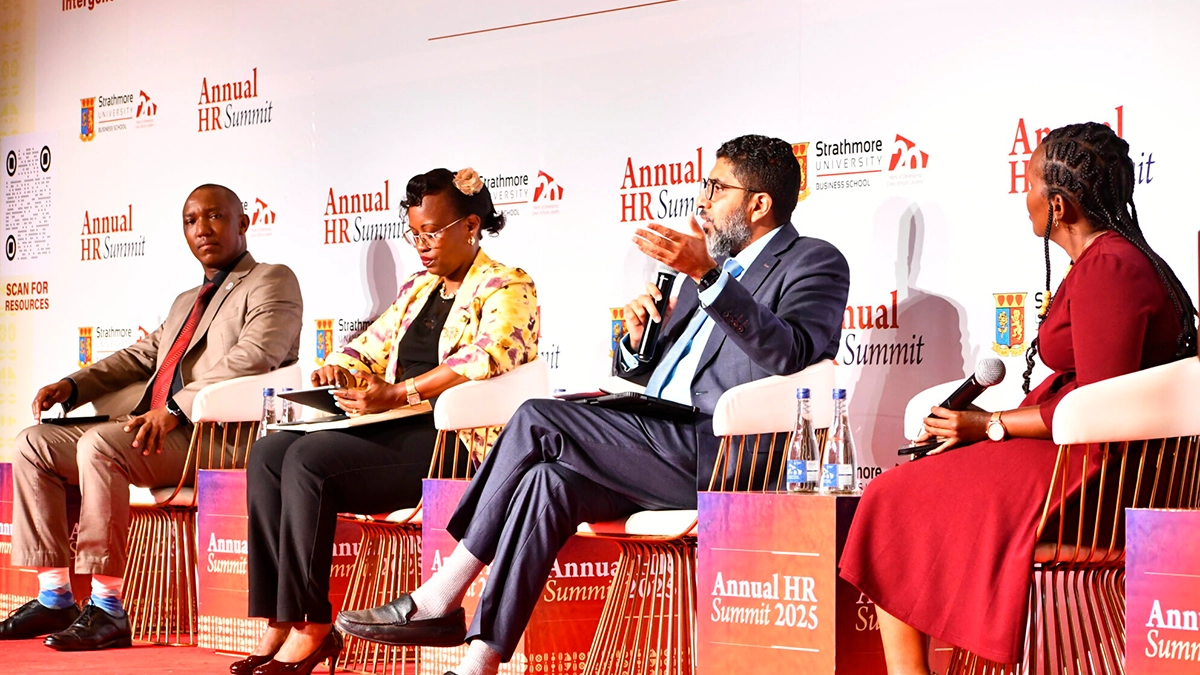
From right: Paul Russo, Group Chief Executive Officer, KCB Group, Justine Kosgei, CEO & Principal Officer, AAR Insurance, Rita Kavashe, Chair of the Board & Managing Director, Isuzu East Africa, and Moderator, Dr. Francis Kangure, HR Consultant & Adjunct Post-doctoral Fellow
One of the summit’s strategic highlights was the CEO Perspective session, where top executives; Paul Russo, Group Chief Executive Officer, KCB Group, Rita Kavashe, Chair of the Board & Managing Director, Isuzu East Africa and Justine Kosgei, CEO & Principal Officer, AAR Insurance, convened to share insights on aligning business goals with people strategies.
Framed around the intersection of leadership, talent, and growth, this high-level dialogue brought a sharp focus to how CEOs view human capital as the cornerstone of competitive advantage. The session spotlighted the evolving role of leaders in building purpose-driven cultures, embracing agility, and cultivating high-performance teams in the face of technological disruption and generational change.
With practical examples and forward-looking strategies, the CEOs shared how investing in people, through trust, clarity, learning, and inclusive culture, is no longer optional but essential.
Article written by Stephen Wakhu
This article was adapted from Strathmore University Website on 21 July 2025, 15:56
Partagez cette histoire, choisissez votre plateforme !
Votre voyage vers l'excellence commerciale commence ici. Abonnez-vous dès aujourd'hui et soyez à la pointe de l'innovation et du leadership.





 English (United States)
  English (UK)
  French