

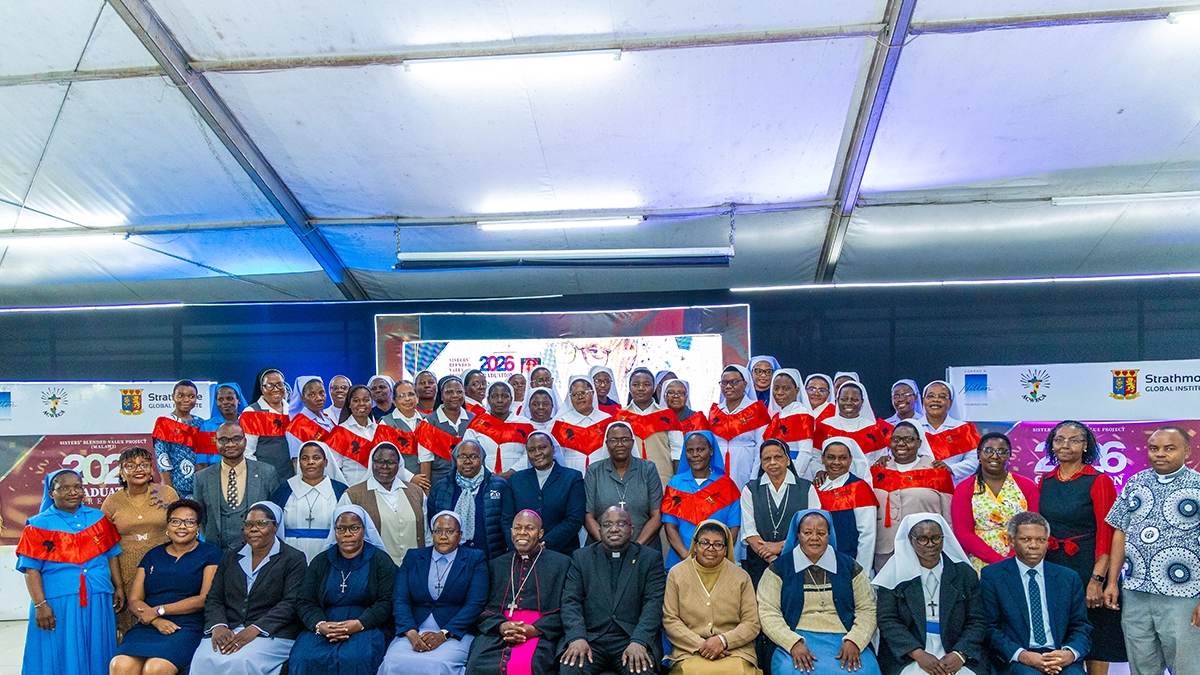
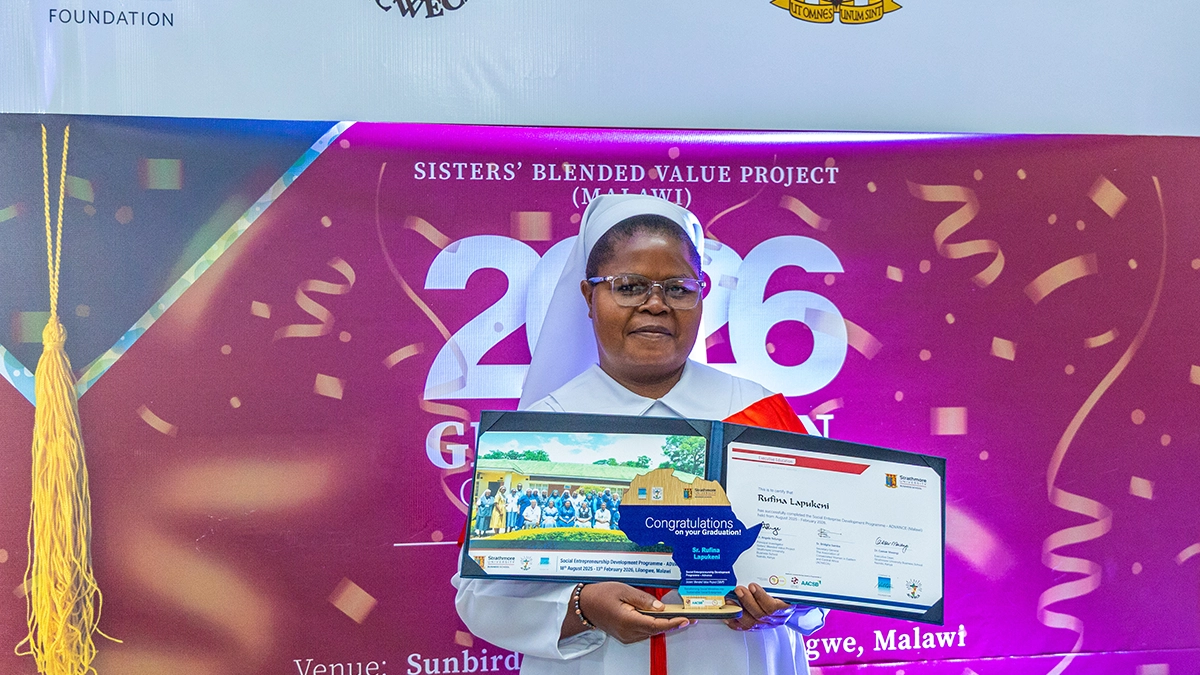
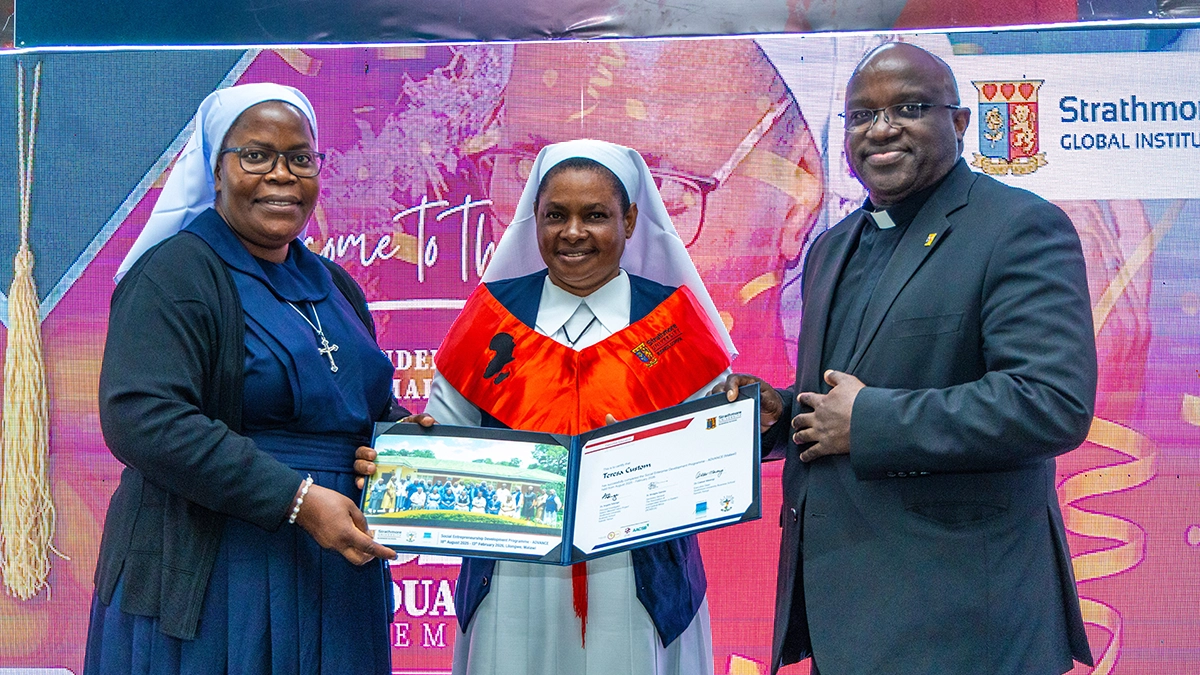
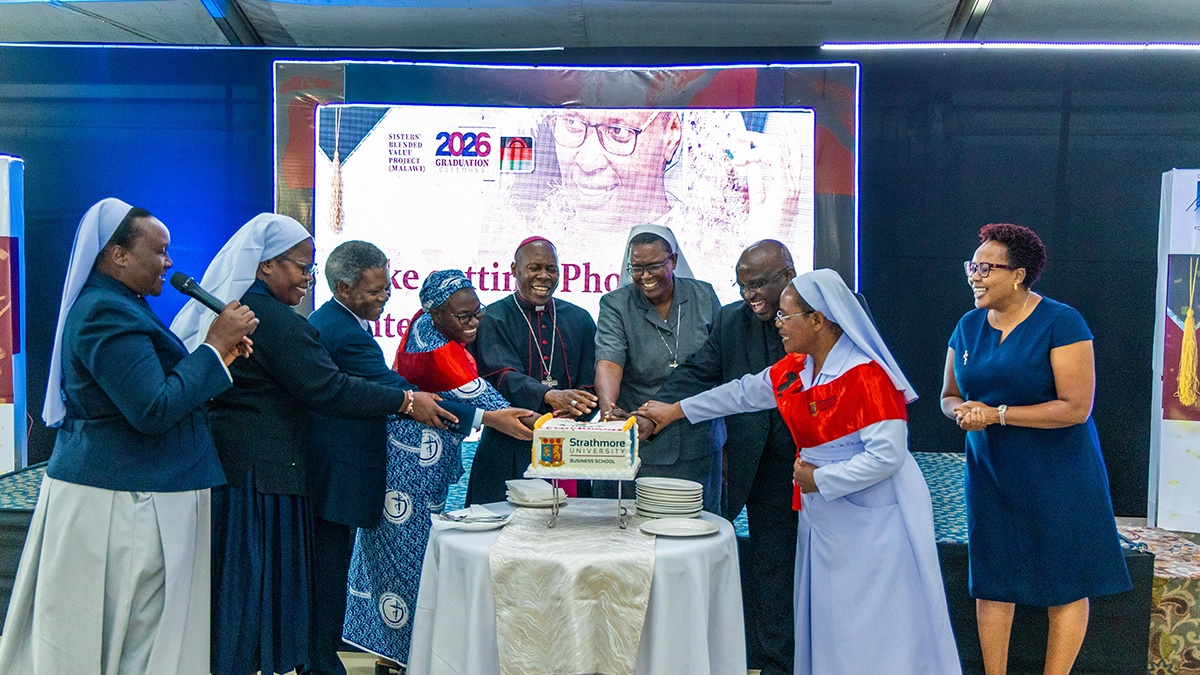
More than a year into its implementation in Malawi, the Sisters’ Blended Value Project (SBVP) is equipping Catholic sisters with the skills, knowledge and networks to strengthen their social ministries and drive greater impact in the communities they serve.
Implemented by Strathmore Business School in collaboration with the Association of Consecrated Women in Eastern and Central Africa (ACWECA), SBVP entered Malawi with a focus on strengthening the sustainability of sister-led social ministries through social entrepreneurship, institutional capacity building, financial management and market readiness.
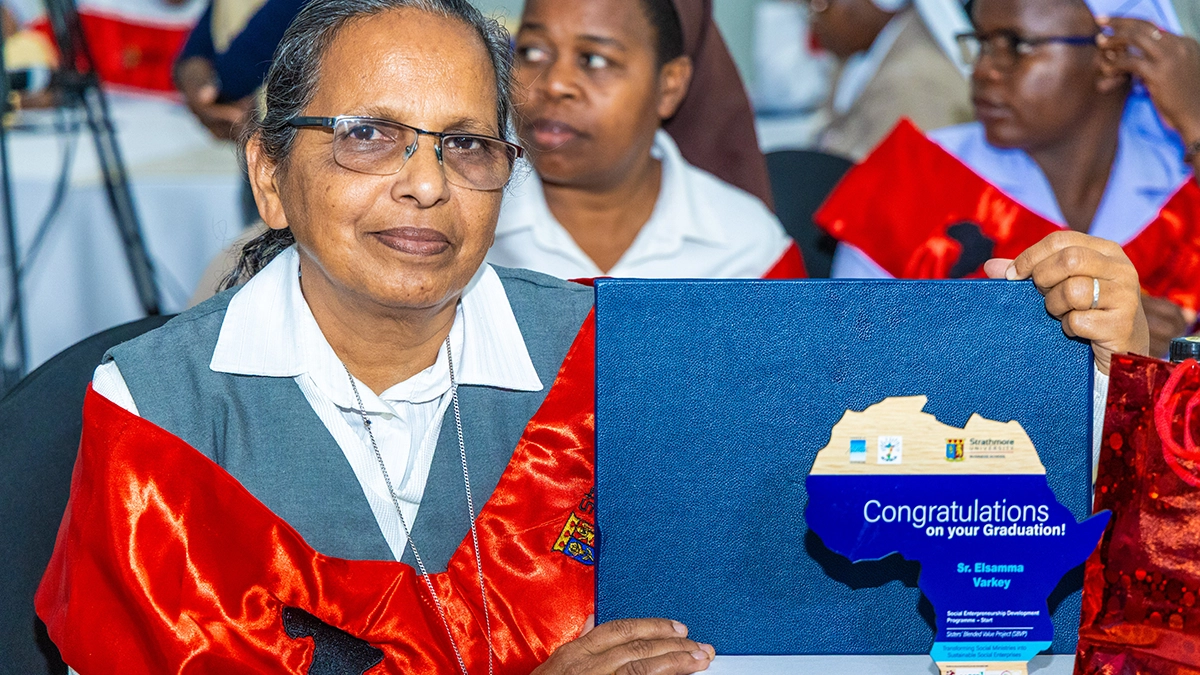
Over the first year and beyond, 39 Catholic sisters from 13 congregations have been supported and trained through the Social Entrepreneurship Development Programme (SEDP), equipping them with practical capabilities to develop and manage initiatives that can generate sustainable social and economic value.
The programme reflects a growing shift in how social ministries can respond to community needs – moving beyond traditional charitable approaches towards models that also promote empowerment, self-reliance and long-term sustainability.
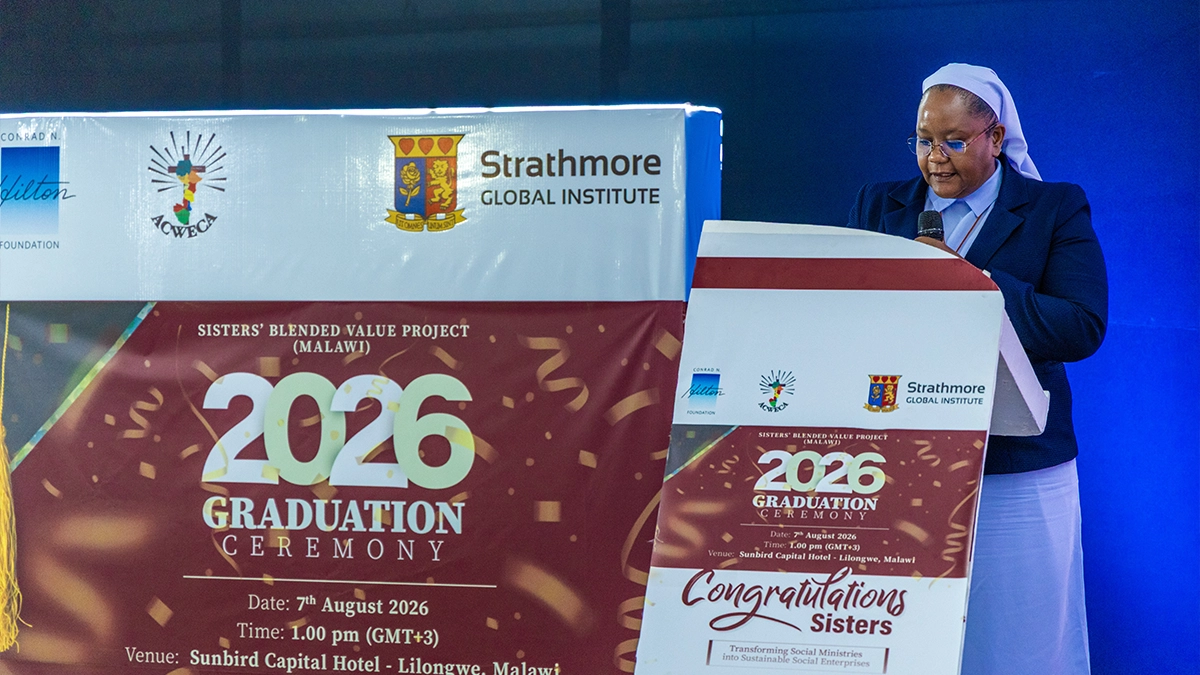
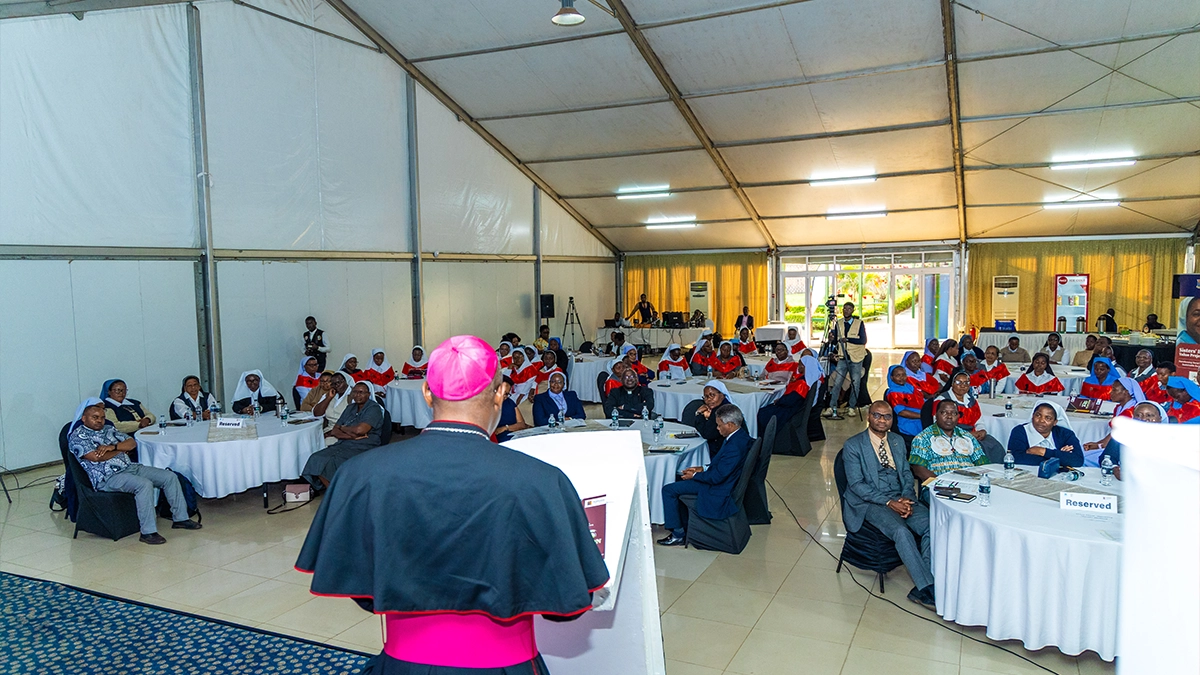
This shift was highlighted by Bishop Martin Anwel Mtumbuka, Bishop of the Catholic Diocese of Karonga and President of the Malawi Conference of Catholic Bishops (MCCB), during the SBVP Annual Social Entrepreneurship and SME Conference and Expo in Lilongwe.
Speaking to the sisters, Bishop Mtumbuka acknowledged the longstanding contribution of religious congregations to vulnerable and marginalised communities through education, healthcare, pastoral ministry and other social services.
He particularly welcomed the growing emphasis on social and economic empowerment.
“Besides just giving them bread, now we are also helping them to look after themselves,” Bishop Mtumbuka said, recognising the importance of equipping communities with the capacity to become more self-reliant.
His message speaks to the evolving role of Catholic social ministries in an evolving development landscape. For decades, sisters have been at the forefront of responding to community needs, often providing essential services where public and other institutions have had limited reach. However, the long-term sustainability of this work requires approaches that strengthen both the services provided and communities’ capacity to become more self-reliant.
For SBVP, this principle is central to its approach.
Through SEDP, sisters in Malawi have been equipped with knowledge and practical skills in entrepreneurship, leadership, financial management, business development and other areas critical to strengthening social enterprises.
The training is designed to help sisters manage existing initiatives more effectively and identify opportunities for their social ministries to generate sustainable economic value. In doing so, the sisters have strengthened their ability to continue responding to pressing community needs over the long term.
Bishop Mtumbuka also highlighted the changing financial environment facing religious congregations, particularly as traditional sources of external support become less dependable.
He encouraged congregations to strengthen their capacity for self-reliance and to manage their resources responsibly. His Grace, Bishop Mtumbuka, also cautioned against allowing financial resources to become the measure of the Church’s success.
“Our credibility as a Church depends on our faith,” he said.
For the sisters, this presents an important balance: building financially and institutionally sustainable ministries while ensuring that their work remains rooted in their Catholic identity and charisms.
Bishop Mtumbuka’s message reinforces a central principle of SBVP: enterprise is a means of strengthening mission, not a replacement for it.
As sisters develop businesses, strengthen institutions, build partnerships and explore new markets, the ultimate purpose remains the transformation of lives and communities.
The Bishop further challenged the sisters to maintain a strong spiritual foundation amid their growing responsibilities. He urged them to balance their work and projects with prayer and a continuing relationship with God.
“Don’t lose your soul, sister,” he cautioned, reminding the sisters that their social ministries derive their distinctive character from their identity as women consecrated to God.
This balance between mission and sustainability, faith and enterprise, service and self-reliance has characterised SBVP’s growing presence in Malawi.
More than a year into the programme’s journey, sisters are increasingly equipped to view their ministries not only as charitable activities but also as platforms for creating sustainable solutions, strengthening livelihoods, and responding to changing community needs.
The journey also reflects the wider contribution of Catholic sisters to Malawi’s development. Through schools, healthcare facilities, community initiatives, pastoral ministries and social enterprises, sisters continue to serve communities, particularly those facing vulnerability and exclusion.
SBVP seeks to strengthen this contribution by supporting sisters to build the institutional and entrepreneurial capabilities required to sustain their work and expand their potential for community impact.
The 39 sisters trained through SEDP represent an important foundation for this journey in Malawi. As they return to their congregations and ministries, the skills gained through the programme provide opportunities to strengthen existing initiatives, explore new enterprises, build partnerships and develop more sustainable approaches to serving their communities.
For the sisters, the journey ahead is to translate this knowledge into action. The journey ahead is founded in building ministries that are financially resilient, socially responsive and firmly rooted in faith.
Article by Alex Okoth Odhiambo
Partagez cette histoire, choisissez votre plateforme !
Votre voyage vers l'excellence commerciale commence ici. Abonnez-vous dès aujourd'hui et soyez à la pointe de l'innovation et du leadership.


Fondation Conrad N. Hilton
La Fondation Conrad N. Hilton envisage un monde dans lequel l'amélioration de la condition humaine est un objectif commun et durable. “Aimez-vous les uns les autres, car c'est là toute la loi”, a écrit Conrad Hilton dans son testament. Les peuples du monde “méritent d'être aimés et encouragés - jamais d'être abandonnés à leur solitude dans la pauvreté et l'obscurité”. Telle est notre détermination.







 English (United States)
  English (UK)
  French