


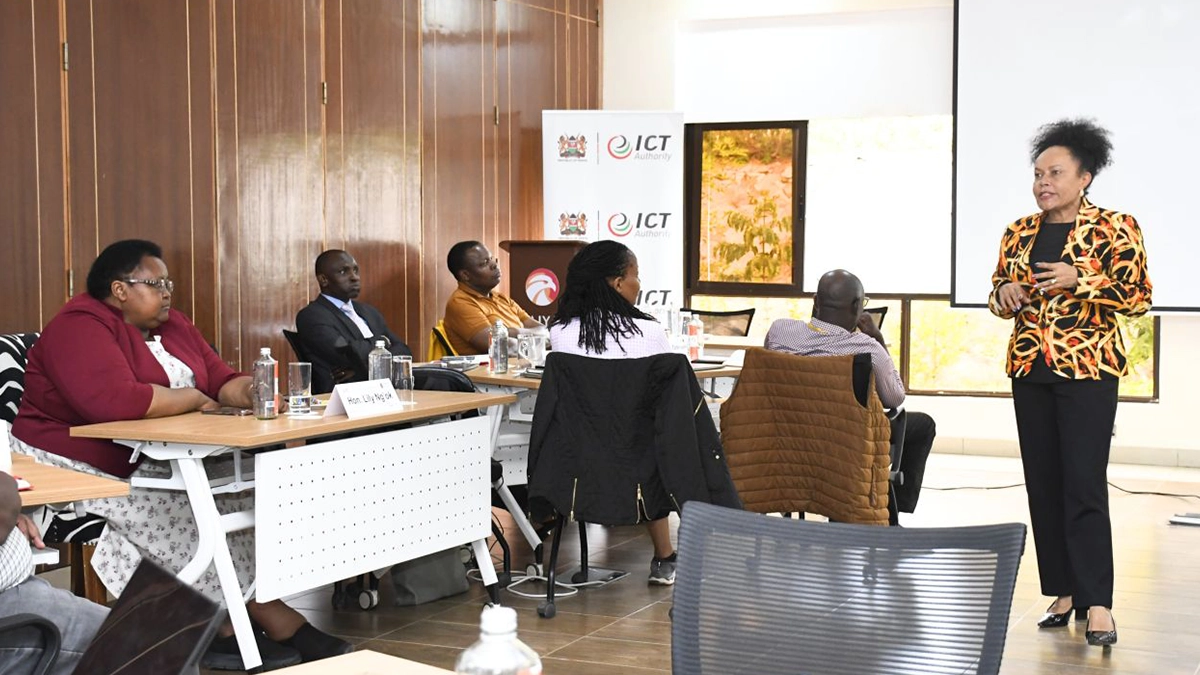


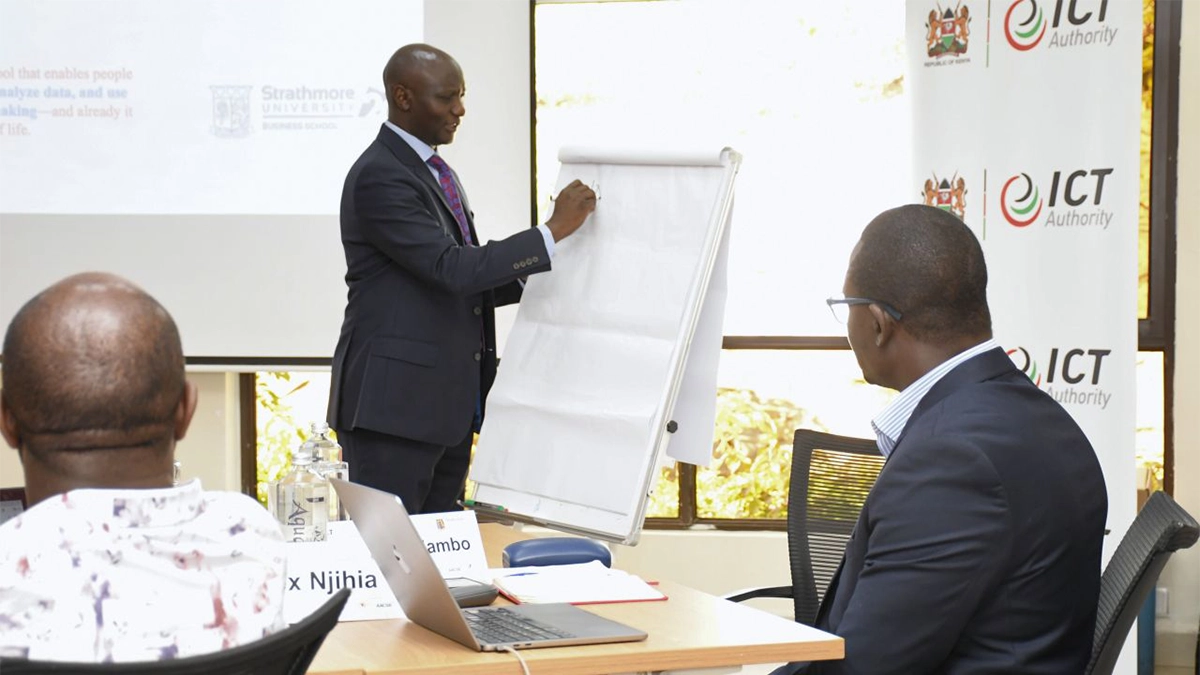
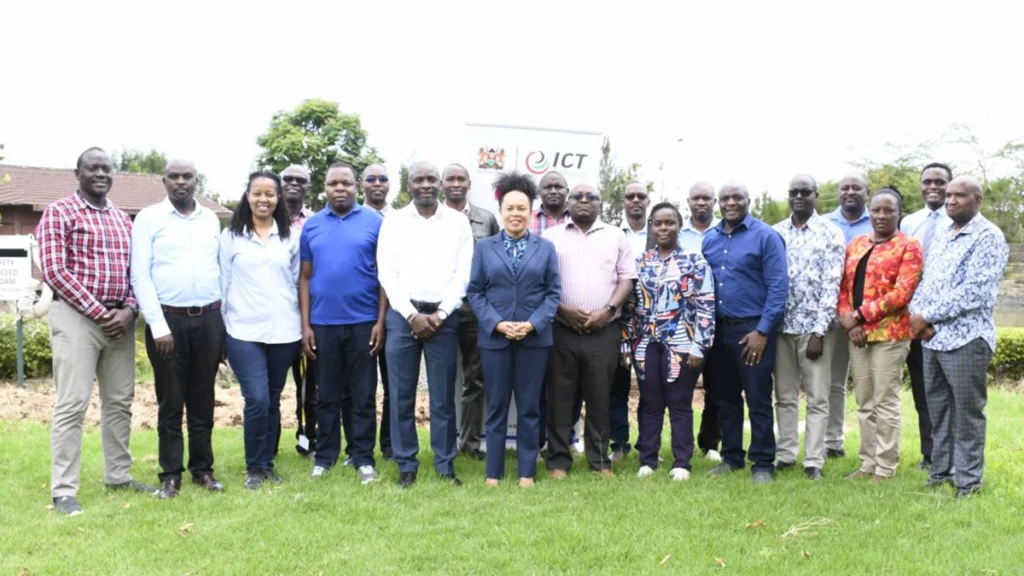
Last week, we trained Directors from the ICT Authority in a Customized Programme dubbed the Strategic Leadership for Sustainable Transformation Programme. The programme brought together reflective conversations on leadership, governance, strategy, and emerging technologies, offering participants an opportunity to deepen their understanding of the leadership competencies needed to navigate complex public-sector environments.
The programme opened with thought-provoking sessions focused on leadership, personality, and organizational culture. Facilitated by Joan Gitahi, the morning session explored Leveraging Personality Insights to Lead Transformative Teams through the Clarity 4D assessment. Directors reflected on their individual personality profiles, examining how behavioral tendencies influence leadership styles, decision-making, and workplace dynamics.
In the afternoon, Caesar Mwangi led an engaging session titled High Performance Harmony: Aligning Culture and Trust to Strategic Success. The discussion emphasized how leadership behaviors shape organizational culture and how culture ultimately determines whether strategy succeeds or fails. Drawing on the film The Devil Wears Prada, participants were challenged to cultivate high-performing environments that inspire excellence without fostering fear-based cultures.
The day also featured a virtual address from John Tanui, who encouraged the directors to champion ethical leadership and remain committed to transformation within Kenya’s public sector institutions. The day concluded with reflections on values-driven leadership and an invitation for continued engagement between the ICT Authority leadership and the Strathmore community.
Day two of the engagement shifted the focus toward governance, collaboration, and policy execution. Facilitated by James Mburu, the sessions guided directors through discussions on how clarity of roles, shared responsibility, and strong collaboration frameworks can enhance institutional performance.
Participants explored the critical interface between policy formulation and public service delivery, reflecting on the responsibility of leaders to ensure that strategic decisions translate into tangible outcomes for citizens. Directors also examined how leadership can influence policy reform while navigating the complex political and institutional dynamics that characterize public sector environments.
A message that resonated strongly with participants was Mr. Mburu’s reflection that “it is better to do the right thing—even if it takes longer—because it is still the right thing to do.” As conversations deepened, participants contributed candid perspectives, creating a vibrant learning environment centered on ethical leadership and meaningful public sector transformation.
On the third day, Geoffrey Peter Otieno facilitated sessions on the theme “Architecting Resilience: Strategic Design Through Systems Thinking.” The discussions introduced directors to the principles of systems thinking and how leaders can design resilient strategies within complex organizational environments.
Drawing from practical leadership experiences, Dr. Otieno encouraged participants to view institutional challenges holistically by examining how interconnected systems shape decision-making and long-term outcomes. A particularly engaging segment focused on the application of the TOWS Matrix as a practical framework for strengthening strategic thinking, particularly when making critical decisions under pressure.
The highly interactive sessions saw directors actively contribute insights and reflections, demonstrating increased engagement and collaboration as the programme deepened discussions on leadership, strategy, and institutional resilience.
The fourth day focused on the rapidly evolving landscape of digital technologies and their implications for leadership and governance. Facilitated by John Olukuru, the sessions examined how organizations can harness artificial intelligence and data analytics to drive innovation and improve decision-making.
Under the session Intelligent Transformation: Integrating AI into the Modern Enterprise, participants explored how artificial intelligence is reshaping organizational operations and strategic decision-making. This was followed by The AI Implementation Roadmap: Delivering Value Beyond the Hype, which examined practical approaches for responsibly integrating AI capabilities while ensuring measurable organizational value.
Afternoon discussions explored data-driven innovation and digital resilience. In Informed Innovation: Driving Change Through Big Data Insights, directors examined how analytics can support strategic decision-making. The final session, Cyber Vanguard: Strategic Oversight and Digital Defense Framework, highlighted the growing importance of cybersecurity leadership in protecting digital ecosystems.
To enrich discussions, Dr. Olukuru incorporated curated insights from global media outlets such as CNN and The Wall Street Journal, alongside examples of Kenyan student-led AI innovations. These perspectives enabled participants to examine artificial intelligence from both global and local lenses, sparking dynamic dialogue on the opportunities and risks presented by rapidly advancing technologies.
The final day of the programme focused on translating the week’s learning into practical leadership action. Facilitated by Kellen Kariuki, the session titled Leadership in Practice provided participants with an opportunity to engage in collaborative group discussions.
Working in teams, directors identified key organizational challenges and proposed strategic solutions to strengthen institutional performance within the ICT Authority. The presentations that followed revealed candid reflections on workplace realities, including organizational culture, internal collaboration, and the leadership behaviors required to foster high-performing teams.
The open and lively exchanges demonstrated a growing sense of trust and transparency among participants, with peers challenging one another’s perspectives while collectively exploring pathways to sustainable change.
As the directors departed Nanyuki, the engagement marked not only the culmination of an intensive learning journey but also the beginning of renewed commitment to leadership, governance, strategy, and institutional transformation within Kenya’s public sector.
Article de Juliet Hinga
Partagez cette histoire, choisissez votre plateforme !
Votre voyage vers l'excellence commerciale commence ici. Abonnez-vous dès aujourd'hui et soyez à la pointe de l'innovation et du leadership.








 English (United States)
  English (UK)
  French