

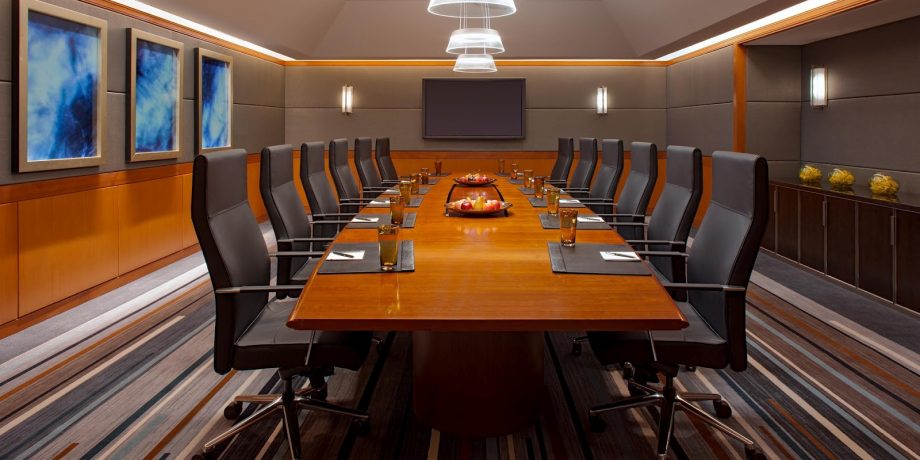
Corporate Board Directors face the complex task of aligning the interests of the board, management, shareholders, and stakeholders. Understanding and adhering to good governance principles can help them in their mission to provide oversight and foresight for the corporation. Transparency and accountability are also imperative to the success of the Board’s mission.
Following the unprecedented challenges brought on by the COVID-19 pandemic, organizations have had to learn to pivot quickly to remain relevant. As organizations find themselves at a crossroads following the pandemic it becomes even more pressing for Board members to work with Management to give direction and guidance after assessing the new risks that have come into play. The question also becomes to what extent did the company put in risk mitigation and crisis management strategies before the crisis and how has that built the resilience and agility of the company? What systems, structures, and processes were already in place to help the Board to obtain new information in a timely manner that can guide decision making?
A crisis scenario can be a test of resilience for the leaders of any organization. Senior Executives and Directors of an organization in crisis are subjected to intense scrutiny and pressure from stakeholders, the media, regulators, and legal representatives. If the Directors do not have access to sufficient information and a good command of the situation at hand it becomes difficult for the Board to be confident in the decisions that they make.
The relationships between Boards and Senior Management can also become strained as both groups have to make difficult decisions based on evidence and good judgment. Challenging discussions with management are integral to good corporate governance. Although Board members are expected to steer the organization, there are some responsibilities that may be deemed as falling under Management’s purview. However, the right balance should be maintained in the thought partnership between Board Members and Management to help foster understanding.
During the SBS Webinar Session entitled, ‘The Changing Role of Directors During this Unprecedented Time,’ Carol Musyoka, an SBS Faculty member and panelist reflected on her experience sitting on twenty boards in both the private and public sectors. She remarked that “Two kinds of board protocols have emerged for me, one where the Board pushes Management and drives the agenda and one where Management drives the agenda and pulls the Board. There is more tension when the Board is pushing the agenda. There is a great symbiotic relationship happening. At this time there is a need for the second type of framework where the Board guides at a helicopter level and management do what they need to be doing.’’
Carol also mentioned that another important priority for the Board during a crisis situation is ensuring that Management keeps an eye on what the look back reputation will be for the organization after the crisis. Another panelist during the session, John Ulanga further elaborated on this point when he asserted that the protection of staff during a crisis is essential and that without staff businesses cannot survive.
There is the need for Directors and Senior Management to have candid conversations and be able to bounce ideas off larger groups of people so that other viewpoints and experiences are taken into consideration in order to calibrate the right response to a difficult situation.
Risk management also comes to the forefront during a crisis situation. Risk management is an increasingly challenging part of Board decision-making, more so during such unprecedented times. There is a lot at stake with poor risk management practices with the impact being felt from top to bottom and transcending across the board, management, shareholders, and stakeholders. When it comes to risk management, Boards play an oversight role. Though not directly involved in managing risk, Boards can fulfill their oversight responsibility by developing policies and procedures around risk management and following up with the Senior Management on the implementation and proper functioning of these policies.
Strathmore University Business School recently hosted a custom training for the Group Directors of the Rwandan bank Cogebanque (Compagnie Generale de Banque). Banks as financial institutions play a central role in their respective countries’ economies. Besides dealing with the relationship between management and different shareholders they also deal with depositors. One of the topics included in the training was Board dynamics which explored the role of the Board as an oversight organ of the company and the role it plays in the company’s growth. The training includes topics such as how to get results from the Board and Committees, how to make the board run more effectively, how to enhance communication and how the board can become more engaged in the organization’s governance process.
The Customised Solutions Division of Executive Education is very proud of its ability to build on the expertise within Strathmore University Business School in terms of bespoke developmental programmes and customised consulting solutions for our clients. We offer a range of customised solutions that focus on providing clients with tailored and bespoke programmes and consulting solutions to ensure that we address their unique and specific needs.
Article by Shailja Sharma, Executive Fellow
Partagez cette histoire, choisissez votre plateforme !
Votre voyage vers l'excellence commerciale commence ici. Abonnez-vous dès aujourd'hui et soyez à la pointe de l'innovation et du leadership.








 English (United States)
  English (UK)
  French