

During the 2026 Sustaining Impact Summit 2026, SUNSEP HUB collaborated with the African Social Enterprise Workshop (ASEW) to deliver a panel discussion on ‘Navigating systems’ and two masterclasses, focusing on critical areas in design thinking, business models, and metacognition among social entrepreneurs.
‘Understanding a system is one thing. Moving through it is another’.
That distinction framed the contribution of the Strathmore University Nonprofits, Social Enterprises and Philanthropy (SUNSEP) Hub to the Sustaining Impact Summit 2026, convened in collaboration with the African Social Enterprise Workshop (ASEW) from 27 to 29 August under the theme Systems that Sustain: Building Impact that Lasts in Africa. Across a panel and two masterclasses, the question remained the same: how do social enterprises keep moving when funding is limited, policy is unclear, markets are shifting, and growth pressures pull in different directions?
The panel: Navigating Systems for Sustainability
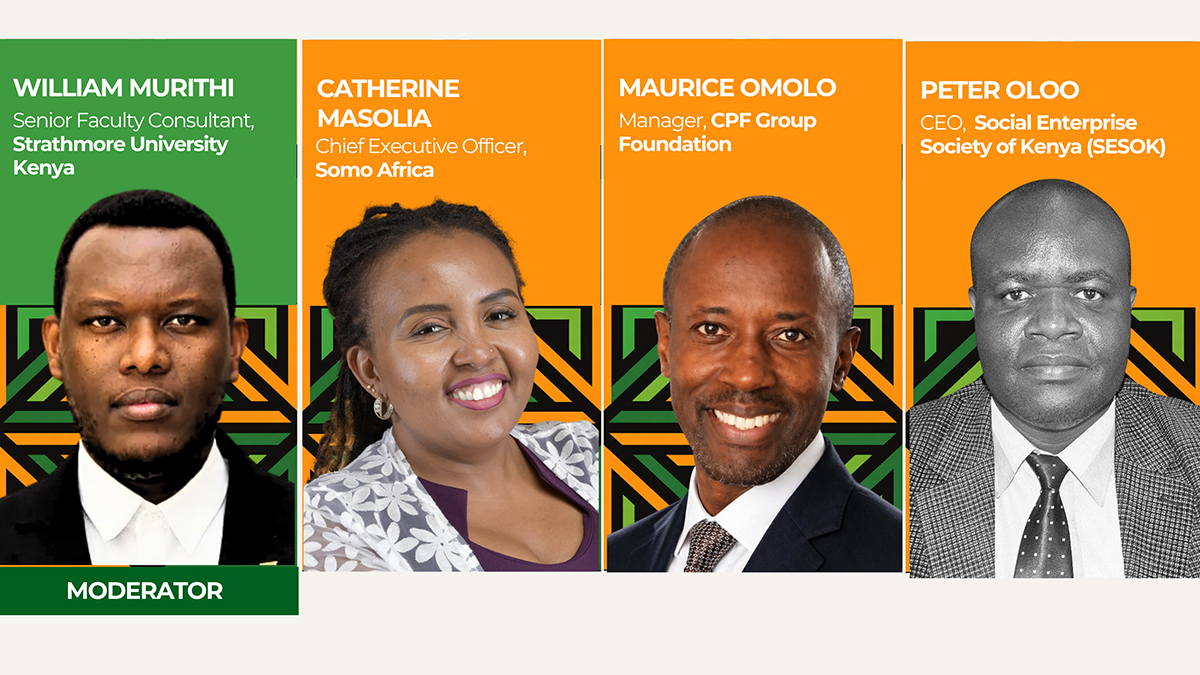
Moderated by Dr William Murithi, Senior Faculty at Strathmore University and lead of the SUNSEP Hub, Panel Session 2 brought together three voices from different corners of Kenya’s social enterprise ecosystem: an enterprise-support organisation, a corporate foundation and a sector membership body. Each described what sustainable navigation looks like in practice. The key lessons from the panel session were
- Scale without losing context
Catherine Masolia, CEO of Somo Africa, cautioned against a version of growth that strips out the very things that made an intervention work. Her message was that scaling and standardising are not the same thing.
“As we [social entrepreneurs] navigate systems, we must not forget who we are. We must build within the context of our communities, not away from them.”
She added, “As we [social entrepreneurs] scale, we must standardise for quality without standardising away context.”
- Finance the institution, not just the project.
Maurice Omolo, Manager at the CPF Group Foundation, spoke from the funder’s side of the table. He argued that Africa’s reliance on short-cycle project grants leaves organisations perpetually restarting, and that philanthropy should shift toward financing the institutional systems that make lasting impact possible. He suggested that “We need to move from short-term project financing to financing the institutional systems that make sustainable impact possible.”
On partnerships, he drew a line between collaborations that are simply convenient and those that are built on what each party uniquely brings. He stated that, “We must move from partnerships of convenience to partnerships of complementarity, unlocking together what no single organisation can achieve alone.”
- Social Enterprises need recognition, supporting policies and strategic collaboration to scale
Peter Oloo, CEO of the Social Enterprise Society of Kenya (SESOK), pointed to a more basic barrier: social enterprises are still not formally recognised in Kenya’s policy and legal framework, and that gap sits upstream of almost every other challenge, from investment to growth. He stated, “One of the biggest barriers facing social enterprises is recognition. If the policy and legal framework does not recognise them, access to investment and growth becomes difficult.”
From his argument, it was clear that social enterprises needed support; he remarked that “There is nothing we [social enterprises] can achieve alone. Social enterprise growth requires strategic partnerships built around shared value, inclusive finance, climate resilience, youth employment and digital transformation.”
Participants left the session with three practical threads: how to position for long-term capital, how to respond to market and policy realities as they are rather than as one wishes them to be, and how to adapt without losing sight of the vision that started the work.
Masterclasses: Turning Insight into Practice
Two in-person masterclasses at Strathmore University on 28 August carried the panel’s ideas into hands-on work.
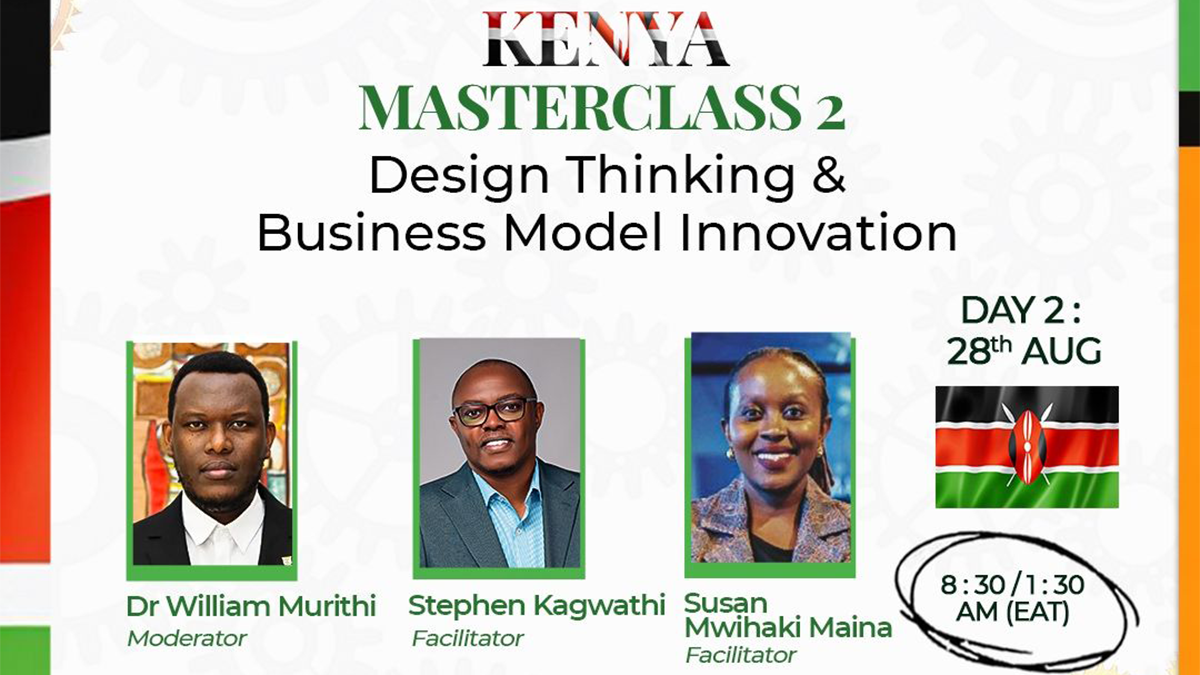
Design Thinking & Business Model Innovation, facilitated by Stephen Kagwathi and John Ngila of the Social Entrepreneurship & Innovation Hub (SEIH), helped participants translate insight into practical, human-centred and resilient business models.
Social Ventures’ Growth, Sustainability and the Metacognition of Social Entrepreneurs, delivered by Mwihaki Maina, drew on original empirical research conducted in Kenya, among the first studies to examine how metacognitive experience influences social enterprise sustainability, alongside qualitative data from more than 800 African founders documented through the African Founders Notebook. The finding was both clarifying and challenging: a founder’s self-awareness, reflective thinking and intuitive decision-making are not soft variables in the growth equation. They are the equation.
Why this Summit Matters to SUNSEP
The Summit sits squarely within SUNSEP’s mission to empower change agents through capacity building, research, knowledge sharing and sustainable funding. The Hub works across four pillars; nonprofits, social enterprises, philanthropy and a Social Innovation Fund, and the three days touched each of them: the panel brought a foundation, a social enterprise and a sector body into one conversation; the masterclasses delivered the kind of tailored capacity building SUNSEP offers year-round; and Peter Oloo’s call for legal recognition speaks directly to the Hub’s policy and advocacy work.
SUNSEP will continue to convene these conversations and to back them with training, research and partnerships that help social enterprises and nonprofits build organisations that outlast any single grant.
Sustainability is not only about building strong systems. It is also about learning how to navigate the systems you do not control.
Written by William Murithi, PhD, SUNSEP Hub Lead
To learn more about SUNSEP’s programmes or to get involved, visit the SUNSEP Hub or write to sunsep@strathmore.edu.
Partagez cette histoire, choisissez votre plateforme !
Votre voyage vers l'excellence commerciale commence ici. Abonnez-vous dès aujourd'hui et soyez à la pointe de l'innovation et du leadership.






 English (United States)
  English (UK)
  French