


Earlier this month, through the Water Governance and Innovation Hub, Strathmore University Business School (SBS) led the delivery of a transformative Asset Management Training Workshop in Siaya County, Kenya. This initiative formed part of the EcoRural Project, a strategic collaboration under the Water and Development Partnership Programme (WADP), to enhance ecological sustainability and resilience in rural water systems.
For Strathmore University, this training was more than a technical engagement. It was a direct expression of its commitment to service-oriented leadership, practical research application, and community-centered capacity building.
The workshop opened with remarks from Dr. Irene Ngunjiri, the Project Lead, Strathmore University, who welcomed over 40 participants from rural water service providers (WSPs), community-based organizations, and the Siaya County Government. Dr. Ngunjiri set the tone for the week by emphasizing the importance of “learning, unlearning, and rethinking how we sustain essential water infrastructure.”
Strathmore faculty and alumni supported facilitation, group work, documentation, and technical reflections throughout the training. The University’s role spans coordination, strategic learning design, and field-based knowledge exchange. “We believe in practical impact,” Dr. Ngunjiri shared. “This project speaks directly to our mission of research-driven solutions that empower society.”
Participants explored asset management as a technical discipline and a system of values, behaviors, and leadership decisions. Under the guidance of Prof. Assela Pathirana (IHE Delft) and supported by Strathmore’s team, participants gained insights into:
- Life cycle costing (LCC). Understanding that the biggest costs in infrastructure management come not from construction, but from long-term operations and maintenance.
- Reliability-centered maintenance (RCM). Shifting from reactive repairs to planned, predictive maintenance based on asset priority.
- Data tools. Leveraging low-cost technologies like Kobo Collect and Google Sheets to build asset inventories in rural settings.
Strathmore’s role ensured the translation of complex concepts into local, relatable frameworks, enabling participants from diverse technical backgrounds to actively contribute.
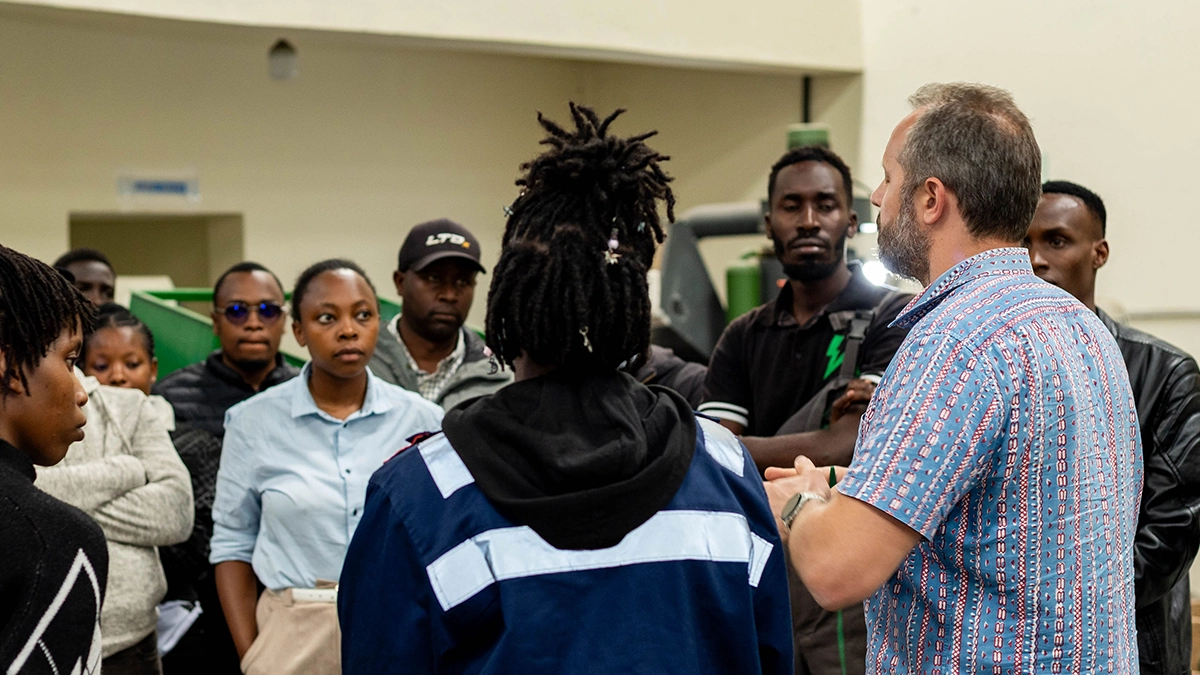
A key component of the training involved field visits to SIBO Water’s Asembo Bay Treatment Plant and the Sirembe and Ujimbe Community Water Projects. These visits allowed participants to map infrastructure, assess operational constraints, and propose tailored solutions.
Participants witnessed the consequences of deferred maintenance, broken meters, underperforming pumps, and revenue losses firsthand. Guided group discussions helped them craft asset improvement plans, many of which will inform future policy at the county level. One participant remarked, “We’re not just identifying problems; we’re building the skills to solve them ourselves.”
In line with Strathmore’s ethos of ethical leadership and integrity, the training also featured a powerful session led by Prof. Jacqueline Oduol, Siaya County’s CECM for Water, Environment & Natural Resources. Drawing on Stephen Covey’s “7 Habits of Highly Effective People,” Prof. Oduol invited participants, especially women leaders, to embrace purpose-driven governance and collaborative service. The session resonated deeply with the training’s emphasis on people-centered asset management, reminding attendees that systems need leaders and not just tools.
The EcoRural Asset Management Training clearly demonstrated Strathmore University’s commitment to practical, purpose-driven education. By bridging academic insight and community need, the university once again affirmed its position as a sustainable development partnership leader.
With knowledge, leadership, and shared vision, the training marked the beginning of a new chapter for rural water service delivery, one where communities are not just recipients, but co-creators of sustainable systems. “Nyalore Tumore – It is possible, it is doable.”
Article by Winnie Omamo
Share This Story, Choose Your Platform!
Your journey to business excellence starts here. Subscribe today and be at the forefront of innovation and leadership.





 English (United States)
  English (UK)
  French