



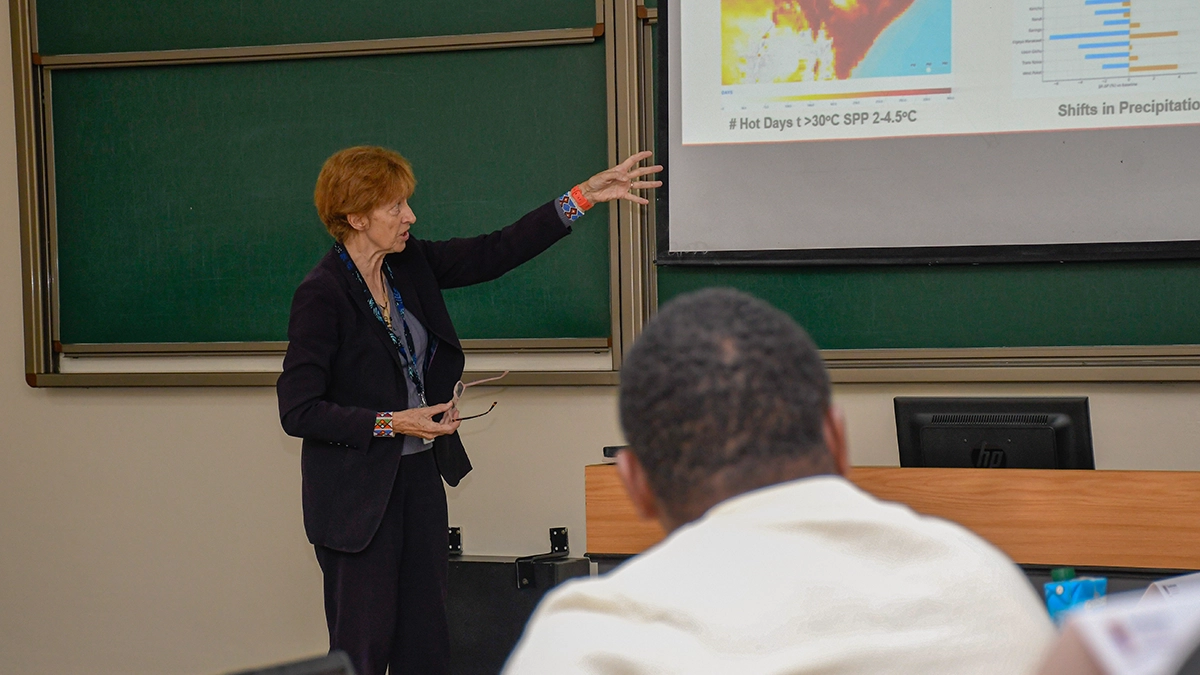
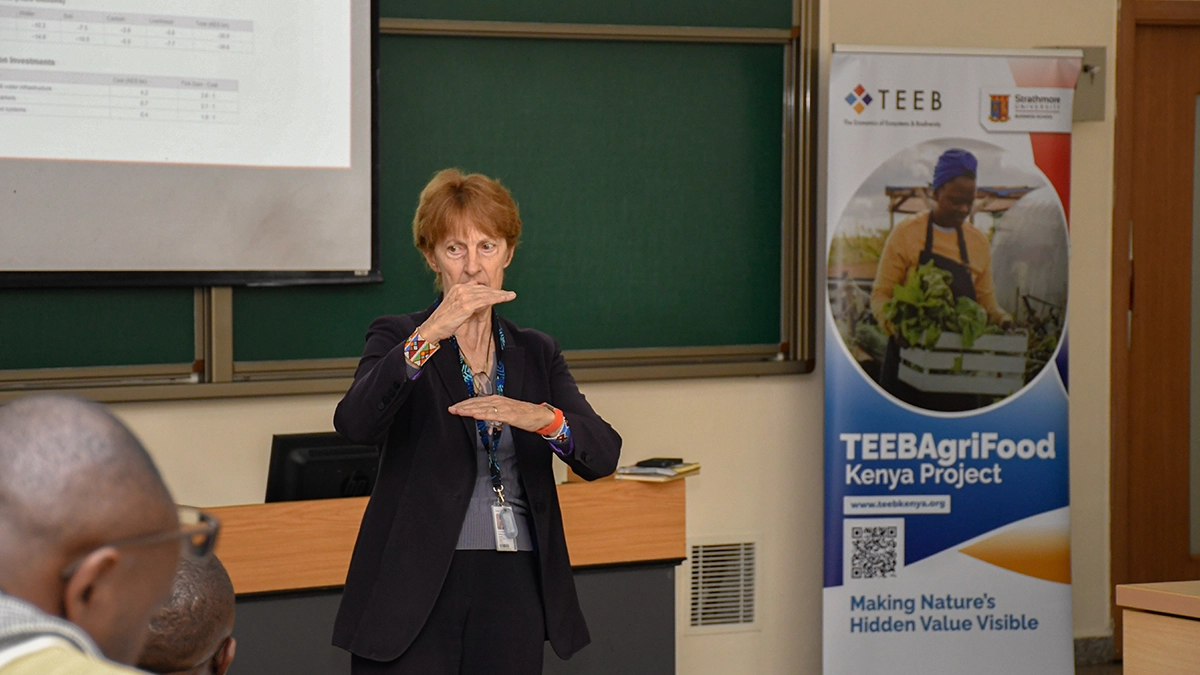



Earlier this month, the TEEBAgriFood Kenya Project convened senior policymakers from the National Government and the Council of Governors (CoG) for an intensive two-day training on True Value Accounting (TVA) and the TEEBAgriFood Evaluation Framework.
At a time when Kenya’s agri-food systems are facing increasing pressure from climate change, environmental degradation, and food insecurity, the training provided a timely opportunity to rethink how value is defined in agriculture. Moving beyond traditional measures such as yield and profit, the sessions introduced a more holistic approach, one that recognizes the interconnected importance of environmental health, human well-being, and long-term economic resilience.
The training brought together a diverse mix of stakeholders, including representatives from key ministries, Parliament, and leading research and regulatory institutions such as Kenya Institute for Public Policy Research and Analysis (KIPPRA), Kenya Agricultural and Livestock Research Organization (KARLO), Kenya Forest Research Institute (KEFRI), National Environment Management Authority (NEMA), and Kenya Wildlife Service (KWS). This multi-sectoral participation highlighted the critical need for coordinated cross-government action in transforming agri-food systems.
At the heart of the TEEBAgriFood Kenya Project is the recognition that policy is one of the most powerful levers for systems transformation. While farmers and markets play a critical role, it is policy that shapes incentives, guides investment decisions, and determines how natural resources are managed at scale. By embedding True Value Accounting into policy frameworks, governments can move beyond short-term, yield-focused approaches and instead promote decisions that balance productivity with sustainability, resilience, and social well-being. In this way, policy becomes the bridge between evidence and action, ensuring that insights from data and research translate into tangible, long-term impact across both national and county levels.
Through interactive and practical sessions, participants explored how True Value Accounting can help uncover hidden costs and benefits within food systems, providing a stronger evidence base for policy and investment decisions. The TEEBAgriFood Evaluation Framework was introduced as a practical tool to support this process, enabling policymakers to analyse trade-offs and design more balanced, future-focused interventions.
A key outcome of the training is the formation of a Policy Thematic Working Group, which will play a central role in translating the findings of the TEEBAgriFood study into actionable policy recommendations. The group is expected to support the integration of nature-positive approaches into both national and county-level planning frameworks.
As Kenya continues to navigate complex development challenges, strengthening the link between evidence and policy will be essential. Initiatives such as this training are helping to build the capacity, alignment, and momentum needed to drive meaningful change.
Ultimately, the shift toward nature-positive, evidence-driven agri-food systems is not just about improving productivity; it is about building resilience, safeguarding ecosystems, and ensuring long-term well-being for communities across the country.
Article by Juliet Hinga
Share This Story, Choose Your Platform!
Your journey to business excellence starts here. Subscribe today and be at the forefront of innovation and leadership.







 English (United States)
  English (UK)
  French