


January 10th, 2026, to January 10th, 2027, marks the special Franciscan jubilee year. This will be the culmination of 800 years since the death of St. Francis of Assisi. During this jubilee, the theme will be Active Charity. Religious Catholic sisters have long embraced this virtue and have been the epitome of charity worldwide. The Franciscan Missionary Sisters of Assisi, Zambia, are no different.
One of the oldest Catholic sister congregations in Zambia is the Franciscan Missionary Sisters of Assisi (FMSA). The FMSA sisters were founded in Assisi, Italy, in 1702. These missionary sisters arrived in Zambia in 1960 and settled in various regions, including Lusaka and the Copperbelt provinces. Initially focused on education, the congregation later expanded their work to include healthcare and care for orphans and the needy. This shift was in response to community challenges such as illness, poverty, and illiteracy. The sisters responded by building schools, hospitals, and providing outreach and care for HIV/AIDS patients. Today, the FMSA sisters continue their charitable work, adopting more sustainable approaches.
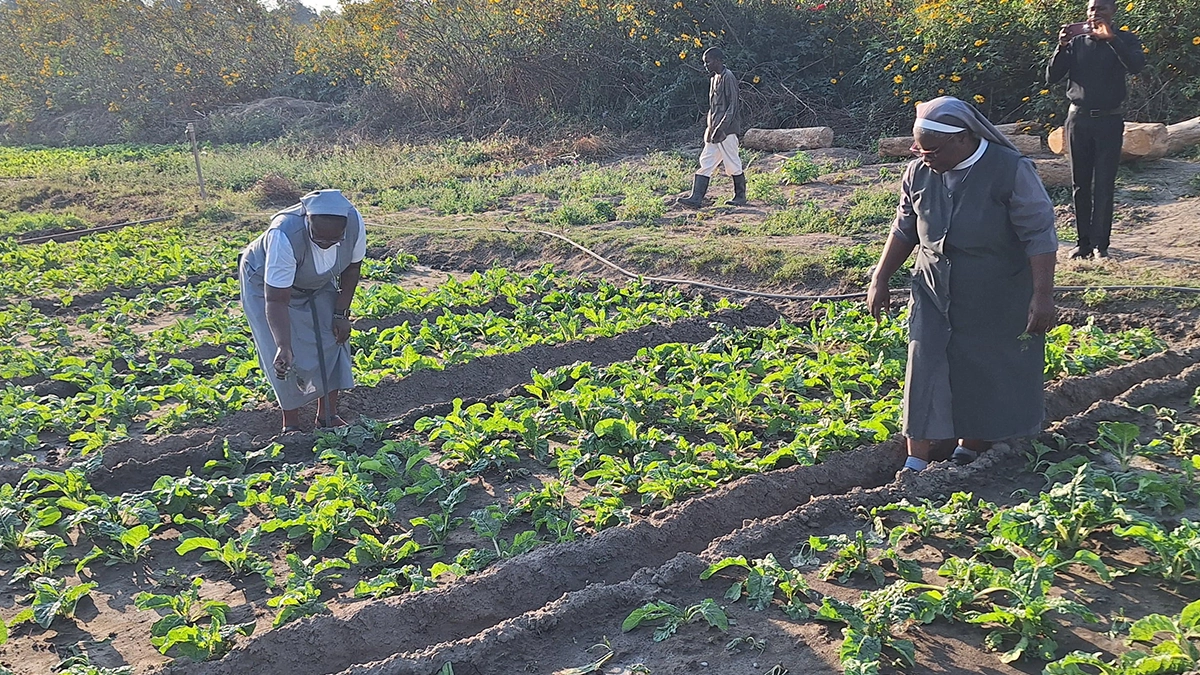
The FMSA has a community on the outskirts of Luanshya District in Zambia’s Copperbelt Province. Here, the sisters run Chibote Farm. At first glance, the farm appears to be an ordinary mixed-farming space. Yet behind its fields lies something more profound. Chibote has become a refuge for the sick, widows, orphans, and the poor. Among those who find shelter here are people living with leprosy, individuals often pushed to the margins by stigma and fear. At Chibote, they find acceptance and care. The sisters have committed themselves to helping these patients rebuild their lives and recover a sense of dignity.
Sr. Zulu, a graduate of the Sisters Blended Value Project (SBVP) Scale Programme in Zambia, explains that leprosy affects more than just the patient. “A leprosy patient becomes a burden to their family financially and emotionally, and there is a lot of stigma against them,” she says. When patients pass away, their spouses and children are often left in extreme poverty. Determined to break this cycle, the sisters offer support that restores dignity to both the patients and their families. During our interview, Sr. Zulu paused and asked, “How do we support them?” She reflected on the question, then proceeded to say, “We give them somewhere to stay. Many of those here are children of leprosy patients who died. They were born and raised here, with no connection to relatives. They don’t even know their roots.”
How did Chibote come about? The patients who were treated needed more than a place to stay. Those who passed away left behind dependents who could be exposed to the capitalistic economics of the modern day. The conviction to support the lepers led the congregation to transform the staff quarters left by the early FMSA missionaries into homes for the sick. But, over time, challenges arose in making this project sustainable. This gave rise to the Chibote dream. Rather than relying solely on charity, the sisters set up the project to support both the sisters and the beneficiaries. At the moment, the project supports 35 beneficiaries, 11 of whom are lepers.
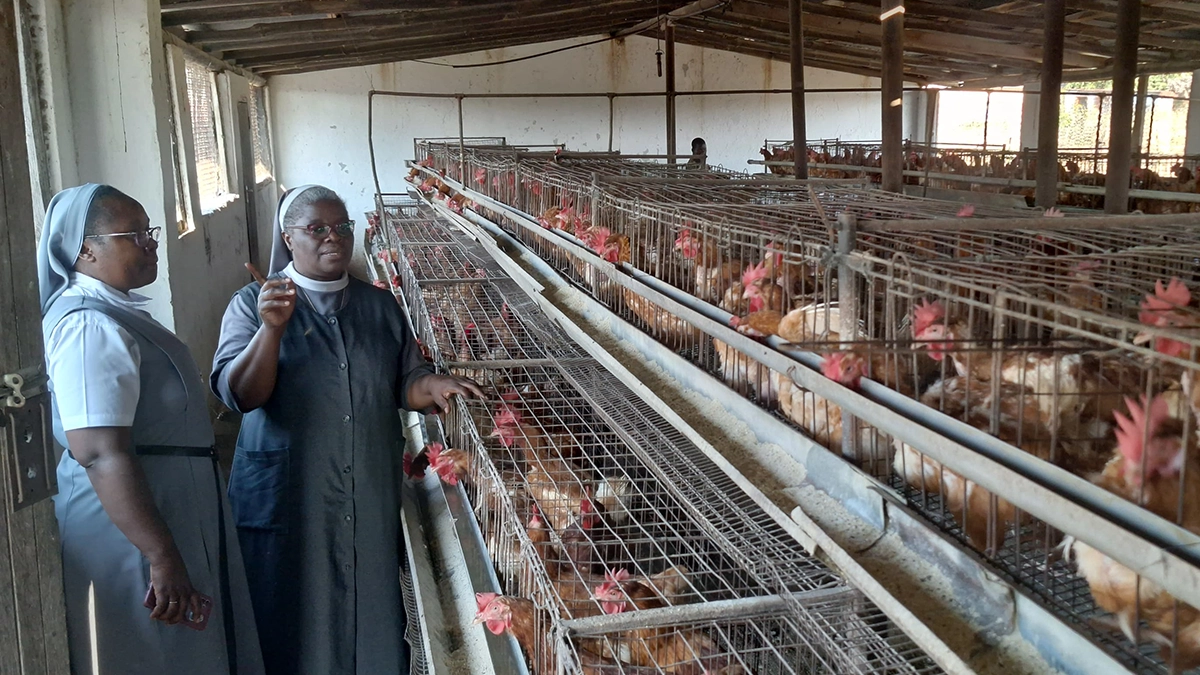
Spanning approximately 25 hectares, Chibote farm is a diverse project, with a poultry unit being the largest, housing over 2000 birds. The community also operates a piggery. A section of the farm is dedicated to organic cultivation of maize, vegetables, and bananas. The birds lay eggs, which are sold to fund the project. The Chibote farm is nearly entirely organic. The sisters adopted the idea of organic farming during the SBVP social enterprise visit to Kasisi Agricultural Centre, where Fr. Dondo guided them through organic farming methods. The ecosystem is nearly self-sustaining. “The chicken and pigs’ droppings are our manure,” Sr. Ruth, a SBVP graduate, adds.
Chibote Farm is not defined solely by its output. Its true significance lies in the lives it brings together. The innovative aspect of how the project functions is where the novelty resides; an ingenuity that emerged during a time of hardship and concern. The 35 beneficiaries, in one way or another, have been integrated into the project. On a good day, all of them support the sisters on the farm, according to their abilities, including the lepers.
The sisters’ work and influence extend far beyond their immediate farm. In addition to supporting their beneficiaries, they sell some of their produce to nearby institutions such as schools and government offices. The sisters have also partnered with women traders at the local market, which Sr. Ruth points out as we conclude our visit: ‘This is our main local market; this is where most of the women we work with sell the eggs and vegetables from the farm. The traders collect eggs, sell them, and then return the money to buy more eggs. In other words, the sisters provide working capital in the form of stock to the traders.
As the Church celebrates the Franciscan Jubilee and active charity, the story of the Franciscan Missionary Sisters of Assisi (FMSA) in Zambia offers a vivid example of what that calling genuinely involves. At Chibote Farm, prayer and service work hand in hand. What begins at the altar each morning extends into fields, homes, and lives that are being transformed. Through their quiet dedication, the sisters show that active charity is both an act of compassion and a commitment to restoring dignity and hope in concrete ways. For it is in giving that we receive, St. Francis.
Article by Paul Bikundo
Share This Story, Choose Your Platform!
Your journey to business excellence starts here. Subscribe today and be at the forefront of innovation and leadership.


Conrad N. Hilton Foundation
The Conrad N. Hilton Foundation foresees a world in which improving the human condition is a shared and sustainable goal. “Love one another, for that is the whole law,” Conrad Hilton wrote in his will. The peoples of the world “deserve to be loved and encouraged—never to be abandoned to wander alone in poverty and darkness.” That is our resolve.







 English (United States)
  English (UK)
  French