

Africa, the second-largest continent in the world, is a land of contrasts. Rich in natural resources yet plagued by economic challenges, the continent’s vast landmass of 30 million square kilometers and its burgeoning population of 1.4 billion across 54 countries present both immense opportunities and significant obstacles. Despite being endowed with an abundance of minerals, fertile land, and other valuable resources, Africa remains one of the poorest regions globally. This paradox raises a critical question: why, with such wealth at its disposal, does Africa continue to lag in development?
Africa’s struggle to harness its full potential is multifaceted. Several critical issues impede the continent’s progress, including a lack of skilled labor, inadequate infrastructure, political instability, and pervasive corruption. These challenges are compounded by leadership that often prioritizes personal gain over national or continental progress. The absence of visionary and accountable leadership has stymied Africa’s ability to effectively capitalize on its resources and transform its economies.
The comparison with other nations further underscores Africa’s unfulfilled potential. For instance, Japan, a country with minimal natural resources, manages to produce twice as much as the entire African continent. This stark disparity highlights the need for Africa to improve resource management, develop essential skills, and build the infrastructure necessary to compete on a global scale.
Despite these challenges, Africa is a continent brimming with potential. The large and youthful population, which constitutes a significant proportion of the global youth demographic, presents an enormous market for goods, services, and innovation. This demographic dividend, if harnessed correctly, could drive significant economic growth and development.
Africa’s wealth of natural resources, including vast mineral deposits, fertile agricultural land, and diverse ecosystems, offers a strong foundation for sustainable economic development. Additionally, the continent’s rich cultural heritage, coupled with its stunning natural landscapes, positions Africa as a prime destination for tourism, an industry that could generate substantial revenue and create numerous jobs.
Several key sectors offer promising opportunities for growth. Infrastructure development is crucial to unlocking the continent’s potential, as improved transportation, energy, and communication networks are vital for economic activities. Expanding internet access and investing in technology can drive innovation and connect African businesses with global markets. Education and financial services are also critical areas that can empower individuals and communities, fostering entrepreneurship and economic independence.
Solar power presents a particularly compelling opportunity for Africa, given its abundant sunlight. Investment in renewable energy can not only meet the continent’s growing energy demands but also position Africa as a leader in the global transition to green energy. Additionally, Africa’s art and cultural industries offer unique avenues for global engagement, providing a platform for African voices and creativity to be recognized worldwide.
However, the benefits of these opportunities are often undermined by poor management, corruption, and political instability. Addressing these issues is essential for Africa to realize its potential and achieve sustainable growth.
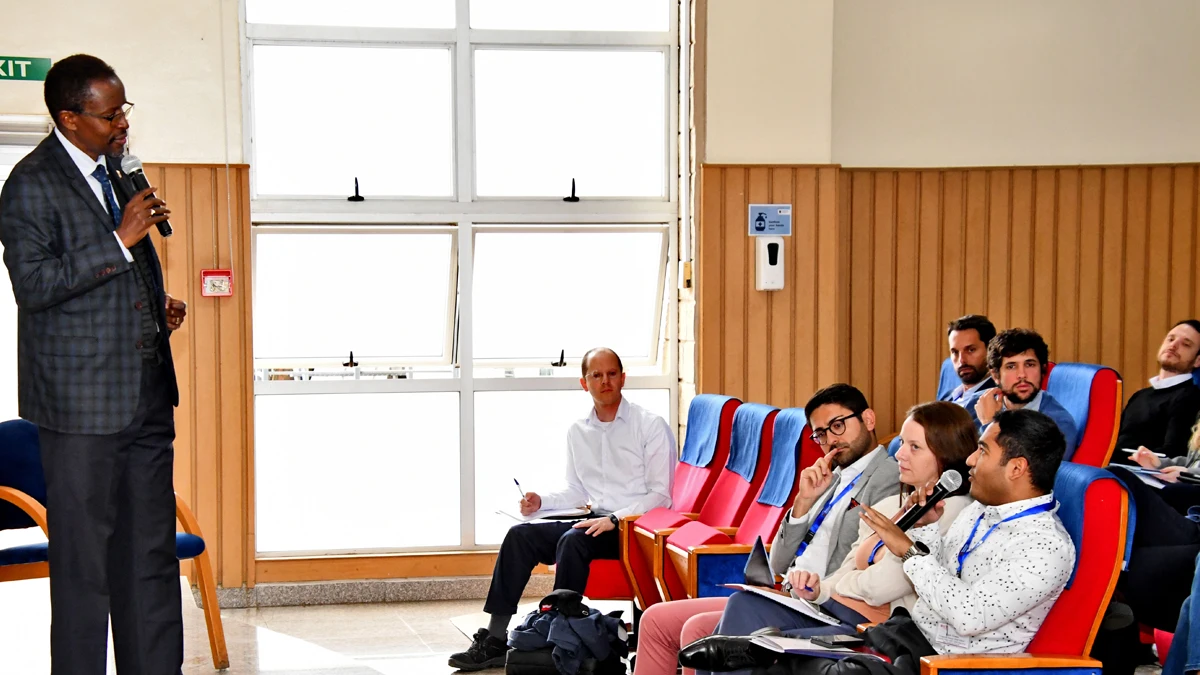
During a recent address at the Strathmore University Business School, Dr. Caesar Mwangi, the dean, spoke to IESE students about the importance of embracing challenges as a path to transformation. He likened the journey to climbing a mountain, where reaching the summit represents the achievement of Africa’s full potential. Dr. Mwangi emphasized that Africa’s transformation requires good, steady leadership. “A progressive, steady leadership makes a big difference in business,” he stated, highlighting the crucial role that effective leadership plays in unlocking Africa’s potential.
Dr. Mwangi also stressed the importance of collaboration with other continents in business ventures. Understanding the unique structures of doing business in Africa is essential for success. This includes identifying key objectives, such as market expansion, increasing market share, and resolving issues of insolvency and operations. By doing so, Africa can position itself as a market pioneer and achieve sustainable growth.
The path to Africa’s prosperity lies in embracing the challenges it faces. By improving leadership, managing resources more effectively, and fostering collaboration with other regions, Africa can unlock its potential and transform into a global powerhouse. Dr. Mwangi’s message is clear: Africa’s problems are its greatest opportunities. With the right approach, Africa can turn its challenges into avenues for growth and development.
Furthermore, Africa’s potential to grow and prosper is not just theoretical; it is a tangible reality waiting to be realized. The continent’s rich resources and youthful population provide a solid foundation for success. However, to realize this potential, Africa must embrace the challenges it faces and work diligently to transform its economic landscape. As Dr. Mwangi aptly put it, “The great unseen job market is called unseen problems. I have full faith in Africa. Our problems are our biggest opportunities.”
It is time for Africa to stand up, take charge, and lead itself to a brighter future. The continent has the resources, the talent, and the drive to achieve greatness. What is needed now is the vision, leadership, and collaboration to turn potential into prosperity. As Africa embraces its challenges, it will unlock the doors to unprecedented growth, innovation, and global influence. The future of Africa is bright, and the journey toward that future begins with a commitment to overcoming the obstacles that stand in the way.
Article by Juliet Hinga & Miriam Wafula

Share This Story, Choose Your Platform!
Your journey to business excellence starts here. Subscribe today and be at the forefront of innovation and leadership.







 English (United States)
  English (UK)
  French