

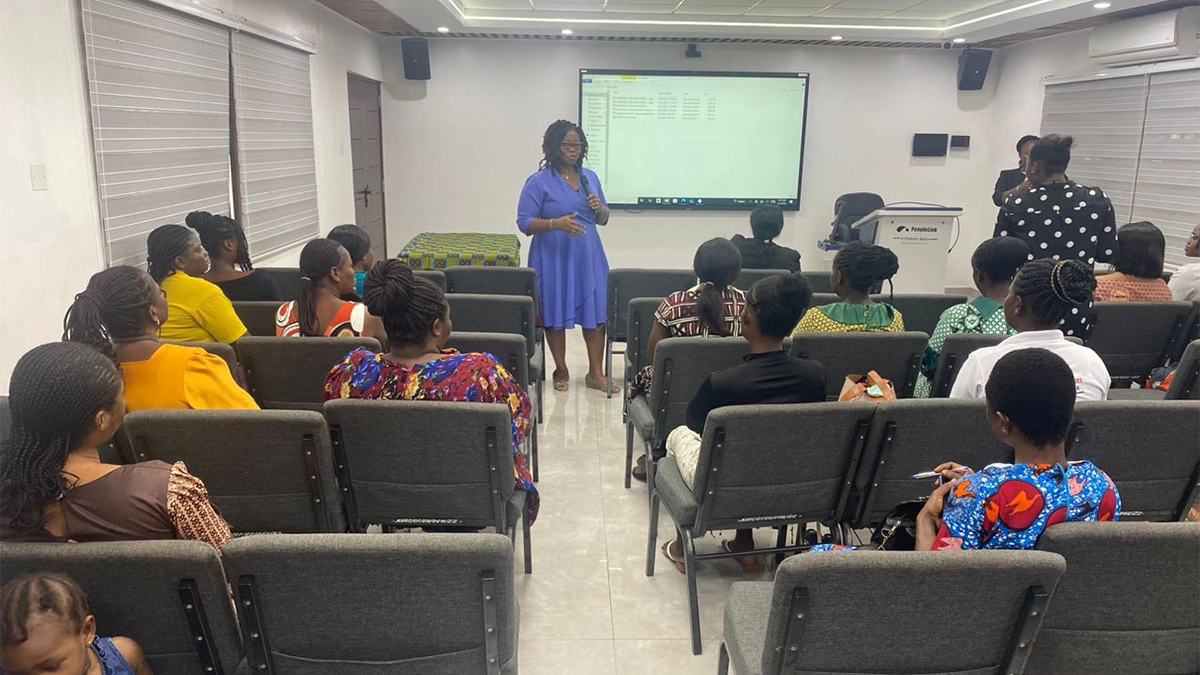
Midway through the ELEMMINATE LMG Programme training, Mrs. Helen Agodzo received word that a major WHO programme was about to launch in her region — one she was supposed to personally oversee. Every instinct told her to leave. Instead, she picked up her phone and asked a younger medical superintendent to step in and deliver the presentation. The superintendent hesitated. Mrs. Agodzo told her she was more than capable. That moment crystallised the shift the programme had catalysed. “I realised from this training that I am not supposed to be there to make the impact,” she recalls. “As a leader, you teach and empower the people who are with you to become better.”
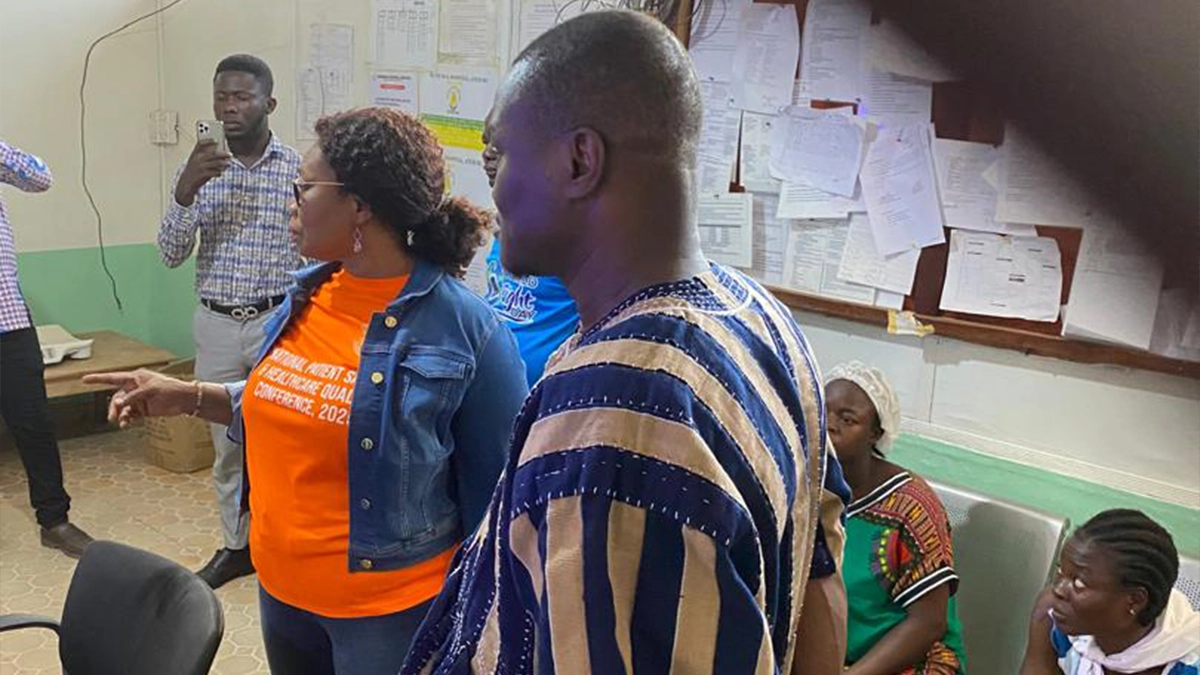
Mrs. Agodzo serves as Deputy Director in charge of Clinical Care for the Bono East Region — one of Ghana’s newest administrative regions, with 372 health facilities serving 1.3 million people across 11 districts and over 1,200 communities. Many settlements are hours from the nearest health facility, served by frontline midwives and community health nurses, often without the leadership or systems support to manage complex emergencies.
When she encountered the LMG programme — delivered by the Institute of Healthcare Management at Strathmore Business School, she found something different. “This is an eye-opener,” she says. “It teaches you about who you are yourself, and then you being able to impact that which you have, because leadership is about influence.” The Clarity 4D leadership profile was a revelation. “For a leader, you have to be able to lead yourself before you can lead others,” she reflects. The programme also gave her frameworks for systems thinking and stakeholder engagement — tools she applied immediately upon returning to Bono East. For Helen, “Leadership is about influence. You want to have a very positive and strong influence on the people you are leading.”
The data Mrs. Agodzo inherited was stark: 17 malaria deaths in 2021, rising to 18 in 2022 across six district hospitals. She launched a comprehensive malaria death audit, applying systems thinking to expose the root causes — referral delays averaging three hours, communication gaps between facilities, inconsistent treatment protocols, and fragmented record-keeping.
Her response was multi-pronged: a 30% increase in resource allocation through new partnerships with national and international stakeholders; training for 500+ healthcare workers leveraging WHO funding; a DHIS2 data management system achieving 25% improvement in data completeness; quarterly reviews with 200+ stakeholders; a 40% rise in bed net usage through community campaigns; 90% adherence to WHO treatment guidelines; and an ambulance-and-helpline referral network that halved transfer times for severe cases. By August 2025, only one district hospital in the entire Bono East Region had recorded a single malaria-related death — down from 17 in 2021. A 94% reduction.
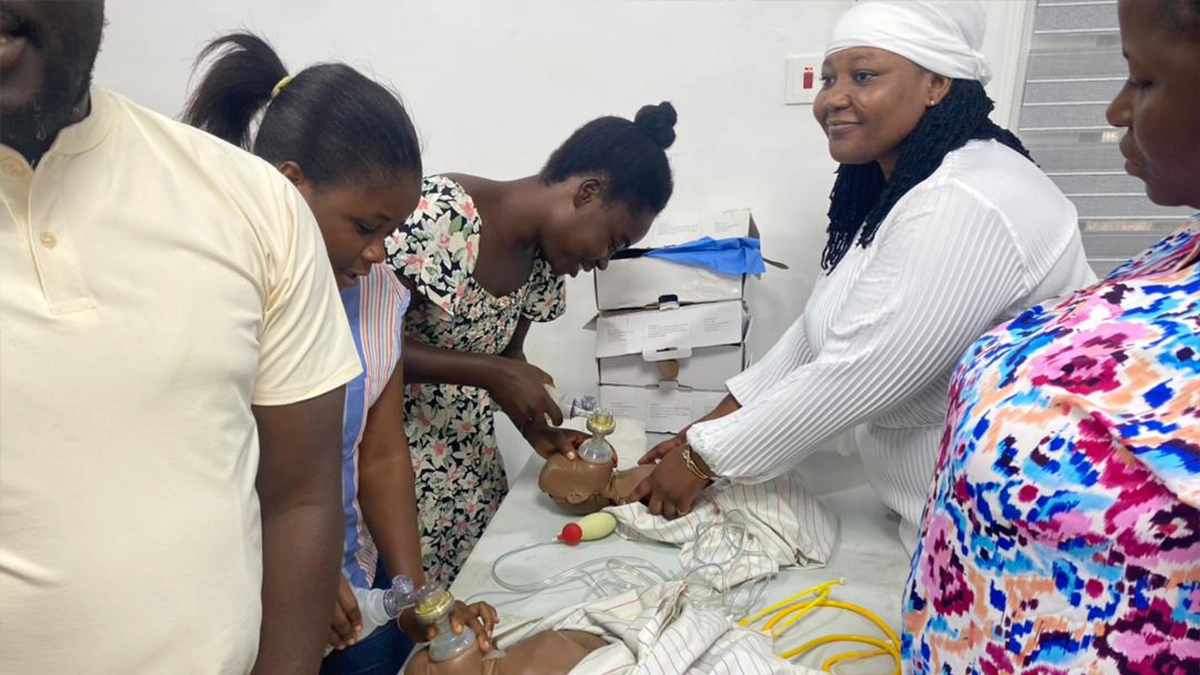
Mrs. Agodzo turned the same LMG lens to maternal and neonatal mortality. Using the Pareto principle, she identified the two drivers behind most poor outcomes: limited staff knowledge and equipment shortages. She built a coalition with the Regional Director of Health Services and the Kintampo Health Research Centre to design an evidence-based training programme.
By September 2025, 60 midwives, nurses, and anaesthetists had completed intensive training in neonatal resuscitation, obstetric haemorrhage management, and emergency referral coordination. Maternal deaths fell from 32 in 2023 to 12 in the first quarter of 2025 alone; neonatal deaths dropped from 246 to 90.
| 94%
Reduction in malaria deaths 2021–2025 |
63%
Drop in maternal deaths (Q1 2023 vs Q1 2025) |
63%
Reduction in neonatal deaths (annual comparison) |
560+
Healthcare workers trained |
Perhaps the deepest measure of the LMG programme’s impact is not found in systems or statistics — it is found in people. Facility managers across the region now make data-driven decisions. Community health volunteers perform better through the daily feedback loops Mrs. Agodzo designed. Clinicians follow evidence-based protocols because she made compliance a routine. Each person now carries forward the leadership principles instilled in her through the LMG programme.
Mrs. Agodzo is also a published researcher, co-authoring peer-reviewed studies in medRxiv and PLOS Global Public Health on malaria prevention and reproductive health — ensuring that lessons from Bono East contribute to the evidence base informing strategies across the continent. “If not for this training, I would have rushed back to my region that night. But actually, I don’t have to be there — because it’s about empowering people.”
Seventeen families who would have lost a loved one to malaria in 2025 did not. Scores of mothers and newborns survived who might not have. A medical superintendent discovered she could lead a national presentation. And across a region of 1.3 million people, a health system is being permanently reshaped — not by external intervention, but by a leader who learned to lead herself, and is now teaching others to do the same.
Article by: Judith Adhiambo Amolo
Share This Story, Choose Your Platform!
Your journey to business excellence starts here. Subscribe today and be at the forefront of innovation and leadership.






 English (United States)
  English (UK)
  French