

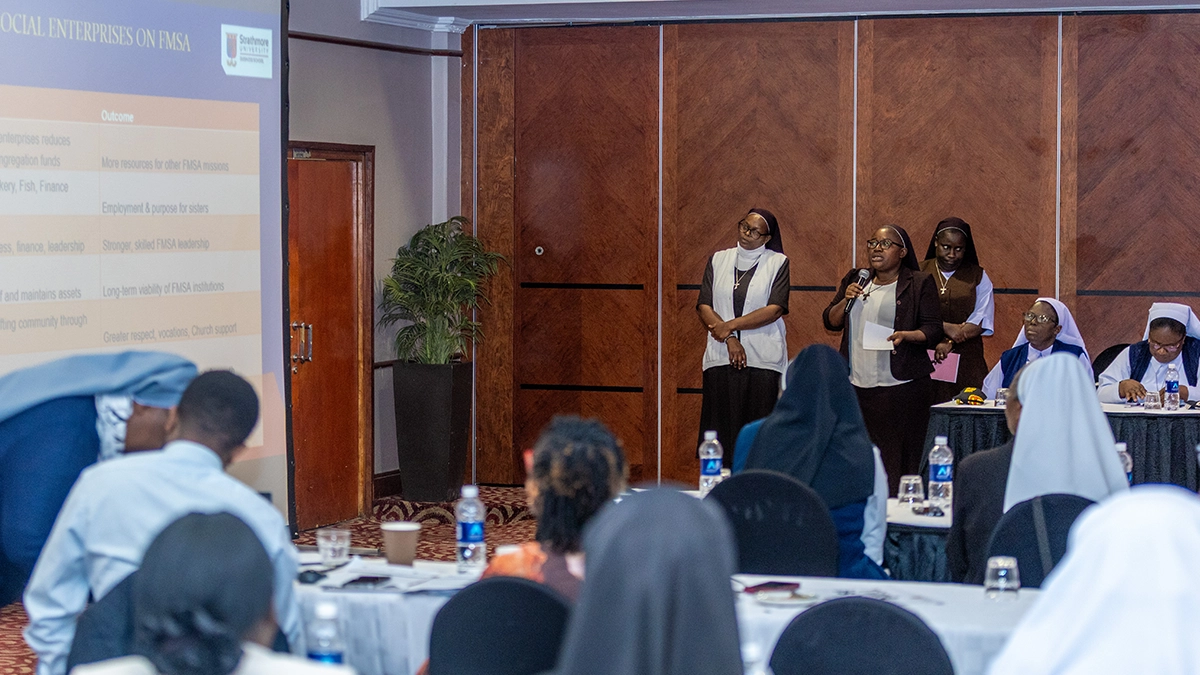
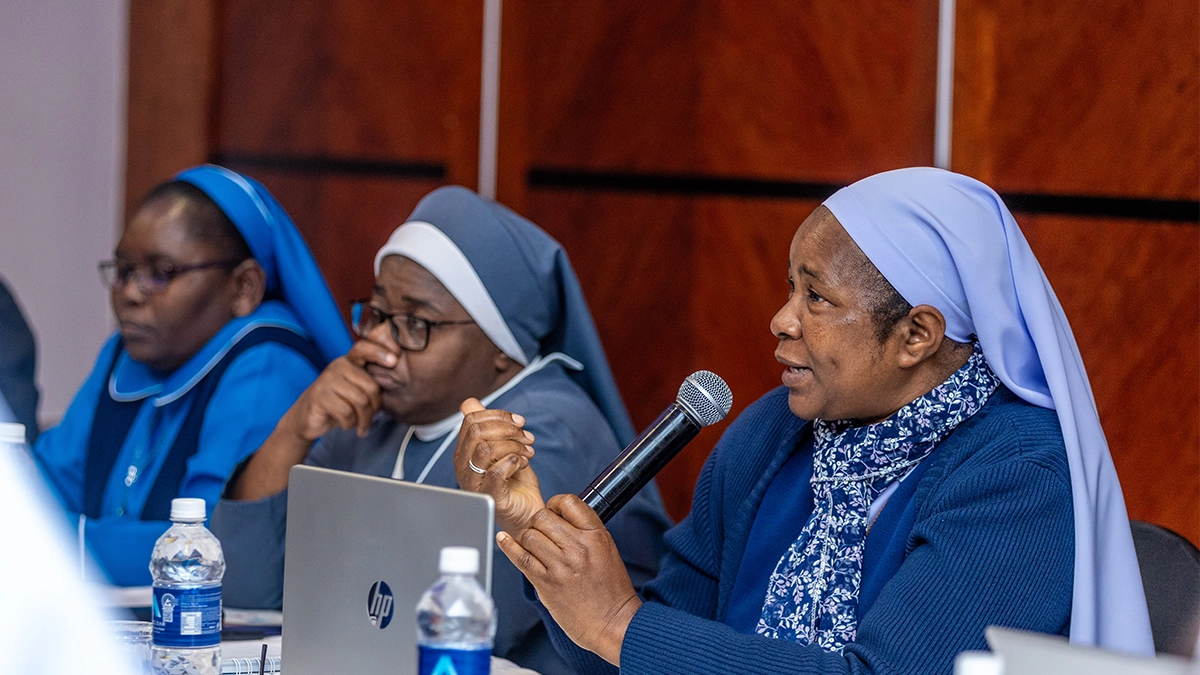
The Association of Consecrated Women in Eastern and Central Africa (ACWECA) has called on Catholic Sisters to embrace leadership, innovation and social entrepreneurship as they seek to strengthen their ministries and contribute to Africa’s development.
Speaking in Zambia at the graduation of Sisters who completed the Sisters’ Blended Value Project (SBVP) Social Entrepreneurship Development programme (SEDP), ACWECA Secretary General Sr. Bridgita Samba urged the graduates to approach their ministries with vision, clarity, understanding, and agility as they navigate an increasingly volatile, uncertain, complex, and ambiguous environment.
Sr. Samba said the graduates had demonstrated their readiness to take on greater responsibility by acquiring new knowledge and skills in social entrepreneurship, leadership and enterprise development.
“You have come before us as serious people. You have challenged us to take you seriously, and we have taken up the challenge and accept you as serious people in this very VUCA world,” she said.
The SBVP, implemented through a partnership between ACWECA and Strathmore University Business School and supported by the Conrad N. Hilton Foundation, seeks to equip Catholic Sisters with the skills and tools required to transform their social ministries into sustainable social enterprises. The programme has expanded from its initial implementation in Kenya, Uganda, Tanzania and Zambia to include Malawi.
For Sr. Samba, the transition towards social entrepreneurship does not mean abandoning the identity or mission of consecrated women. Rather, it provides an opportunity for Sisters to strengthen the sustainability of their ministries while remaining faithful to their Congregational charisms and their commitment to serving communities.
She emphasised that the Sisters’ identity and vocation should remain at the centre of their entrepreneurial journey.
“Your identity is your passport. Ambiguity can only be countered with agility, complexity with clarity, uncertainty with understanding, and volatility with vision,” Sr. Samba said.
Turning vision into action
The ACWECA Secretary General challenged the graduates to view their newly acquired skills not simply as academic achievements, but as tools for creating lasting social impact.
She encouraged them to focus less on competing with others and more on becoming effective stewards of the people, resources and ministries entrusted to them.
The Sisters, she said, should use their enterprises to support human dignity and contribute to the integral development of the people they encounter through their work.
This approach reflects SBVP’s broader philosophy, which seeks to distinguish social entrepreneurship from traditional charity models and to enable Sisters to develop enterprises that generate both social and financial value. ACWECA describes the programme as an opportunity for religious women to strengthen the sustainability of their charisms, ministries and congregations.
Sr. Samba also reminded the graduates that a vision must be accompanied by action.
“Today, you graduate as social entrepreneurs with a vision. But a vision is just a dream,” she said, encouraging the Sisters to move beyond imagining possibilities and take practical steps towards building sustainable enterprises.
Her message echoed the philosophy associated with Conrad Hilton, whose “Dream Big” principle has been incorporated into the SBVP journey. She further encouraged the graduates to embrace resilience, noting that success in social entrepreneurship would require persistence, learning and a willingness to seek guidance.
Graduation as the beginning of a new journey
Rather than presenting graduation as the conclusion of the learning process, Sr. Samba described it as the beginning of a new phase in which the Sisters would have to apply their knowledge to real-world challenges.
“Your learning, Sisters, should not stop with your graduation. The real learning begins now,” she said.
She urged the graduates not to expect immediate success but to remain open to learning from setbacks, seek professional advice, and continuously improve their enterprises.
This emphasis on continuous learning and adaptation is consistent with SBVP’s focus on strengthening Sisters’ capacity to respond to changing economic, technological, and social realities. The programme has incorporated training in areas such as leadership, financial management, strategic planning, social entrepreneurship, and market access.
Building sustainable ministries
A key message from Sr. Samba was the need for the Sisters to become responsible stewards of the resources entrusted to their care.
She challenged them to grow, scale and sustain the ministries operated by their Congregations, while ensuring that their enterprises remain aligned with their respective charisms and missions.
The call for sustainability has been central to SBVP since its establishment. ACWECA states that the programme is intended to help Sisters move their ministries towards sustainable social enterprises while maintaining their mission-driven character.
The approach also responds to longstanding challenges facing religious congregations, including financial sustainability and the need to strengthen institutional and entrepreneurial capacity. Previous reporting on the programme has highlighted the project’s objective of helping Sisters become more self-reliant while continuing to serve vulnerable communities.
Sisters as builders of Africa
Sr. Samba further challenged the graduates to see their work within the broader context of Africa’s development.
“Africa needs serious builders, as there are enough consumers. You are the builders of Africa,” she said.
The message situates social entrepreneurship within a broader development agenda, recognising the role that Sister-led institutions play in education, healthcare, social protection, economic empowerment, and other forms of community service.
Through their Congregations and ministries, consecrated women have established institutions and initiatives that serve communities across the region. SBVP seeks to strengthen the sustainability of these initiatives so they can continue to create social value over the long term.
A continuing commitment to service
As the graduates begin the next chapter of their journey, Sr. Samba’s message placed social entrepreneurship within a larger vocation of service.
The challenge before the Sisters is not simply to establish businesses, but to build sustainable enterprises that remain connected to their mission and create meaningful value for the communities they serve.
The SBVP journey, therefore, represents more than professional training. It is part of a broader effort to equip consecrated women with the knowledge, confidence and entrepreneurial capabilities to sustain their ministries in a changing world.
For the graduating Sisters, the next phase will be defined by how effectively they translate their learning into action, strengthen their enterprises, serve their communities, and use their Congregational charisms to contribute to a more sustainable and inclusive Africa.
Article by Alex Okoth Odhiambo
Share This Story, Choose Your Platform!
Your journey to business excellence starts here. Subscribe today and be at the forefront of innovation and leadership.


Conrad N. Hilton Foundation
The Conrad N. Hilton Foundation foresees a world in which improving the human condition is a shared and sustainable goal. “Love one another, for that is the whole law,” Conrad Hilton wrote in his will. The peoples of the world “deserve to be loved and encouraged—never to be abandoned to wander alone in poverty and darkness.” That is our resolve.







 English (United States)
  English (UK)
  French