

The evidence that reaches a Kenyan judge today looks very different from what it did a decade ago. It is a WhatsApp screenshot, a voice note that may have been generated by AI, or an algorithm that decided how much a family should pay for health cover. Technology has already reached the Judiciary. The real question is whether those who sit in judgment are equipped to protect people’s rights, and their health, when it does. That question travelled with us to Mauritius.
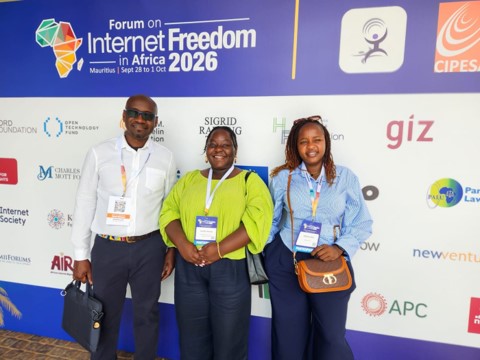
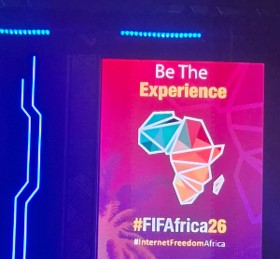
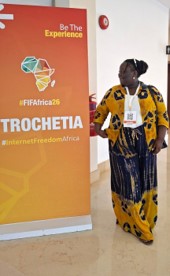
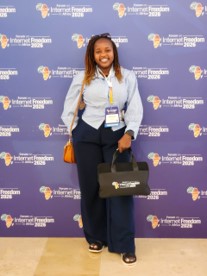
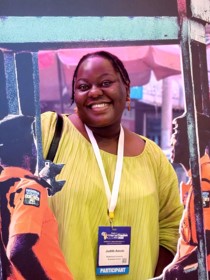
From 28 September to 1 October 2026, Strathmore University Business School (SBS), through the Institute of Healthcare Management (IHM), was represented at the Forum on Internet Freedom in Africa 2026 (FIFAfrica26). Convened every year since 2014 by the Collaboration on International ICT Policy for East and Southern Africa (CIPESA), and co-hosted this year by Mauritius’s Halley Movement Coalition, the 13th edition drew more than 500 participants to Balaclava for 18 pre-events and 41 main sessions, chosen from over 450 proposals. SBS was represented by the SEHRT Project team: Prof. Ben Ngoye, Judith Amolo and Sabina Machocho. SEHRT (Supporting Ethics and Human Rights in Technology at the Kenyan Judiciary) is a Luminate-funded initiative led by IHM and in partnership with CIPIT, @iLabAfrica and the Strathmore Dispute Resolution Centre (SDRC).
The Forum spanned eight themes; from digital democracy and data governance to AI, platform accountability, digital inclusion and online safety. Mauritius was itself a fitting host: a stable democracy that, in April 2026, launched a National AI Strategy alongside FAIR Guidelines built on fairness, accountability, inclusiveness, integrity and responsibility. The Forum closed with the launch of CIPESA’s State of Internet Freedom in Africa 2026 report, and its insights will feed Africa’s voice into global processes such as WSIS+20.
Why would a healthcare institute attend an internet freedom forum? Because digital harms are very often health harms by another name. SEHRT looks at technology through four aspects of health: physical, when an algorithm delays or prices someone out of care; mental, when surveillance and harassment leave people anxious and silenced; social, when shutdowns cut communities off; and spiritual, when people lose their sense of dignity and belonging. Courts sit where all four meet.
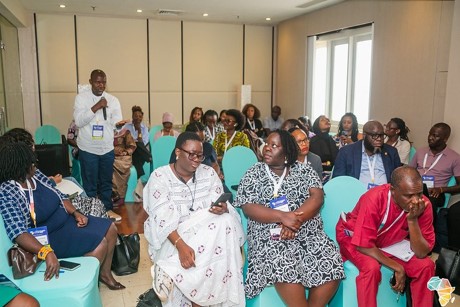
The sessions the team attended spoke directly to this. Grace Naiserian of Mzalendo Trust made the case for a “multi-door” approach to accountability, where litigation, oversight and regulation work together, and the panel warned of the “liar’s dividend”, where real evidence of abuse is dismissed as an AI fake. Media Defence’s Spyware on Trial, a session on competition law in digital markets, and Access Now’s A Decade of #KeepItOn rounded out a demanding programme.
Digital rights are human rights, and accountability should follow both control and profit.
Most striking was Healthcare by AI: Are We Leaving the Most Vulnerable Behind? It presented an audit of the model Kenya’s Social Health Authority uses to set health insurance contributions, which tends to over-estimate the incomes of the poorest households, so many pay more than they should. Here, in one case, was everything SEHRT exists to address: an automated decision, the right to health, and real people whose access to care depends on getting it right.
So, what did SBS bring home? First, evidence that will shape what SEHRT offers the Judiciary, from approaches to authenticating digital evidence to how the Data Protection Act’s safeguards on automated decisions should apply. Second, relationships, with continuity alongside other experts in the field. Third, visibility: SEHRT showed that governing technology is a question of leadership, health systems and public trust, questions a business school is well placed to ask.
Coming home, it was hard not to look inward. SEHRT brings together parts of Strathmore that ideally, would rarely share a project: IHM at SBS, Strathmore Law School through SDRC, CIPIT and @iLabAfrica. This year that work was formalised through internal collaboration agreements and evidently first made visible at the SDRC Colloquium in August. For Strathmore, it means more than one project. When a question as tangled as “what should a judge do when an algorithm decides who pays for healthcare?” arrives, no single department can answer it well. SEHRT shows the university can respond as one institution rather than a collection of separate parts.
A university is not only the sum of its schools and centres. It is also the strength of the connections between them.
Most directly, this collaboration serves the Kenyan Judiciary, which needs joined-up guidance rather than fragments. Ultimately, it serves the people behind each case file: the mother whose contribution was miscalculated by a model she cannot see, the young person harassed into silence online, the patient harmed by a tool meant to help. It serves our own faculty and students too, who see complex problems treated as shared ones. And it is timely. Kenya’s Artificial Intelligence Bill was tabled in the Senate in April 2026, health financing now runs on automated means-testing, and governments across the continent are writing AI strategies. The norms that will govern technology in Africa are being set now, and Strathmore cannot afford to wait until they are settled.
This goes to the heart of who SBS is. In Africa’s current digital age, transformation is also about whether technology serves people or quietly works against them, and that depends on those who design, govern and judge it. Ethical leadership now means asking hard questions of our tools, not only of the people we lead. It also means breaking silos, as SEHRT does, and ensuring Africa brings its own evidence to global debates rather than adopting rules written elsewhere.
FIFAfrica26 was a gathering about freedom: to speak, to organise, to access information and to live without being watched. The SEHRT team came home convinced that these freedoms cannot be separated from health. Africa’s digital future will be decided not only by those who build technology, but by those who govern it, question it and hold it to account. SEHRT’s presence in Mauritius was SBS’s values at work: trailblazing in a fairly new space that few business schools occupy, and service to society by protecting people’s health rights along the way.
Article by: Judith Adhiambo Amolo
Share This Story, Choose Your Platform!
Your journey to business excellence starts here. Subscribe today and be at the forefront of innovation and leadership.






 English (United States)
 English (UK)
 French