

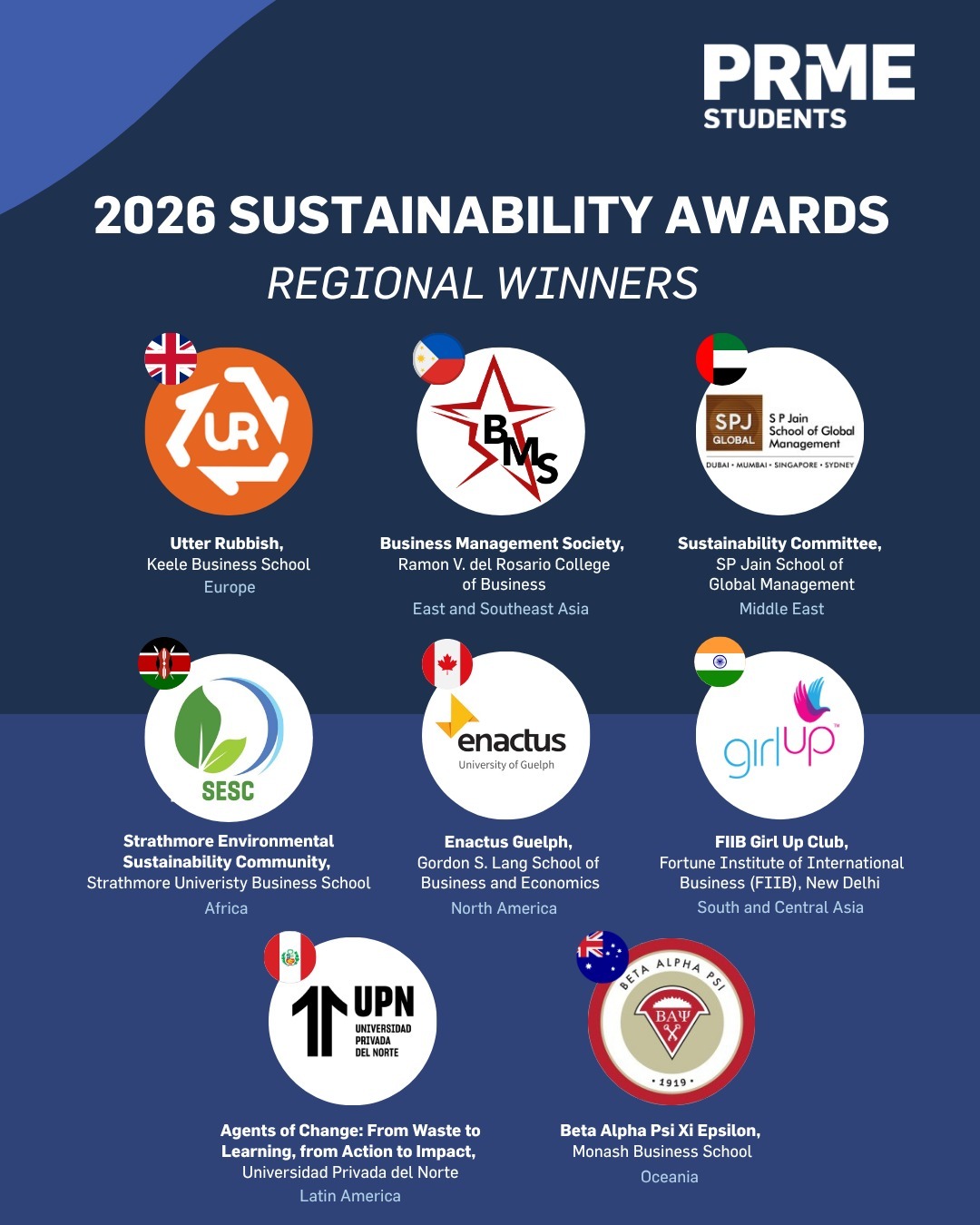
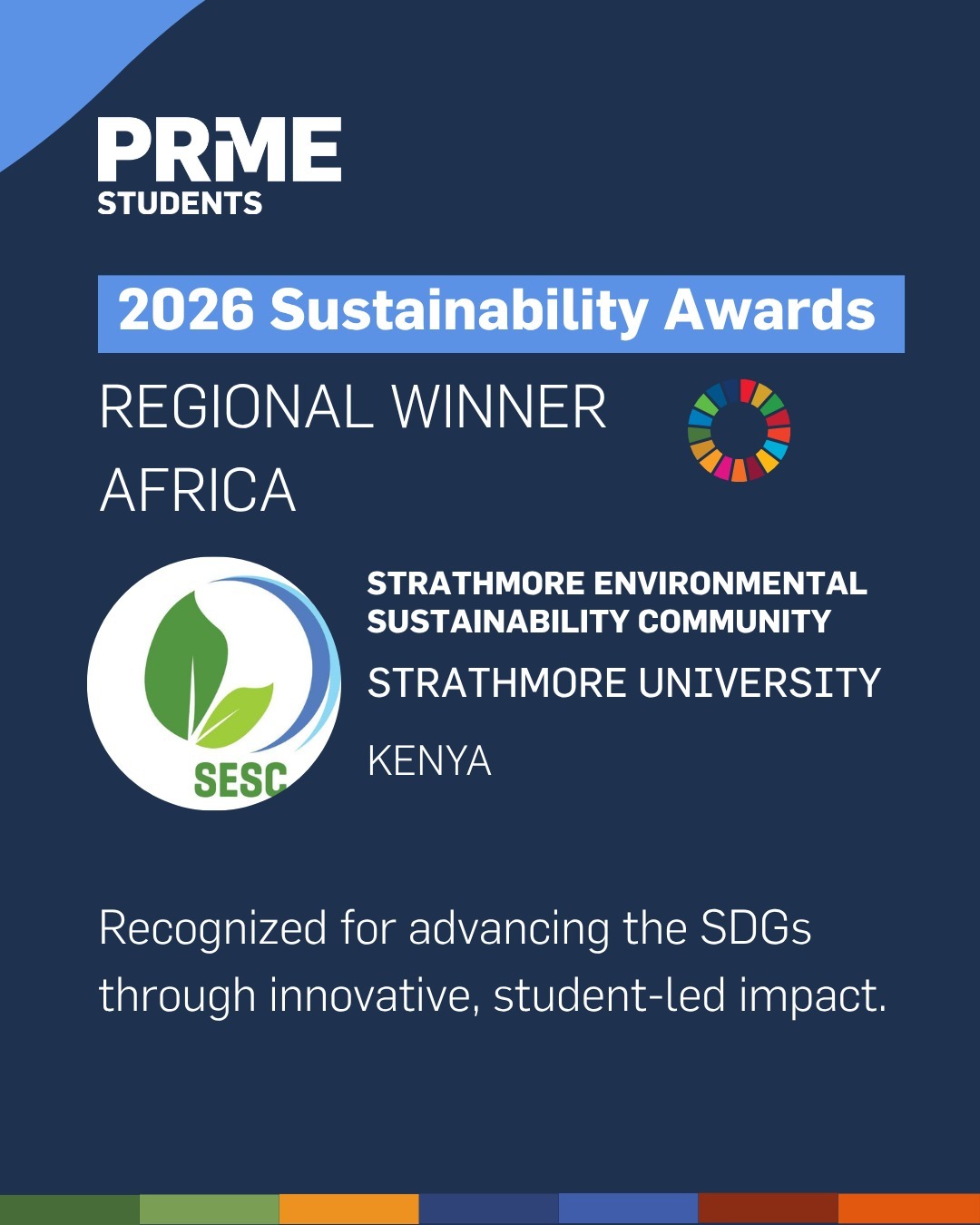
Today, the need to safeguard both people and planet is increasingly converging with the growing force of youth leadership. As such, the Principles for Responsible Management Education (PRME) has continued to play a pivotal role in shaping responsible leaders for a sustainable future. As a United Nations–supported initiative, PRME advances the integration of sustainability, ethics, and accountable governance within higher education by aligning institutions with the United Nations Global Compact and contributing to the realisation of the Sustainable Development Goals (SDGs). Through its global network, PRME not only promotes responsible management education but also recognises institutions and student organisations that translate these principles into tangible, community-driven impact. This year, the prestigious PRME Students Sustainability Award regional winner for Africa (Student Organisation category) was awarded to the Strathmore Environmental Sustainability Community (SESC).
This recognition is grounded in the broader mandate of the PRME Students Sustainability Awards, which honour outstanding student-led initiatives across the global PRME community, a global network of over 850 business and management schools dedicated to advancing sustainability and responsible leadership in education. At its core, PRME embodies a new generation of leadership: one that redefines the future and actively builds sustainable systems from the ground up. At Strathmore University, this community, through SESC, has redefined what it means to be a student-led organisation, evolving into a dynamic platform that integrates policy, research, advocacy and grassroots action into a unified force for environmental change.
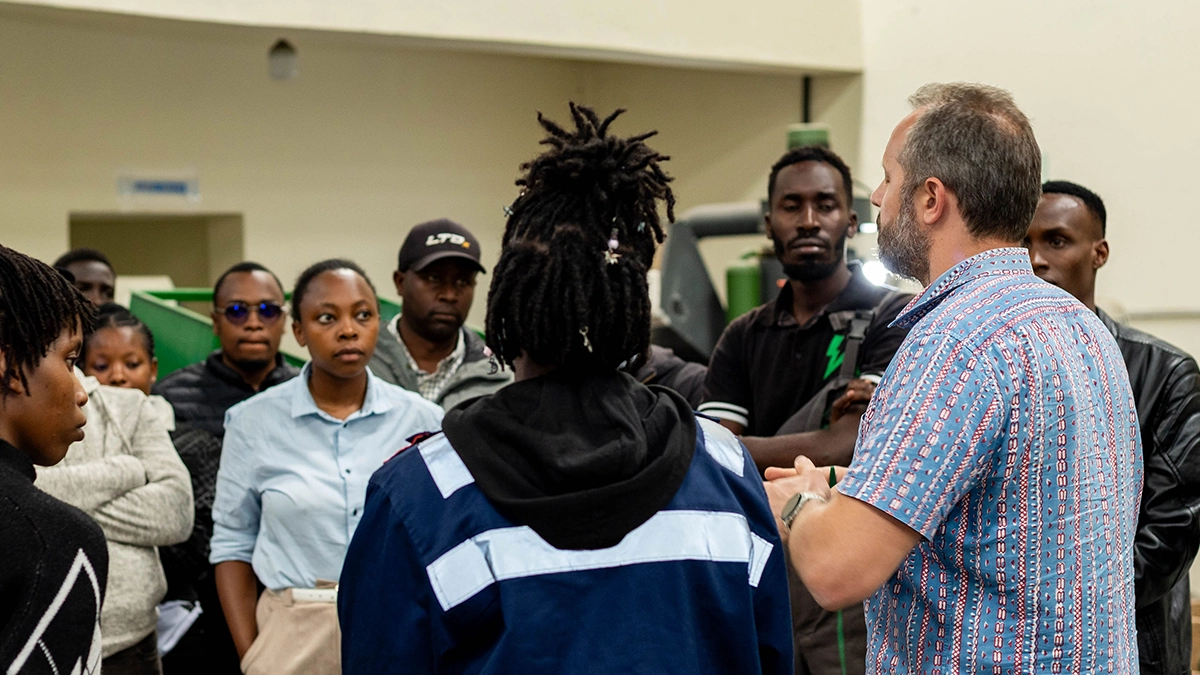
In the past year, SESC has implemented more than 45 sustainability-focused programs spanning campuses, local communities, and global platforms. These projects were deliberate, structured interventions designed to address some of the most pressing environmental and social challenges of our time, ranging from e-waste collection drives and circular-economy campaigns to nationwide tree-planting initiatives. SESC consistently translated global sustainability frameworks into tangible, community-level action. Its work is closely aligned with key priorities under the Sustainable Development Goals, particularly advancing climate action, quality education, sustainable cities, and responsible consumption and production.
SESC’s approach to sustainability blends creativity with policy to make complex global systems more accessible and engaging. Through initiatives such as Global Green Fund negotiations and COP simulations, students actively participate in realistic climate diplomacy, gaining practical experience in environmental governance and international policy-making. Complementing this are innovative platforms like “Cinema in Nature,” sustainability podcasts, and hackathons, which reframe environmental engagement through storytelling, media, and innovation. Together, these efforts make sustainability experiential and culturally resonant, effectively democratising the discourse and extending its reach beyond academic spaces into everyday public life.
SESC’s impact extends beyond institutional boundaries into local communities where it addresses real, lived environmental and social challenges. Through initiatives such as the Mukuru Kayaba project, the group empowered grassroots agents of change. It trained 300 youth volunteers and worked with over 400 residents as part of the initiative. Nationally, SESC has also led clean-up drives, awareness campaigns, and environmental restoration efforts that foster a culture of sustainability in communities often excluded from formal environmental discourse. Within Strathmore University, it has further strengthened active citizenship by mobilising students into leadership roles and embedding sustainability into both academic and extracurricular life.
This student organisation has further integrated itself into global sustainability ecosystems through collaborations with institutions such as the United Nations Environment Programme (UNEP), UN-Habitat, and various embassies. This has positioned its members within international environmental governance frameworks. Beyond participation in flagship platforms, it has maintained active engagement in key policy spaces, including UNEP and UN-Habitat meetings, Executive Board sessions, the United Nations Environment Assembly, and Committee of Permanent Representatives meetings, where students contribute through policy dialogue, stakeholder engagement, and youth-led advocacy. These experiences have strengthened student leadership and policy exposure while enhancing Strathmore University’s institutional visibility and recognition in global sustainability spaces, supporting its accreditation and formal engagement with UNEP and related multilateral platforms.
To achieve PRME recognition, an organisation must demonstrate strong performance across five pillars: advancing the SDGs, innovation, impact, global cooperation, and alignment with the Seven Principles for Responsible Management Education. SESC excels across all these areas. However, its most distinctive strength lies in its model of youth-driven governance, a combination often underestimated. In this model, governance is not bureaucratic but agile, responsive, and deeply participatory, channelling the energy and creativity of young people into structured systems that deliver clear and measurable outcomes.
This success is underpinned by a strong ecosystem of institutional support and mentorship within Strathmore University. Key contributors include Prof. Izael Da Silva, Deputy Vice Chancellor and Patron, whose leadership anchors sustainability in the university’s strategic vision; Dr Mumbi Wachira, who advances sustainability and integrated reporting through executive education programmes; Dr William Muriithi, whose work at the SUNSEP Hub strengthens systems thinking and sustainability research; and Madam Rosemary Okello, who amplifies youth-driven sustainability narratives through the Africa Media Hub. Additional global intellectual grounding is provided by Prof. Jacqueline McGlade through the Natural Capital Hub, while the Strathmore Quality Assurance Department reinforces accountability and continuous improvement.
As the Africa regional winner, SESC now advances to the global stage, where it will compete with the world’s leading student organisations at the 2026 PRME Global Forum and Student Summit in Cairo, Egypt.
Article written by Ian Abuki; Project coordinator, SDG4Change Project at SUNSEP Hub and UN PRME Regional Leader, Africa.
Share This Story, Choose Your Platform!
Your journey to business excellence starts here. Subscribe today and be at the forefront of innovation and leadership.





 English (United States)
  English (UK)
  French