

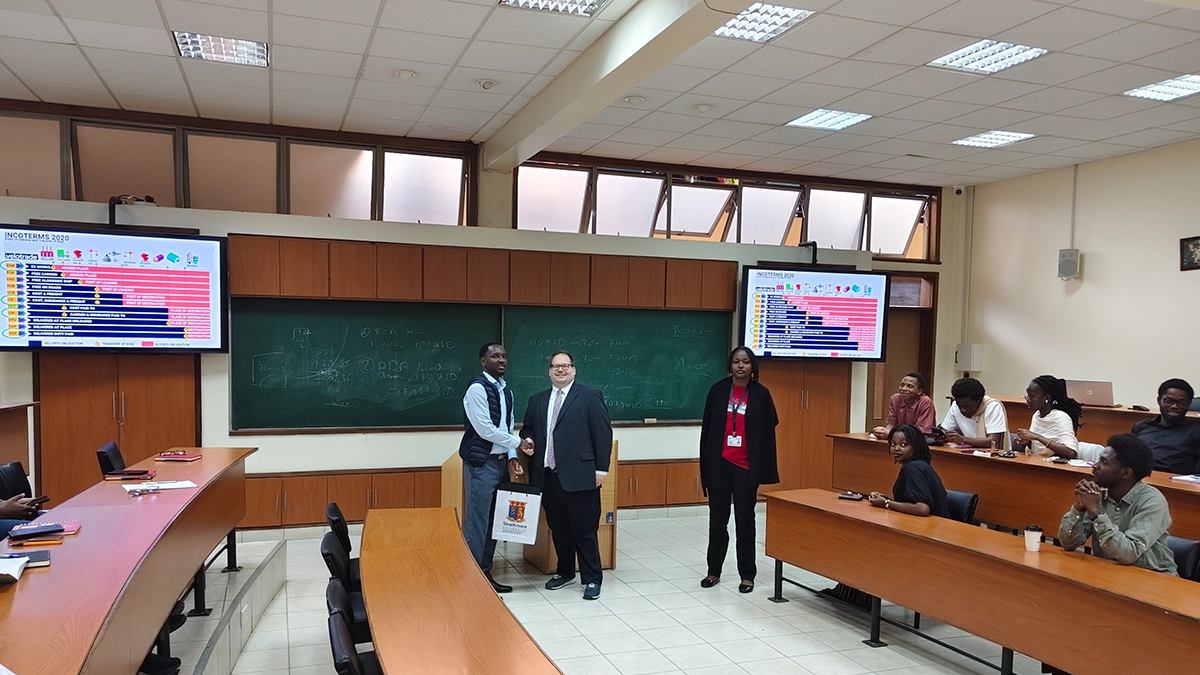
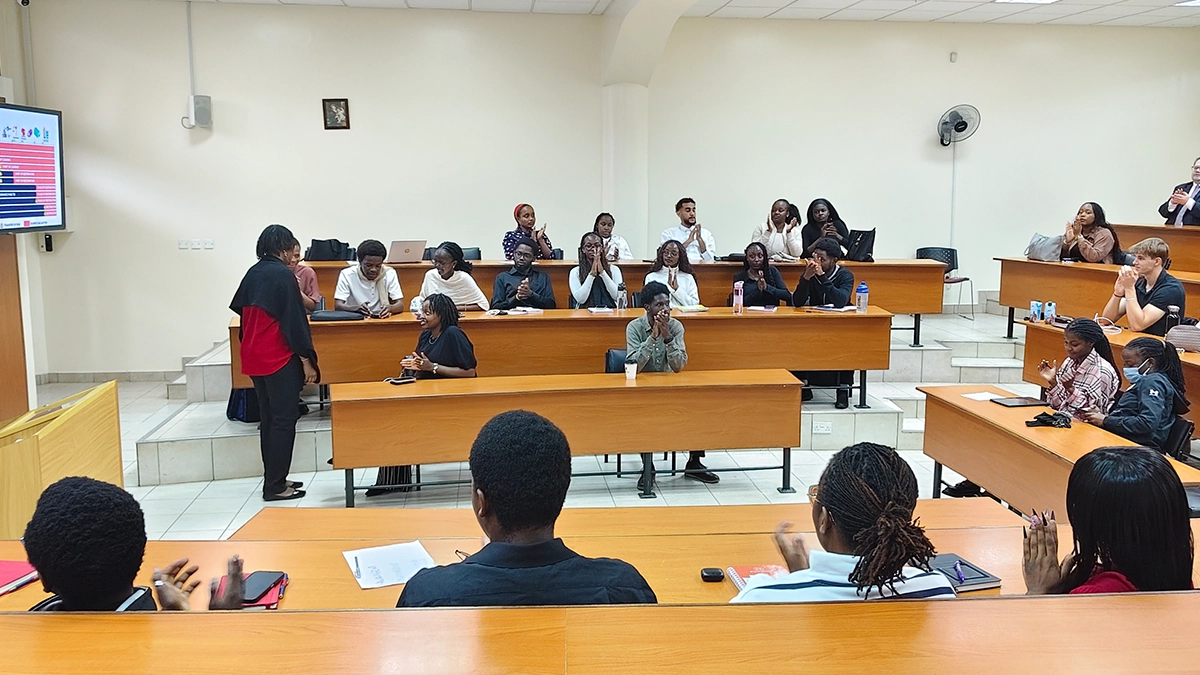
The future of logistics will depend as much on the quality of its people as it will on technology, infrastructure and global trade networks. For universities, preparing that talent means bringing industry knowledge, experience and decision making closer to the classroom. Recently, our Bachelor of Science in Supply Chain and Operations Management students had that opportunity through a guest lecture with one of the top logistics experts, Dr. Andre Kreie, the Managing Director of Learn Logistics by the Kuehne Foundation. At the centre of the session were Incoterms: the international rules that sit behind everyday decisions on the movement of goods between buyers and sellers. Dr. Andre used them to open a wider discussion on international trade, lead times, risk and business relationships. It was also an example of what becomes possible when experienced practitioners, industry-backed learning initiatives and universities come together around talent development.
Inside International Logistics: From the Expert
Incoterms: knowing the rules is only the beginning
International trade needs a common language. Incoterms help establish important responsibilities between buyers and sellers: who arranges particular stages of carriage, who bears specified costs and where risk transfers. Dr. Andre focused on the dos and don’ts of their application. From the session, the students had a chance to examine the importance of understanding what a chosen term actually means as opposed to memorising it, may it be EXW, FCA, CIF, CIP or DDP. We believe, for future logistics professionals, this is where professional judgement begins.
The lead-time gap: two clocks, one supply chain
One of the most striking illustrations from the session was the lead-time gap. The organization has one clock: the time required to procure, manufacture and deliver. The customer has another: how long they are prepared to wait. The gap between the two exposes the quality of the entire supply chain.
Incoterms, risk and relationships
The third discussion took Incoterms into supply chain risk management and relationship management. A rule may establish where risk transfers, but successful international trade still relies on organizations working together. Information has to move, documentation has to be accurate, responsibilities have to be clear and relationships have to withstand disruption. The ability to see these connections separates knowledge of an Incoterm from the ability to manage an international transaction.
Looking ahead, as Strathmore Business School, we believe that the future of logistics is better shaped by building talent for where logistics is going. Logistics increasingly informs sourcing, market access, cost, resilience and customer service. Developing people who can engage confidently with those decisions is part of moving logistics further up the management and global development agenda.
Check the Bachelor of Science in Supply Chain and Operations Management:https://strathmore.edu/bsc-in-supply-chain-and-operations-management/
Share This Story, Choose Your Platform!
Your journey to business excellence starts here. Subscribe today and be at the forefront of innovation and leadership.





 English (United States)
  English (UK)
  French