

The Black Voices in Coaching Research Conference brought together coaching scholars, practitioners, and researchers from around the world between June 11 and 14, 2026, in Johannesburg, South Africa. The conference provided a platform for exploring the transformative role of indigenous African wisdom in shaping the future of coaching research and practice.
Held under the theme “Indigenous and African Wisdom in Coaching Research: Beyond Borders,” the conference focused on epistemic pluralism, leadership, equity, and the inclusion of African-centred knowledge systems within coaching theory and practice. Participants engaged in research presentations, panel discussions, and workshops that highlighted the diversity and richness of perspectives within the global coaching ecosystem.
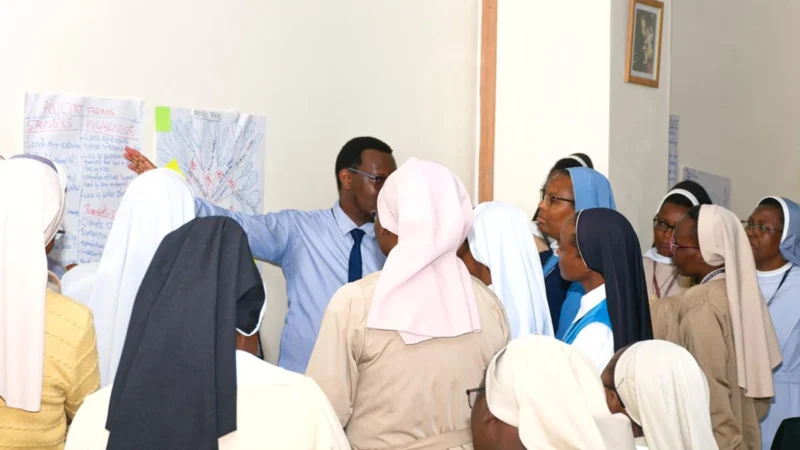
Among the presenters was Dr Nancy Njiraini, SBVP Academic and Research Lead, who attended the conference to showcase two research posters. The posters were based on preliminary findings from an ongoing coaching study conducted in collaboration with Dr William Murithi, a senior lecturer at Strathmore Business School. The studies draw insights from coaching engagements within SBVP. SBVP is a programme supporting Catholic sisters in East and Central Africa. It is implemented by Strathmore Business School in collaboration with the Association of Consecrated Women of Eastern and Central Africa (ACWECA) and with the generous support of the Conrad N. Hilton Foundation.
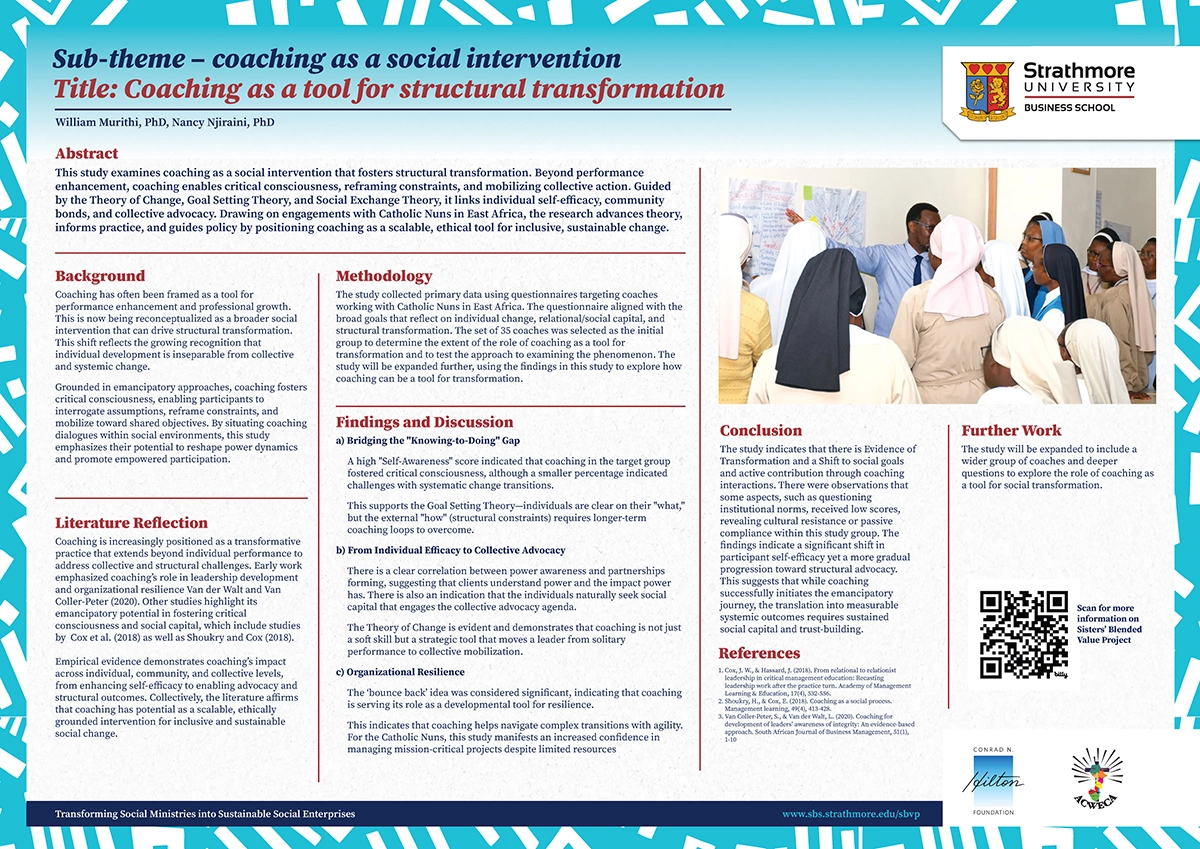
The first poster explored coaching as a social intervention. It examined its potential to drive structural transformation. The poster posits that, while coaching has traditionally been viewed as a tool for enhancing individual performance, it is increasingly being recognised as a catalyst for broader social and organisational change. The study investigated how coaching conversations with Catholic sisters contributed to deeper awareness, leadership growth, and social impact.
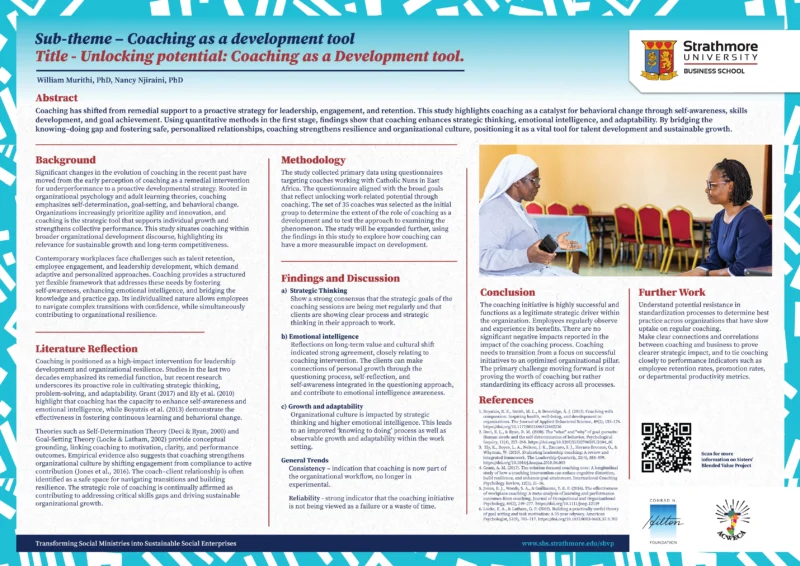
Findings from the study suggest that coaching plays a critical role in bridging the gap between knowledge and action. Coaching effectively enhances self-awareness and critical reflection, and translates insights into action. The research also noted that sustained coaching engagements are necessary to support meaningful and lasting transformation.
The study also highlighted coaching’s role in shifting leaders from individual effectiveness toward collective advocacy. As participants developed a stronger awareness of their influence and capabilities, they became more inclined to build partnerships and mobilise others around shared goals. Coaching was found to encourage collaboration and collective action rather than isolated leadership.
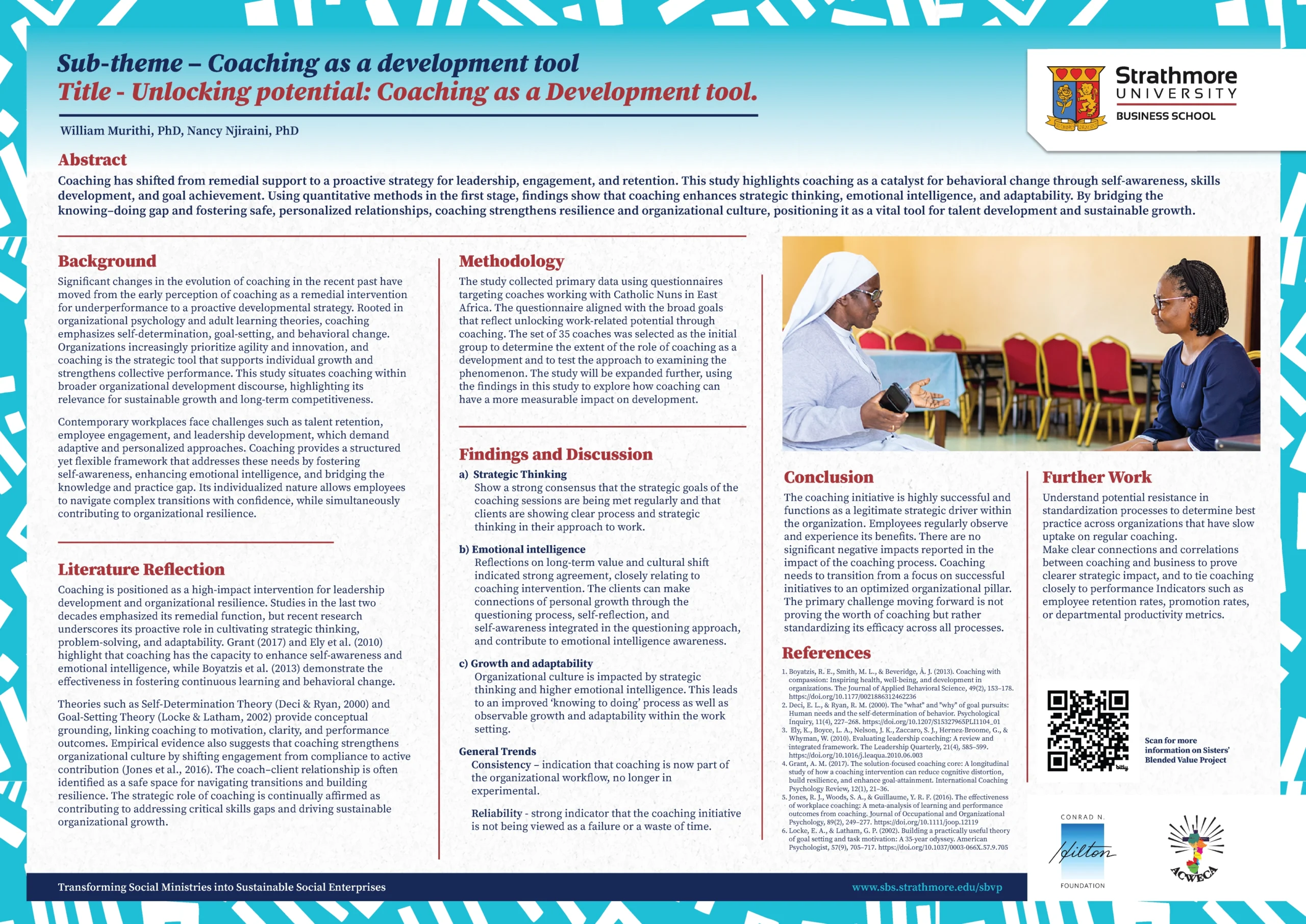
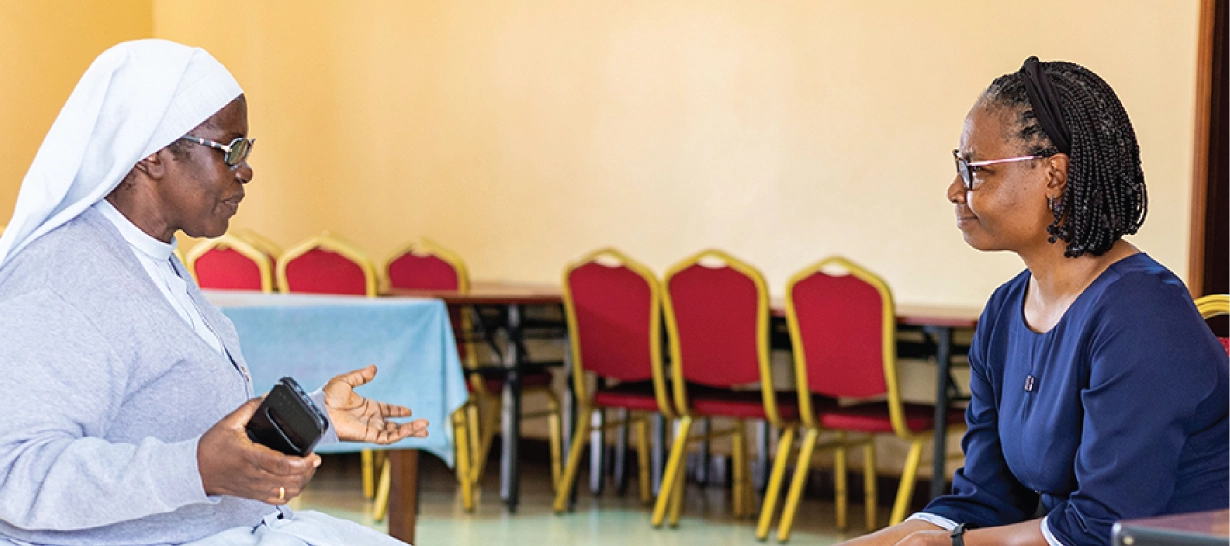
The second poster examined coaching as a development tool and explored how structured coaching relationships unlock human potential. The study evaluated coaches’ perspectives on their interactions with Catholic sisters and sought to understand how coaching contributes to leadership development, organisational effectiveness, and sustainable growth.
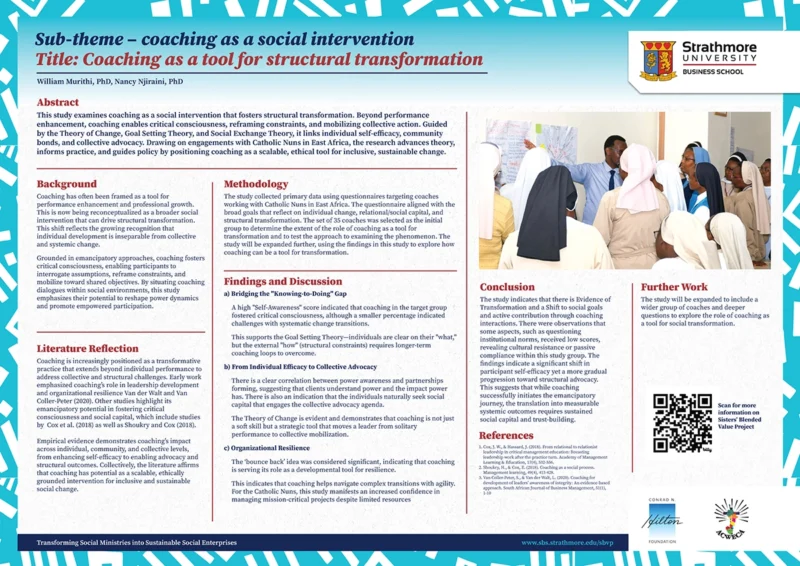
The findings demonstrated that personalised coaching relationships create psychologically safe environments that accelerate learning and growth. Coaching was found to strengthen strategic thinking by helping individuals become more process-oriented, goal-focused, and forward-looking in their approach to leadership and decision-making.
The research further indicates that coaching contributes significantly to the development of emotional intelligence. Through reflective questioning and guided conversations, participants enhanced their self-awareness and interpersonal effectiveness. This increased emotional intelligence enabled catholic sisters to navigate workplace dynamics more effectively and respond to challenges with greater agility and empathy.
A notable outcome of the study was the improvement observed in the transition from knowledge acquisition to practical application. Participants demonstrated increased adaptability and were better equipped to translate ideas into action. The combination of strategic thinking and emotional intelligence emerged as a powerful driver of behavioural change and professional growth.
Across both studies, evidence pointed to coaching as a powerful catalyst for personal transformation and professional growth. Participants demonstrated increased confidence, greater clarity of purpose, and a stronger commitment to achieving both social and organisational goals. Coaching was shown to strengthen individual agency while contributing to broader organisational development.
The researchers conclude that coaching represents a vital tool for sustainable development. By investing in individual self-determination and leadership growth, organisations strengthen their collective capacity to become more resilient. Coaching is a vital tool for sustainable growth. When organisations invest in individuals’ self-determination, they inherently strengthen the collective ecosystem, building agile, innovative, and resilient workforces. SBVP has heavily invested in coaching to help sisters transform their ministries into sustainable social enterprises.
Article by Alex Okoth Odhiambo
Share This Story, Choose Your Platform!
Your journey to business excellence starts here. Subscribe today and be at the forefront of innovation and leadership.

Conrad N. Hilton Foundation
The Conrad N. Hilton Foundation foresees a world in which improving the human condition is a shared and sustainable goal. “Love one another, for that is the whole law,” Conrad Hilton wrote in his will. The peoples of the world “deserve to be loved and encouraged—never to be abandoned to wander alone in poverty and darkness.” That is our resolve.







 English (United States)
  English (UK)
  French