






















In an era characterized by rapid technological advancements, global connectivity, and an increasing focus on sustainability, the future of supply chain management stands at the crossroads of innovation and adaptation. As we navigate an ever-evolving landscape shaped by disruptions, digital transformations, and heightened consumer expectations, the traditional paradigms of supply chain practices are undergoing tremendous transformation.
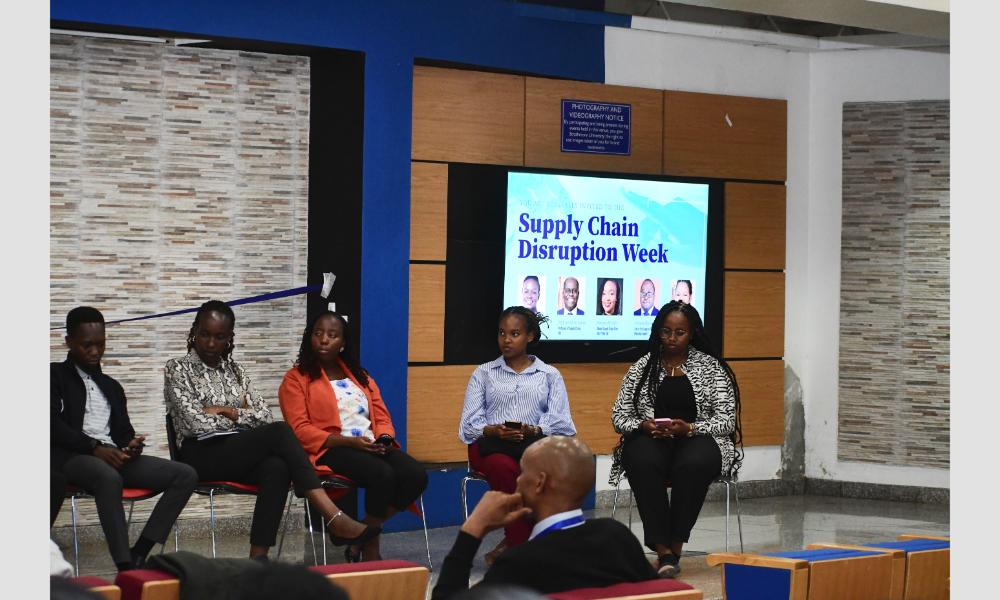
Taking this supply chain transformation into consideration, Strathmore Business School organized the Supply Chain Disruption Week 2023, a two-day event that sought to give the students undertaking the Bachelor of Supply Chain in Supply Chain and Operations Management a platform to interact with supply chain professionals and prepare them for the job market.
The conversations delved into the shifts and challenges reshaping the landscape of supply chain management across the world. Against the backdrop of unprecedented global disruptions, the discussions served as a compass for navigating the future of supply chains. One of the prevailing themes that emerged was the imperative for resilience and adaptability in supply chain strategies. The traditional models faced stress tests during various disruptions, prompting a re-evaluation of approaches to risk management, demand forecasting, and supplier relationships.
This year has been filled with disruptions in supply chain management, ranging from geopolitical tensions to natural disasters among others, disruptions that underscored the need for resilient supply chains. This flexibility includes diversifying suppliers, adopting digital technologies for real-time tracking, and creating contingency plans that can be activated seamlessly in times of crisis.
Speaking during the Supply Chain Disruption week 2023, Noelyne Mumbi, Global Supply Chain Planner and Operational Excellence Specialist at Pfizer Laboratories, highlighted four key disruptors of supply chains: technological disruptors, geo-political disruptors, natural disruptors, and people as disruptors of supply chain. She emphasized that to succeed in the future of supply chain, the next generation supply chain professional must be prepared to be disrupted by either of these factors.
Four key points were highlighted during the discussions:
Technology as a Disruptor. Technology emerged as a cornerstone for the future of supply chains. The adoption of cutting-edge technologies such as blockchain, artificial intelligence, and the Internet of Things (IoT) was highlighted as essential for enhancing visibility, traceability, and efficiency across the entire supply chain. The insights garnered from data analytics played a pivotal role in informed decision-making, from demand planning to inventory management, mitigating risks and ensuring smoother operations. In the recent past, more and more organizations have begun adopting automation in supply chains, with the evolution of automation supply chains including; automated warehousing and fulfillment centers, autonomous vehicles in logistics, robotics where tech is transforming the manufacturing processes through the use of Collaborative Robots (Cobots) and 3D printing among others. When it comes to supply chain optimization, technology has also been changing the landscape through the use of predictive analytics and demand forecasting as well as the use of blockchain in supply chain management to improve traceability.
Sustainability and Ethical Supply Chain Practices. There is growing emphasis on sustainability and ethical supply chain practices. Stakeholders are increasingly scrutinizing the environmental and social impacts of supply chain activities. The 2023 Supply Disruption Week highlighted the imperative for organizations to integrate sustainable practices into their supply chain strategies, addressing issues such as carbon footprint reduction, ethical sourcing, and circular economy principles.
Collaboration and Network Resilience. There is need for individuals and organizations alike to collaborate and foster resilient networks. To thrive in the future of supply chain, organizations must strengthen relationships with suppliers, engage in transparent communication, and collaborate with industry peers to create more robust supply chain ecosystems. This interconnected approach helps in sharing best practices, managing risks collectively, and fortifying supply chains against disruptions that might emanate from any part of the network.
Talent Development for the next generation of supply chain professionals. Recognizing the dynamic nature of supply chain management, all the speakers during the disruption week emphasized the importance of continuous talent development. Professionals and aspiring leaders were encouraged to stay abreast of technological advancements, industry trends, and evolving best practices. Education and training programs that focus on building a workforce equipped with the skills necessary for the future of supply chain management were highlighted as essential components of organizational success.
The Discussions from Supply Chain Disruption Week 2023 not only illuminated the challenges but also charted a course for the future of supply chains—one characterized by technological integration, sustainability, collaboration, and a workforce continuously evolving to meet the demands of this dynamic landscape.
Learn about the BSc. Supply Chain and Operations Management Programme here.
Share This Story, Choose Your Platform!
Your journey to business excellence starts here. Subscribe today and be at the forefront of innovation and leadership.








 English (United States)
  English (UK)
  French