


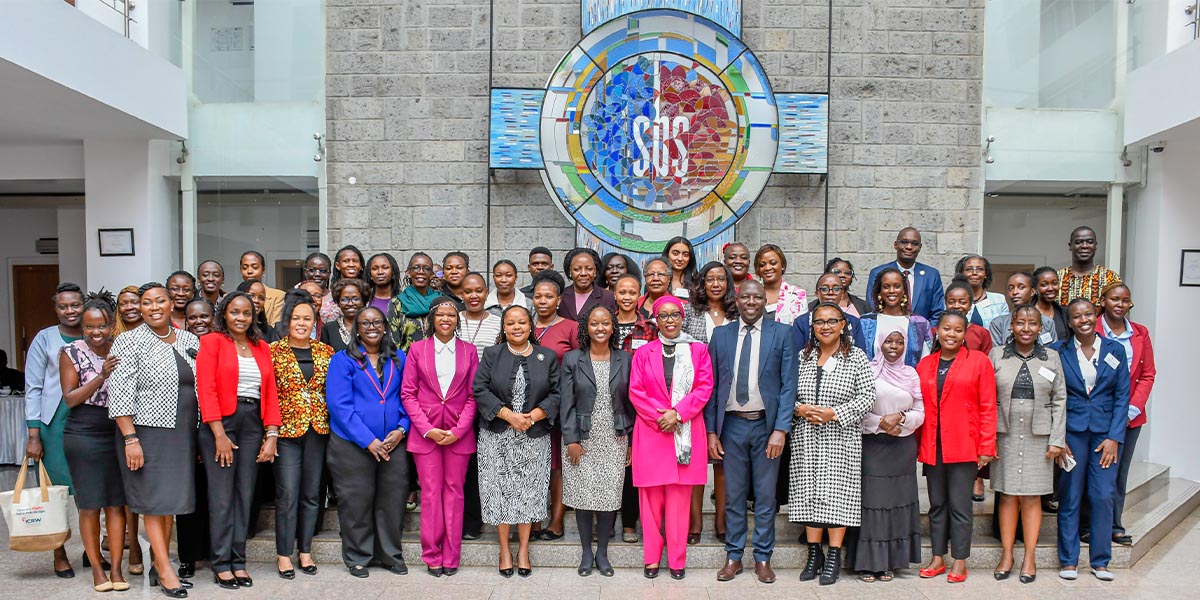
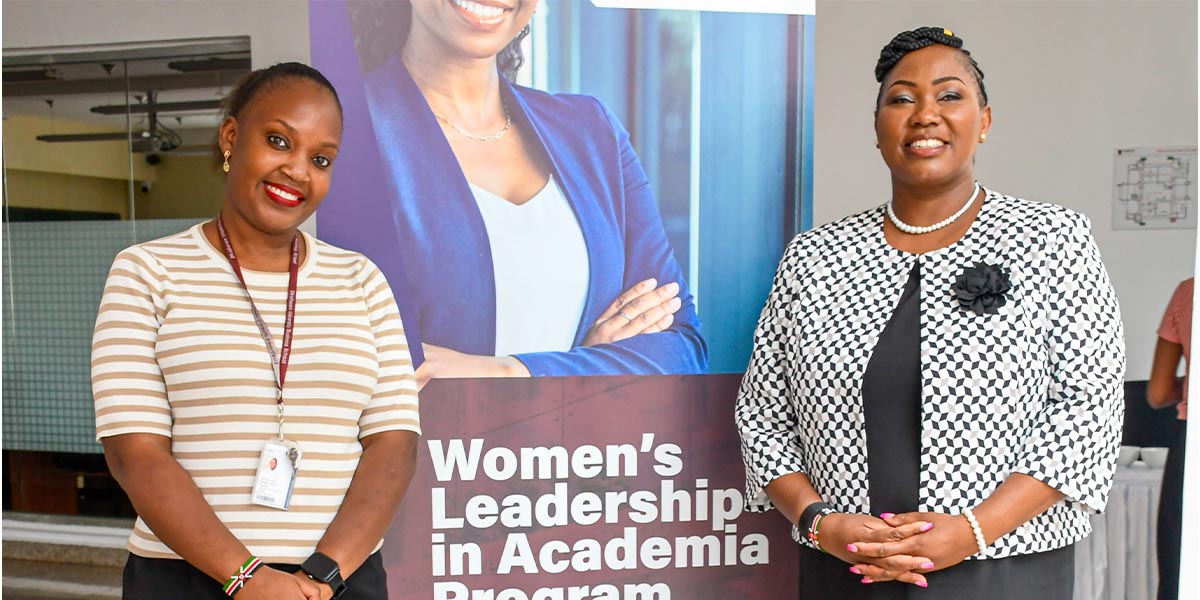


The launch of the Women’s Leadership in Academia Program (WLAP) marked more than the introduction of a new research project, it signaled a decisive step toward transforming the landscape of academic leadership; a defining moment in advancing women’s participation and progression in academic leadership.
As the flagship program of the Financial Services and Innovation Research Hub at Strathmore University Business School (SBS), WLAP is designed as a comprehensive, institution-wide framework aimed at strengthening leadership capacity, accelerating professional growth, and addressing the persistent gender gap in academia. With a clear roadmap spanning 2025–2030, the programme is anchored on one ambition: to deliver sustainable, systemic impact.
Sharing the journey of WLAP, Dr. Freshia Mugo-Waweru, the Program’s Principal Investigator, traced its evolution from ideation in 2024 to a fully developed strategy grounded in research and institutional need. At its core lies the critical challenge of declining representation of women in senior academic roles, particularly at the professorial level. This gap persists despite constitutional guarantees of equality, underscoring a key reality; progress does not happen passively. It requires intentional design, structured support, and sustained commitment.
Offering a deeply personal reflection, Dr. Vincent Ogutu, Vice Chancellor, Strathmore University, highlighted the influence of women who shaped his academic journey. His message resonated strongly: leadership is not just about achievement, but alignment. “If you play in the wrong field, you will always lose.”
His call to action was clear women must embrace their identity and purpose, recognizing that authenticity is not a limitation, but a powerful leadership asset.
Delivering the keynote address, Lady Justice Jamila Mohammed challenged prevailing assumptions about gender disparities in leadership. She emphasized that underrepresentation is not a reflection of women’s capabilities, but of systems that must evolve. Representation, she noted, is not merely symbolic, it is catalytic. “It shapes institutional culture, influences decision-making, and opens pathways for others to rise,” she emphasized. She also noted that advancing women in leadership was a shared responsibility, requiring active allyship from men as well.
From the panel session, six dynamic themes came up, offering practical insights for navigating leadership journeys in academia and beyond.
Let Your Values Guide Your Priorities and Decisions. Leadership is ultimately a reflection of what one stands for. In complex institutional environments, where competing demands are constant, values serve as a compass. They provide clarity in decision-making, consistency in leadership style, and credibility in influence. For women in academia, anchoring leadership in personal values ensures that success is not only achieved but sustained with integrity.
You Can Have It All. Just Not All at Once. The notion of “having it all” often creates unrealistic expectations. The panel reframed this idea, emphasizing sequencing over simultaneity. Different seasons demand different priorities, whether advancing a career, pursuing research, or focusing on family. Recognizing this allows leaders to make intentional choices without guilt, understanding that success is cumulative, not instantaneous.
Build Strong Systems of Support and Advocate for Flexibility. No leadership journey is navigated in isolation. Strong support systems, both personal and institutional, are critical enablers of success. Equally important is the need to advocate for flexible structures within academia that acknowledge diverse realities. It is therefore important that institutions that embrace flexibility are better positioned to retain talent, foster inclusion, and unlock the full potential of their people.
Invest in Impact for Lasting Change. Short-term wins can be visible and rewarding, but they rarely shift systems. The panel emphasized the importance of investing in long-term impact, whether through mentorship, policy influence, or institutional reform. Sustainable change requires patience, consistency, and a willingness to build beyond immediate recognition.
Lift Each Other Up. Progress is Collective. The advancement of women in academia depends on networks of support, mentorship, and sponsorship and by creating spaces for collaboration and actively uplifting one another, women can accelerate collective progress. True leadership is measured not only by individual success, but by how many others are brought along the journey.
Show Up, Even Before You Feel Ready. One of the most powerful barriers to advancement is self-doubt. Waiting until one feels “fully ready” can often mean missing critical opportunities. The panel encouraged women to step forward, take risks, and embrace growth, even in moments of uncertainty.
WLAP is not just a program, it is a blueprint for institutional transformation. By addressing structural barriers, fostering leadership capacity, and creating pathways for advancement, it holds the potential to influence change far beyond academia.
As institutions across Africa and globally grapple with questions of equity, representation, and leadership, initiatives like WLAP offer a compelling model: one that moves beyond conversation to coordinated, strategic action.
Because advancing women in leadership is not just about representation, it is about reshaping the future of institutions, and ultimately, society itself.
Learn more about WLAP here
Share This Story, Choose Your Platform!
Your journey to business excellence starts here. Subscribe today and be at the forefront of innovation and leadership.






 English (United States)
  English (UK)
  French