

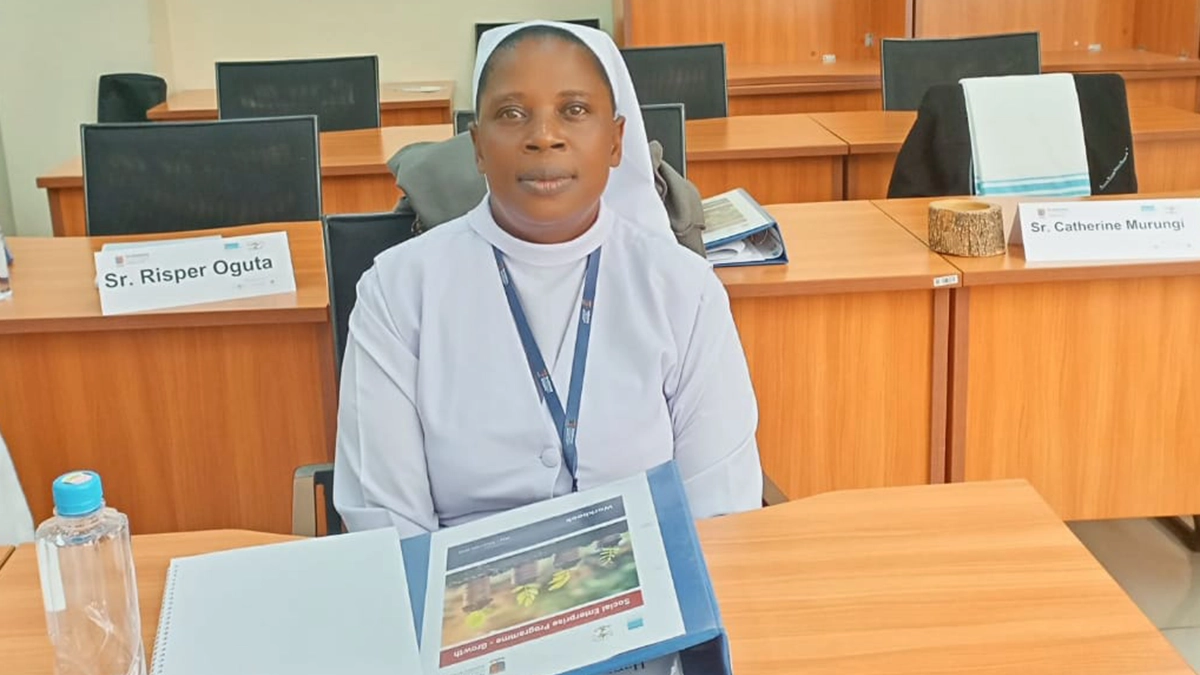
At the Association of Consecrated Women in Eastern and Central Africa (ACWECA). Sisters Blended Value Project (SBVP), success is often measured not only in enterprise growth, but in transformed perspectives. For Sr. Pamela Nabangi, the programme became exactly that: A journey of awakening, inspiration, and practical change.
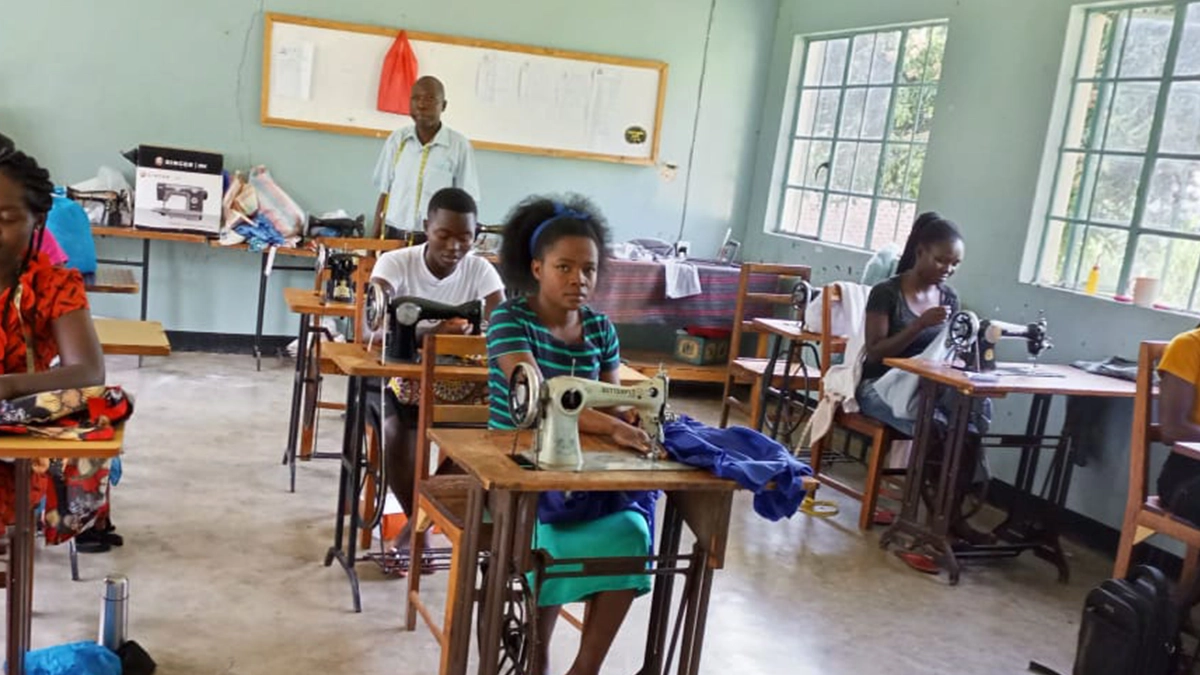
Sr Pamela, a member of the Sisters of Mary of Kakamega, participated in the social enterprise training at Strathmore Business School (SBS) in 2022. At the time, she was managing St. Jude’s Technical College, an institution serving students from economically disadvantaged backgrounds. Today, she serves in the Diocese of Bungoma, overseeing its pastoral Centre.
Before joining SBVP, financial sustainability was a major challenge for Sr. Pamela and her college. Many students struggled to pay fees consistently, leading to interrupted learning, delayed studies, and, in some cases, school dropouts. Seeking a lasting solution, her congregation joined SBVP to explore sustainable ways of supporting vulnerable learners. She hoped the programme would help the congregation develop a sustainable model to strengthen St. Jude’s Technical College and secure its long-term impact.
Like many participants, Sr. Pamela expected SBVP to provide direct financial support. Instead, she received what she now considers far more valuable: knowledge. “The expectation was that maybe there would be funding at the end,” she recalls, “but they gave us knowledge.” Through the training, she learned strategic thinking, resource mobilisation, and sustainable enterprise development, an empowering shift from dependence on external support to building internal capacity.
According to Sr. Pamela, peer learning was one of the most transformative aspects of the SBVP experience. Interacting with sisters from different congregations exposed her to a range of successful social enterprises. “What transformed me most was learning from other sisters,” she says. This made her believe that sustainable enterprises were achievable. She adds that it opened her mind and that she “realised that nothing is impossible.” Exposure visits to thriving social enterprises also provided practical ideas and models she could adapt within the congregation´s ministries.
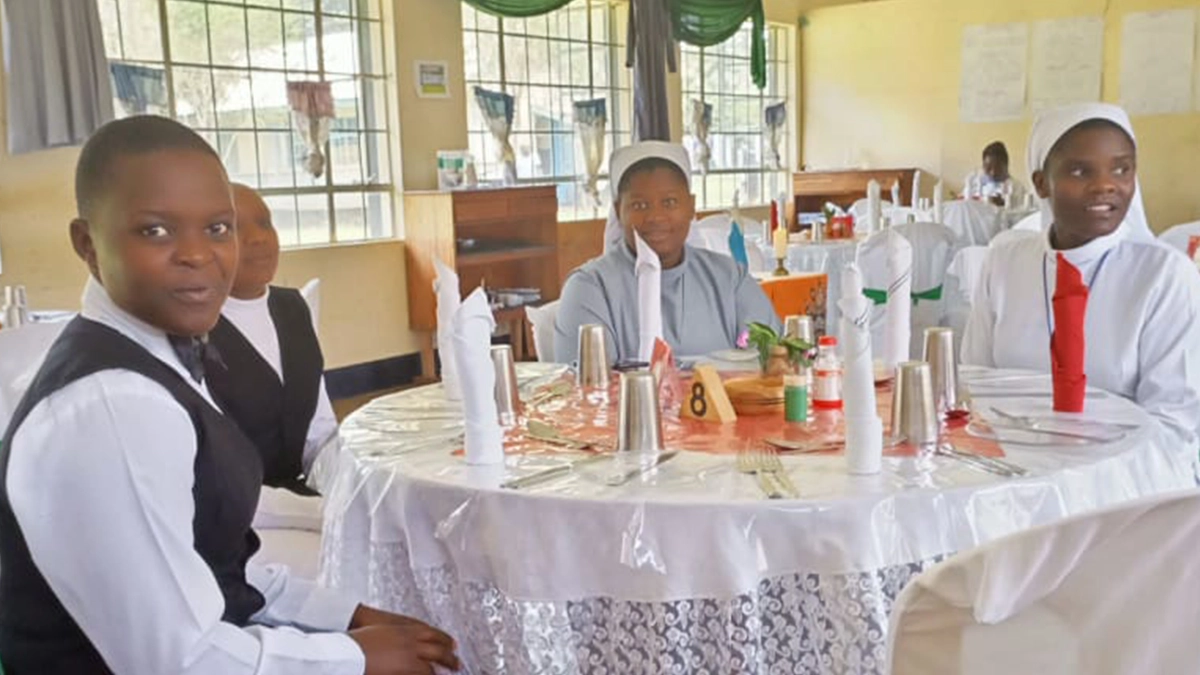
Mentorship was another key pillar of Sr. Pamela’s SBVP journey. With guidance from their mentor, her team developed a strong Action Learning Project (ALP) that continues to bear fruit even after her transfer from the technical college. The congregation has expanded its facilities to host nursing students, generating additional income. Other ventures, including catering and fish farming, have diversified revenue streams. “Before, we waited for salaries that were never enough,” she says. “Now we know we can create projects that make us sustainable.”
Beyond institutional growth, SBVP has enabled the Sisters of Mary of Kakamega congregation to create opportunities for the wider community. Partnerships forged through the programme have improved infrastructure, supported students, and assisted people living with disabilities. More than 40 students have received support to start small businesses, fostering economic independence. The congregation’s catering enterprise also offers students paid work. “What they earn helps pay their fees,” she explains.
For Sr. Pamela, the SBVP journey has been deeply personal. Training in financial and project management equipped her with practical leadership skills that she now applies daily. “I am now more aware of how to manage finances,” she reflects. Beyond technical skills, the programme transformed her understanding of ministry. “We were a bit closed before,” she says. “Now we see that to be better ourselves, we must help improve the lives of others.”
Looking back, Sr. Pamela describes one of the greatest gifts of the journey simply as the opportunity to learn at Strathmore Business School. “It was a dream come true,” she says. Her message to other congregations is clear: “This is a very valuable programme. If it were my wish, many more sisters would go through it. It opens minds and helps us see what is possible.” Sr. Pamela adds that the programme is a catalyst for transformed thinking, sustainable ministry, and renewed hope for the communities served by the religious sisters.
Article by Alex Okoth Odhiambo
Share This Story, Choose Your Platform!
Your journey to business excellence starts here. Subscribe today and be at the forefront of innovation and leadership.

Conrad N. Hilton Foundation
The Conrad N. Hilton Foundation foresees a world in which improving the human condition is a shared and sustainable goal. “Love one another, for that is the whole law,” Conrad Hilton wrote in his will. The peoples of the world “deserve to be loved and encouraged—never to be abandoned to wander alone in poverty and darkness.” That is our resolve.






 English (United States)
  English (UK)
  French