

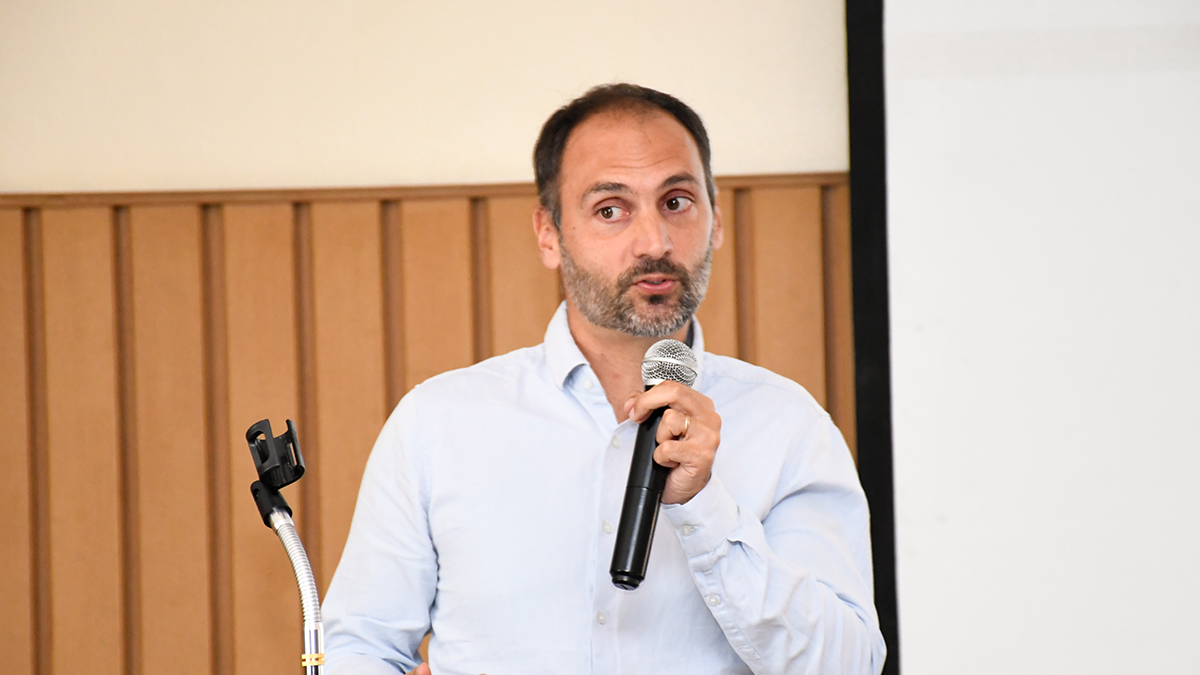
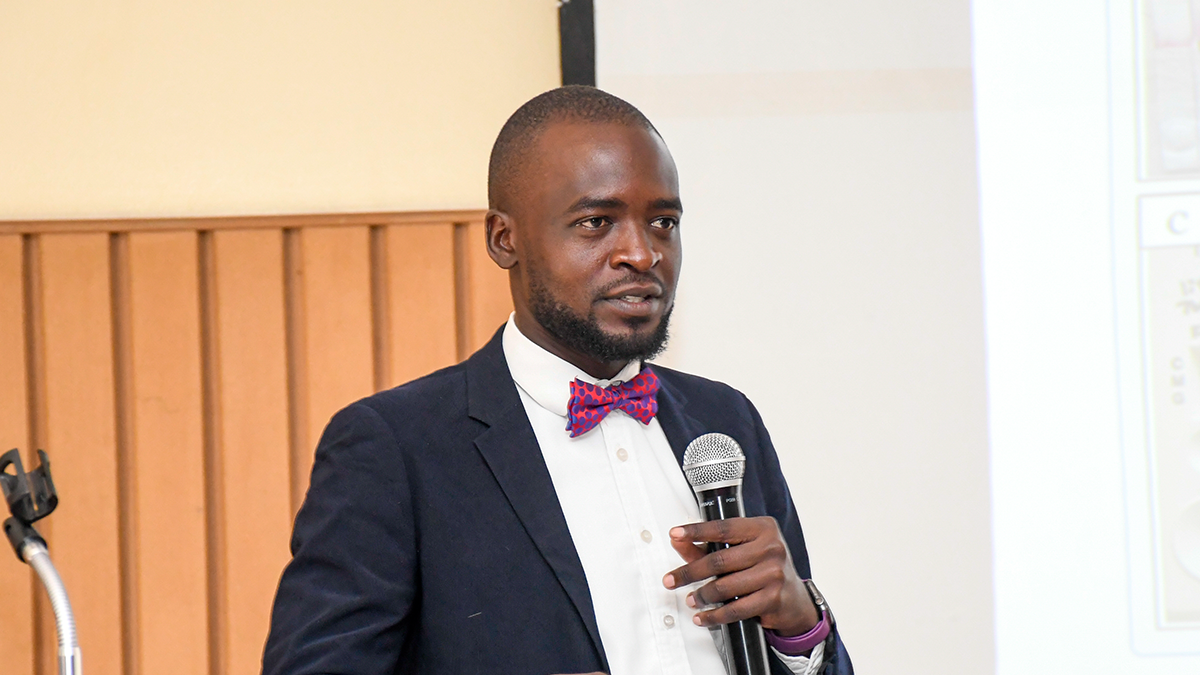

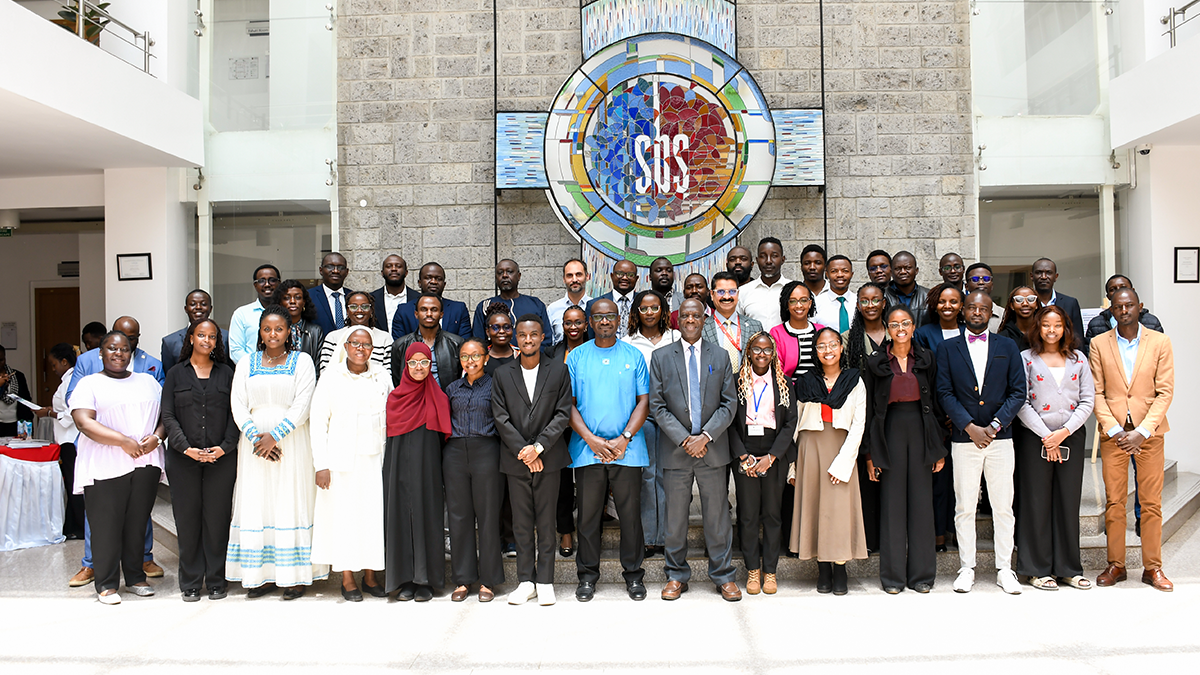
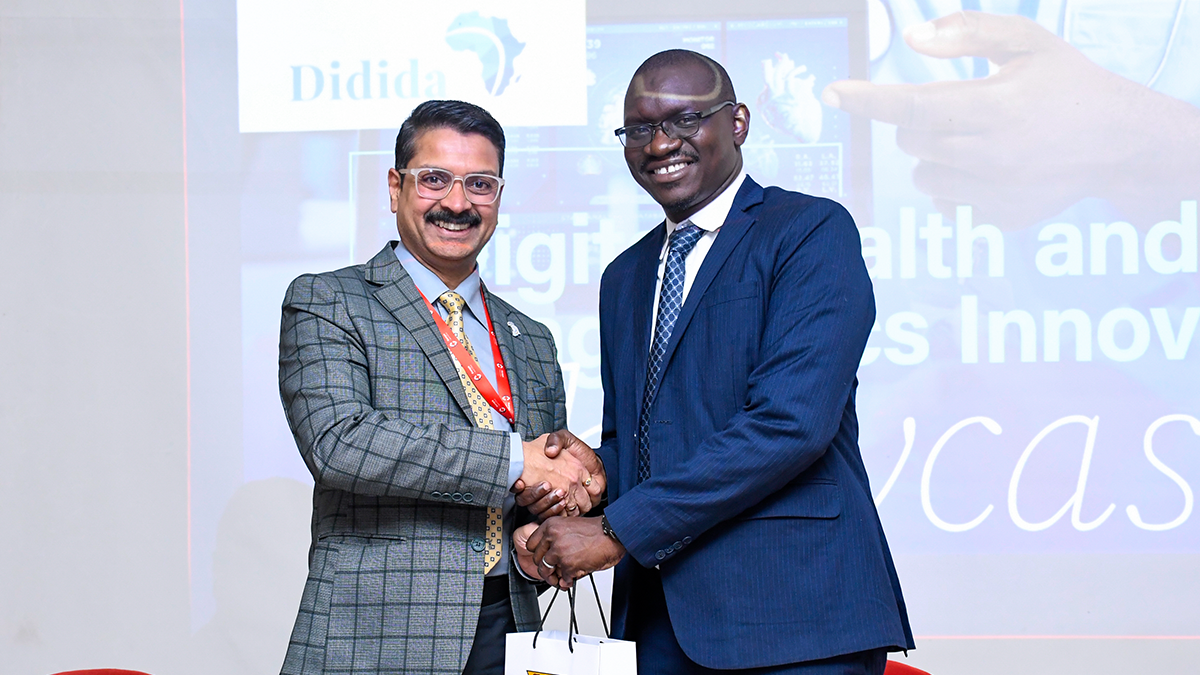
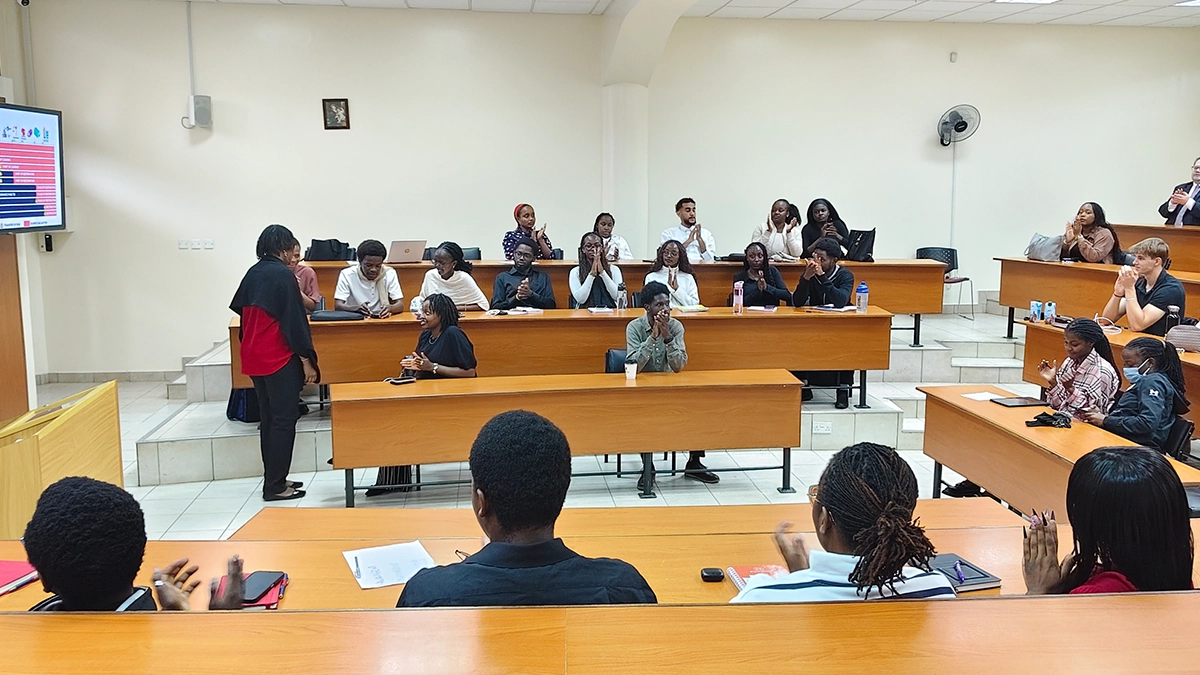
A wearable device to monitor a mother’s pregnancy. A rapid test designed to detect malaria earlier. An artificial intelligence tool helping people with visual impairments navigate their surroundings. These were not ideas confined to research papers or presentation slides. They were prototypes being demonstrated, tested and discussed at the Digital Health and Diagnostics Innovations Showcase Business Event, hosted by Strathmore Business School (SBS).
Held under the theme “From Research to Impact: Showcasing Innovations for the Future of Diagnostics and Digital Health in Africa,” the event brought together researchers, policymakers, healthcare professionals, innovators, investors and industry partners to confront one of the most persistent challenges in African innovation:
How do promising ideas move from the laboratory into the hands of the people who need them?
For Africa’s health systems, the question is more than academic. Across the continent, millions of people continue to face barriers to timely, affordable and quality healthcare. Early diagnosis, accessible technologies and data-driven care models have the potential to transform how diseases are detected and managed, particularly in settings where healthcare resources are limited. But developing an innovative technology is only the beginning.
Welcoming participants, Dr. Caesar J. Muriithi Mwangi, Executive Dean of SBS, highlighted the critical role of innovation in addressing complex challenges in Africa’s healthcare systems and beyond.
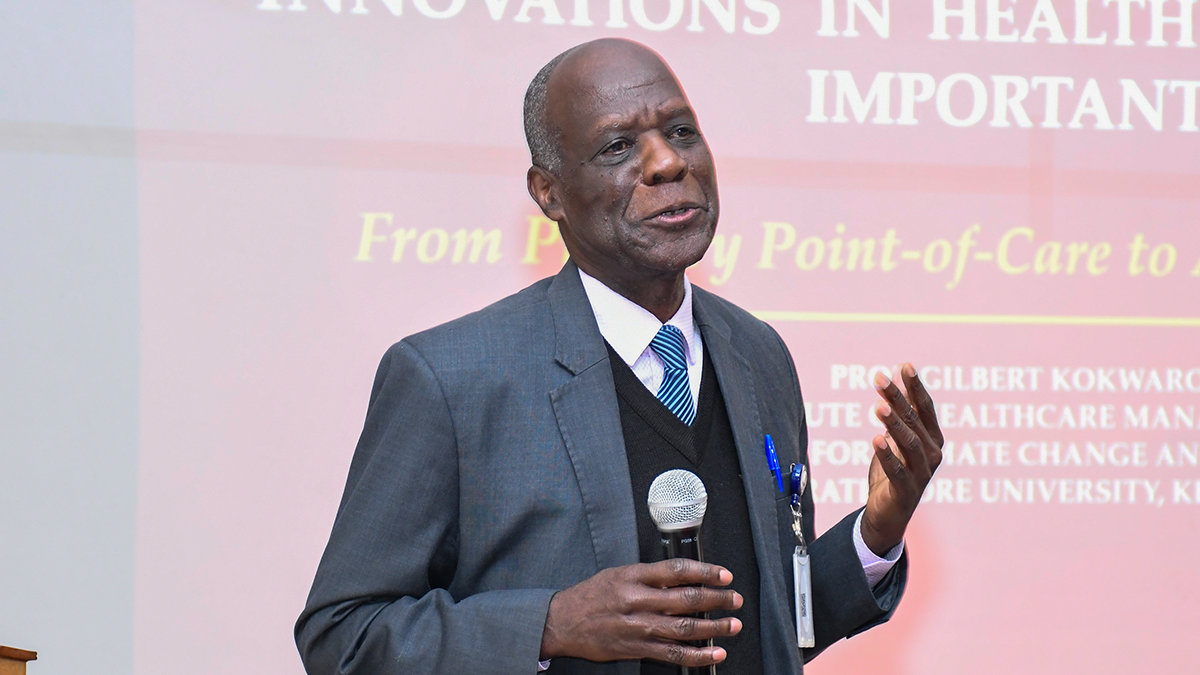
Prof. Gilbert Kokwaro, Director of the SBS Institute of Healthcare Management, reinforced the need for solutions that are not only innovative but also practical and sustainable enough to address the realities of African health systems.
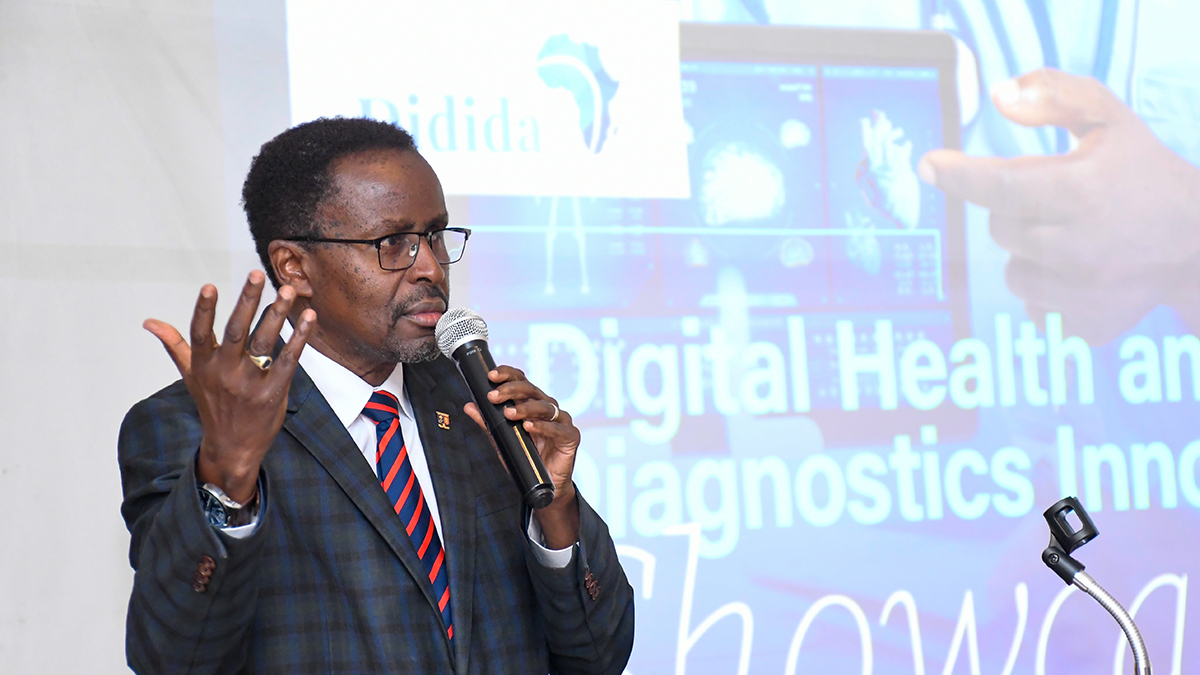
Giving the keynote address, Prof. Shaukat Abdulrazak, PhD, Principal Secretary, State Department for Science, Research and Innovation, brought the central challenge into sharp focus: the value of research extends beyond publication. For research to deliver its full value, it must translate into policies, technologies, products and services that improve people’s lives. It was a challenge that the innovations on display were already beginning to answer.
The exhibition floor offered a glimpse into what that future of healthcare in Africa could look like. Point-of-care diagnostic technologies for malaria and schistosomiasis demonstrated how faster, more accessible testing could support earlier intervention, particularly in settings with limited laboratory infrastructure.
A diagnostic test for brucellosis addressed another often-overlooked health challenge, while smart wearable technologies demonstrated how real-time monitoring could support maternal health.
Elsewhere, artificial intelligence was being applied to some of healthcare’s less visible but equally important challenges from insurance claims verification to supporting continuity of care for people living with chronic conditions.
For people with visual impairments, navigation technology demonstrated how digital innovation can go beyond diagnosis and treatment to promote greater independence and inclusion.
The diversity of the innovations was striking. But the bigger story was what they had in common. Each was attempting to solve a real problem, in a real context, for real people.
Yet the showcase also highlighted a reality that innovators know all too well: a successful prototype is not the same thing as a successful health solution. Between the laboratory and the patient lies a complex ecosystem of regulation, financing, procurement, manufacturing, clinical validation, market access and user adoption. That means no health innovation scales in isolation.
Researchers need to work alongside policymakers. Innovators need industry partners. Healthcare professionals need to be involved in testing and adoption. Investors need confidence that a technology can move beyond proof of concept to become a viable, scalable business.
That shift from invention to implementation is critical for Africa. The continent has no shortage of researchers, entrepreneurs and innovators developing solutions to some of its most pressing health challenges. What remains essential is building the ecosystems that enable those solutions to move efficiently through the innovation pipeline. This means strengthening links between universities, healthcare systems, government, industry and capital.
It also means creating pathways through which promising research can access mentorship, commercial expertise, regulatory guidance, funding and markets.
For institutions such as SBS, this creates an important opportunity: to bridge the gap between technical innovation and the business capabilities needed to scale that innovation.
The showcase, therefore, offered more than a display of emerging technologies. It provided a window into a different way of thinking about African health innovation — one in which research is not the destination, but the starting point.
If the showcase demonstrated anything, it is that Africa is not short of ideas for solving its health challenges. The opportunity now is to ensure those ideas do not remain trapped in laboratories, research papers or prototypes. The next frontier is building the partnerships, investment and enabling ecosystems that can take African innovation from lab to life — from prototype to product, and ultimately from promise to measurable impact.
Learn more about the DIDIDA Project here
Article by Juliet Hinga
Share This Story, Choose Your Platform!
Your journey to business excellence starts here. Subscribe today and be at the forefront of innovation and leadership.






 English (United States)
  English (UK)
  French