

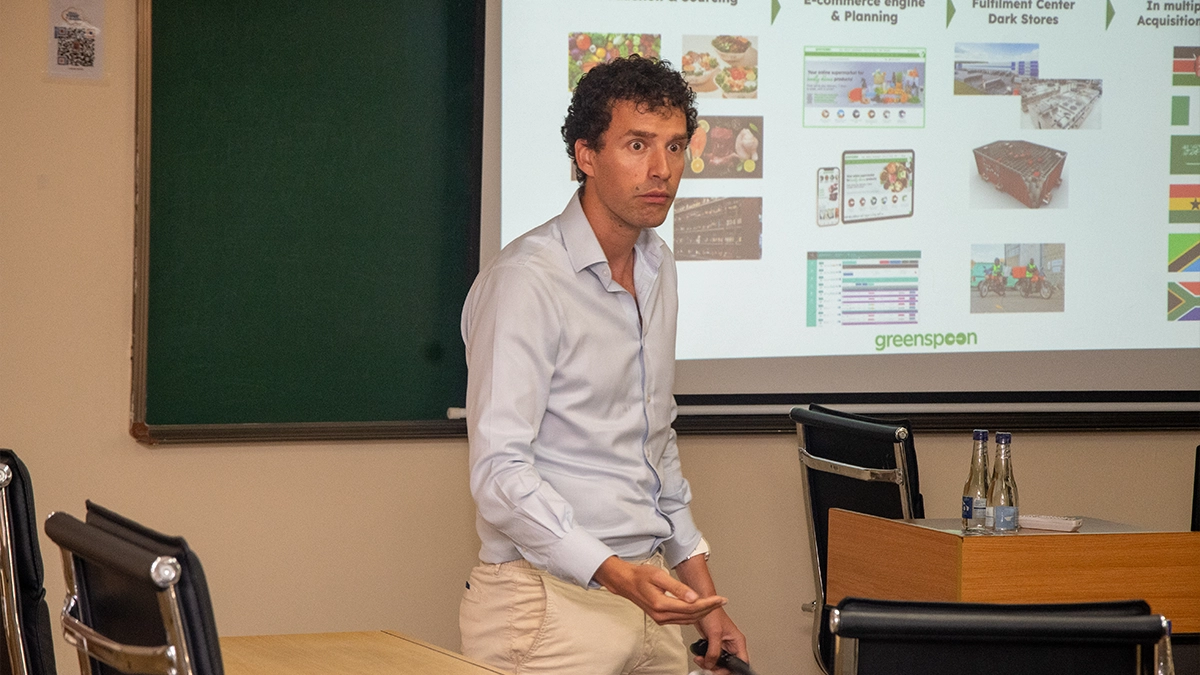
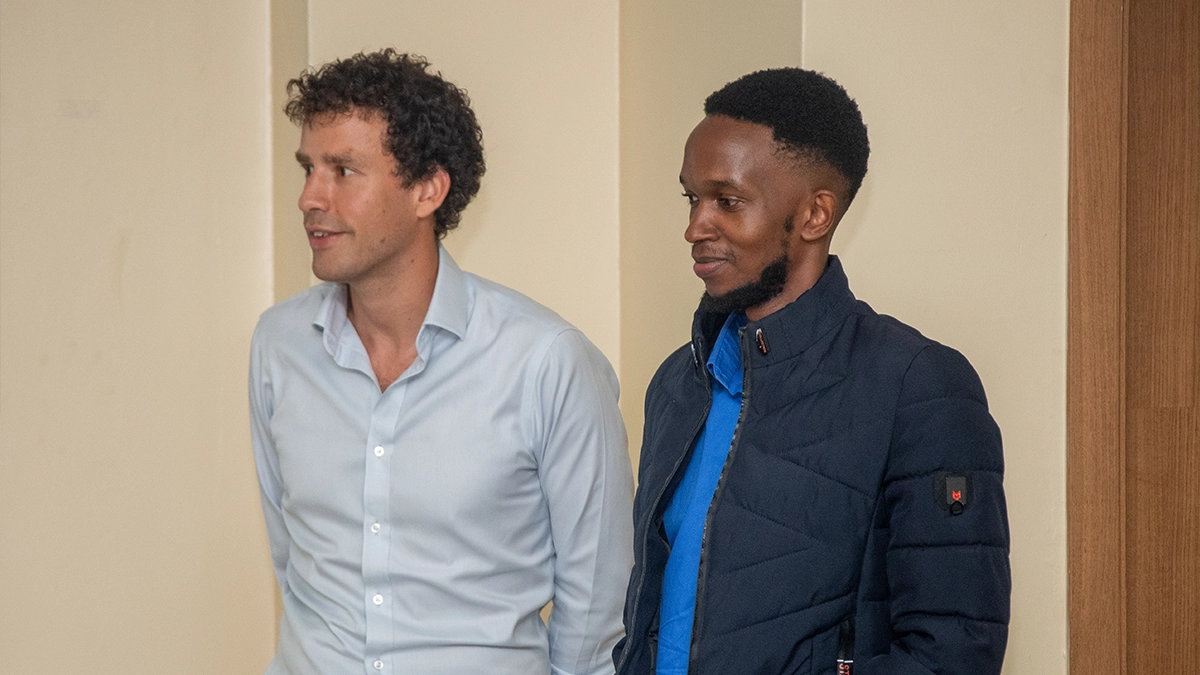

Earlier this month, we hosted two guest lecture sessions for the Master of Management in Agribusiness (MMA) Programme. The sessions featured two visionary leaders—Alexander Osinga, CEO of Greenspoon, and Muthoni Kioria, Managing Director of Livemo Investments Ltd, who shared practical insights on building resilient and sustainable agribusinesses in Kenya.
Their presentations, grounded in real-world experience, underscored the critical intersection of innovation, sustainability, and community engagement in transforming Kenya’s food and livestock value chains.
Revolutionizing E-Commerce and Food Systems: Alexander Osinga’s Vision
Since joining Greenspoon in 2021, Alexander Osinga has steered the organic food e-commerce platform to over 400% growth in under two years. At the heart of this transformation lies a commitment to sustainability, quality, and customer-centric service—values that have positioned Greenspoon as a market leader in responsibly sourced products.
During the guest lecture session, Osinga emphasized that Greenspoon is not just a delivery service but a catalyst for change in Kenya’s food ecosystem. “You don’t have to be big to be successful—just clear on your mission and consistent in your delivery,” he stated.
His session offered a deep dive into Greenspoon’s operational strategies, especially the logistical and financial considerations of expanding into regions like Mombasa. For example, while setting up a warehouse in Mombasa costs about $2,000 monthly (compared to $4,000 in Nairobi), daily transportation from Nairobi could reach KES 1.6 million monthly, underscoring the importance of thorough cost-benefit analysis and market research.
He also walked students through the stages of startup growth—from bootstrapping with personal funds and support from friends and family to attracting angel investors and venture capital. He warned against spreading too thin across markets without a solid strategic foundation, advocating instead for focused growth, supported by data and a deep understanding of customer needs.
Above all, Osinga’s talk highlighted the role of sustainability, not only in terms of eco-friendly practices but in supporting local producers, reducing waste, and creating lasting social impact.
From Goat to Market: Building Trust-Based Livestock Value Chains with Muthoni Kioria
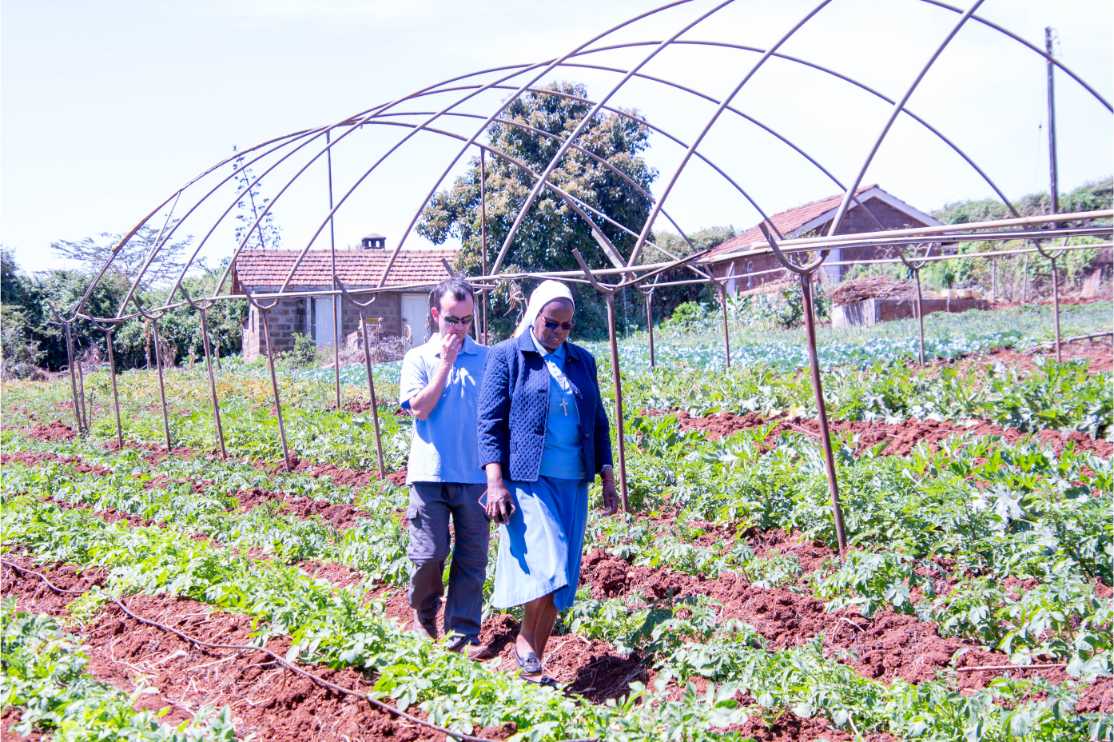
Complementing Osinga’s tech-driven model, Muthoni Kioria shared her powerful experience at the grassroots level through Livemo Investments Ltd., which focuses on creating inclusive livestock value chains for Kenya’s pastoralist communities.
Her company’s mission is simple yet transformative: ensuring that livestock sourced from regions like Kajiado and Iriya reaches export markets with integrity, transparency, and efficiency. But this goal, she emphasized, hinges not just on systems, but on trust.
“In this business, trust is everything,” Kioria said. “If someone doesn’t like you, your goats can simply disappear.” She pointed out how informal networks and theft remain significant challenges, especially at slaughterhouses. Building relationships with truck drivers, local aggregators, and even slaughterhouse staff is central to operational success.
Kioria’s team invested directly in their communities, launching a breeding program with 33 Boer goats and working alongside KALRO to introduce faster-growing, healthier goats. The program uses a barter model—trading Boer bucks for local Galla goats—ensuring community ownership and buy-in.
Training on animal health, vaccination, and commercialization further empowered pastoralists to adopt better herd management practices, reduce livestock age, and increase income. A key lesson, Kioria shared, was the importance of flexibility and community collaboration. “Initially, we came with a fixed curriculum, but we had to adapt—to let the community lead.”
As operations expanded, so did their focus—moving into land security, fodder production, and women’s empowerment. Livemo now supports women-led cooperatives, helps groups register for improved access to resources, and promotes localized vaccine campaigns that reduce costs and increase community ownership.
Though their businesses differ—Greenspoon being a digital-first organic food retailer and Livemo a livestock value chain integrator—both Osinga and Kioria shared strikingly similar messages: the need for a clear mission, the power of stakeholder trust, and the importance of building sustainable, inclusive systems.
Their sessions at Strathmore University Business School offered students a powerful reminder that whether you’re moving groceries or goats, meaningful business growth in Kenya’s agribusiness sector depends on vision, execution, and relationships.
Both leaders exemplify what it means to lead with purpose in a complex market—creating value not just for their businesses but also for the communities and ecosystems they serve.
The Master of Management in Agribusiness Programme is a dynamic programme designed to develop visionary leaders in the agribusiness sector. It integrates critical elements of business management, behavioral economics, and agricultural systems to address the evolving challenges of food production, sustainability, and global trade. With a strong emphasis on innovation and practical application, the programme equips professionals with the strategic, analytical, and leadership skills needed to drive growth and transformation across the agricultural value chain. Participants benefit from a multidisciplinary approach that fosters both technical expertise and a deep understanding of the broader agribusiness ecosystem. Learn more about this Programme here.
Article by Miriam Wafula and Juliet Hinga
Share This Story, Choose Your Platform!
Your journey to business excellence starts here. Subscribe today and be at the forefront of innovation and leadership.






 English (United States)
  English (UK)
  French