

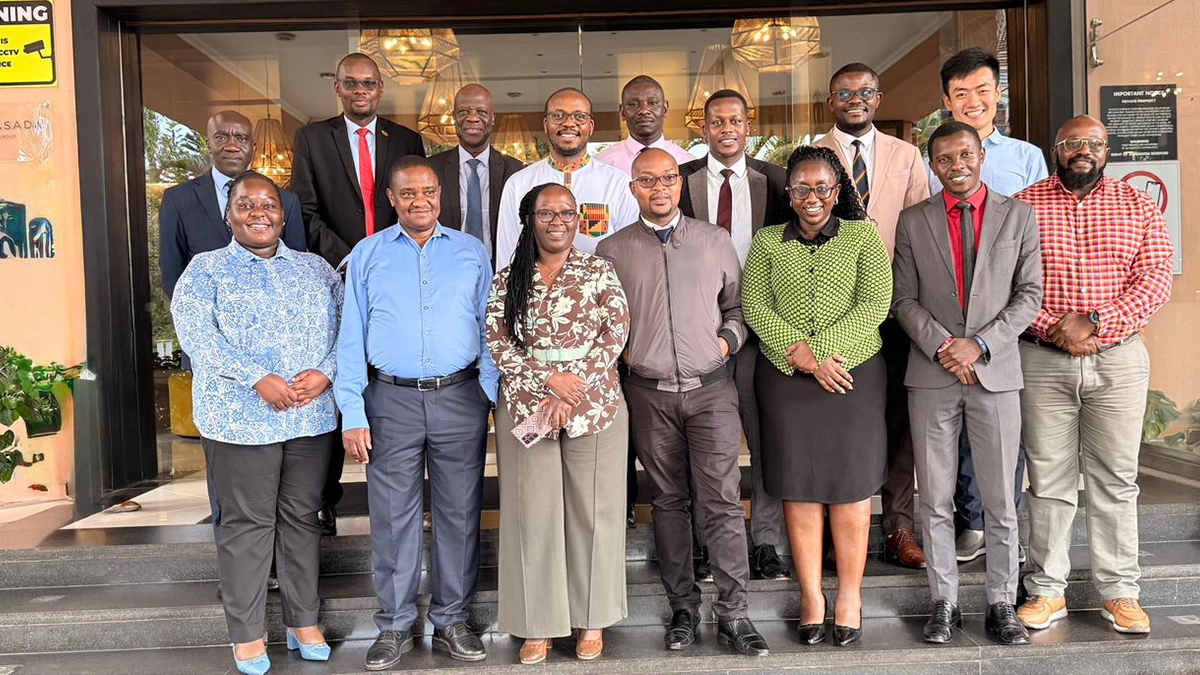

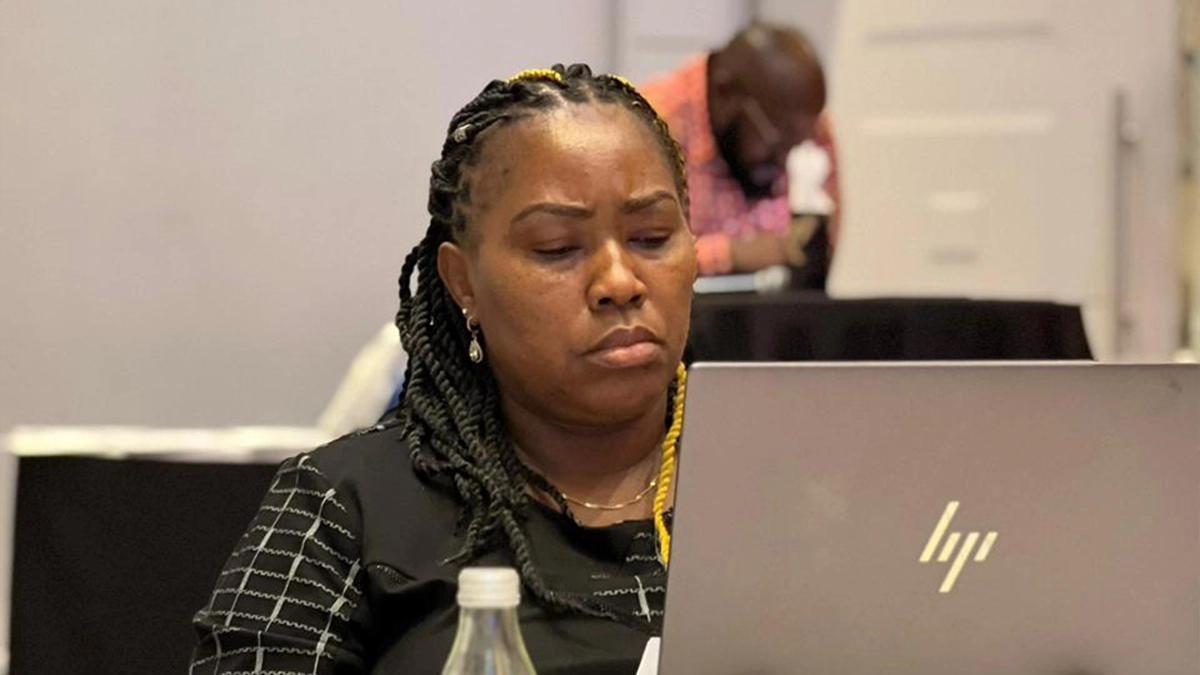



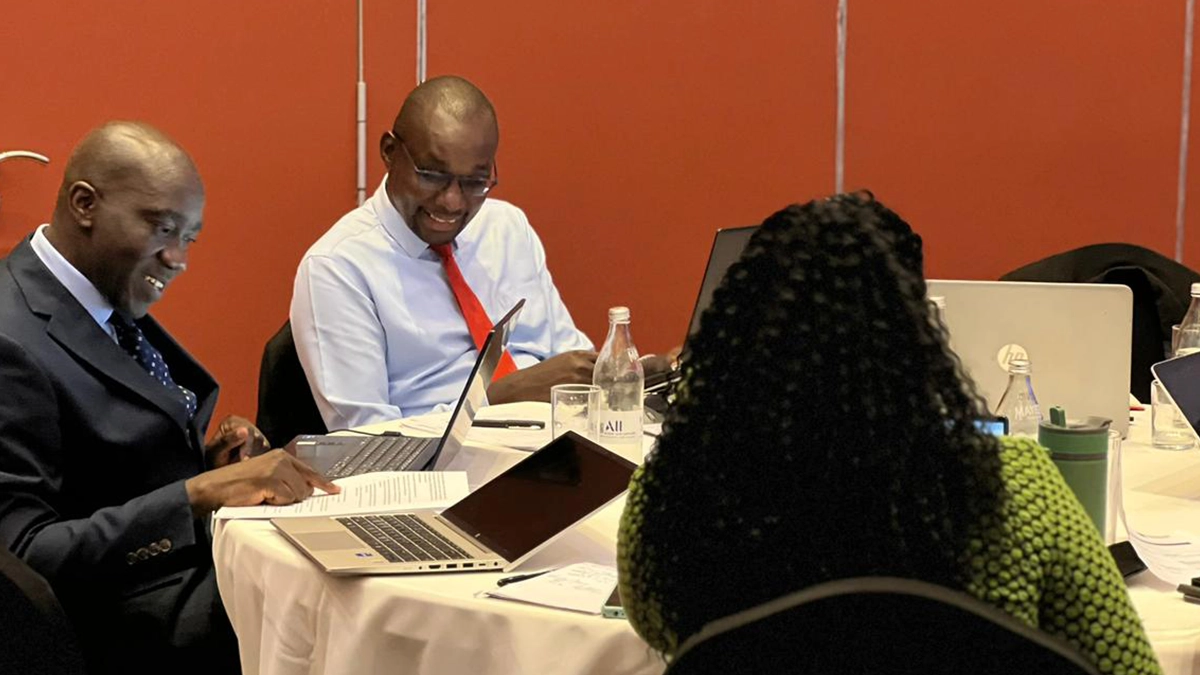
Sitting in a space full of experts and some of the most brilliant minds that Africa has ever produced, one could not help but feel the weight of what was being built — not just a curriculum, but a commitment. A commitment to the idea that the continent’s governance challenges deserve frameworks forged here, tested here, and answered here. That is precisely what brought a distinguished gathering of academics, practitioners, and curriculum architects including brilliant minds such as Dr. Edwin Orero, Dr. Freshia Waweru, Dr. Katindi and Dr. Erastus Mbithi to the Pullman Hotel in Nairobi on 31 March and 1 April 2026.
For too long, African scholars studying public policy have reached for frameworks born in Washington, Brussels, or Geneva — diagnosing governance failures through lenses calibrated elsewhere, and prescribing solutions shaped by contexts far removed from their own. Strathmore Business School (SBS) has decided that this must change. The proposed PhD in Public Policy and Governance, currently pending approval by the Commission for University Education (CUE), is the institution’s most deliberate response yet: a doctoral programme designed to produce policy thinkers who interrogate, interpret, and influence the complex governance landscapes of the African continent — from the inside out.
The two-day convening of a rigorous curriculum review and development exercise in which public policy experts from SBS were assembled to scrutinise, stress-test, and sharpen the academic architecture of a programme that aspires to be both intellectually demanding and deeply consequential. Every element of the proposed PhD was on the table: its philosophical foundations, course structure, research methodology requirements, credit load, competency outcomes, and the mechanisms through which doctoral candidates would engage with real-world policy problems.
The sessions were chaired by Dr. Kamau Wairuri — the pioneer and Academic Lead of the PhD in Public Policy and Governance — whose vision and deep ownership of the programme gave the proceedings both scholarly coherence and an unmistakable sense of purpose. Alongside him, Dr. David Mathuva, Associate Dean for Academic and Student Affairs, brought a governance and quality assurance perspective to the review, ensuring that the curriculum would satisfy the highest standards of academic integrity while remaining sufficiently adaptive to accommodate the varied professional backgrounds that doctoral candidates in policy and governance typically bring. The presence of public policy experts from across SBS ensured that the review was multidisciplinary from the outset — drawing on expertise spanning health policy, fiscal governance, environmental regulation, and regional integration.
Dr. Kamau Wairuri’s vision for this programme is both clear-eyed and urgent. Africa, he has long argued, does not suffer from a shortage of policy frameworks — it suffers from a shortage of frameworks that are rooted in, and genuinely responsive to, its own political economies, governance histories, and developmental realities. The borrowing of models designed for entirely different institutional contexts has produced, predictably, policies that look credible on paper but struggle to take root in practice.
Under his academic leadership, the curriculum has been constructed around a set of animating questions: How do policies move from aspiration to implementation in contexts defined by limited state capacity, competing institutional interests, and diverse community needs? What theoretical tools, developed and validated within African contexts, should frame the doctoral candidate’s analytical lens? How does a researcher trained in this programme engage responsibly and effectively with the policymakers, civil society actors, and communities whose lives are shaped by governance decisions? These were not abstract philosophical discussions at the Pullman Hotel — they were live curriculum decisions: debates about compulsory courses, research methodology scaffolding across the doctoral journey, and what a qualifying examination process should look like for a programme that prizes both scholarly rigour and policy utility.
The workshop moved methodically through four interdependent dimensions of the proposed doctorate. The first was programme philosophy and positioning. Participants interrogated the epistemological stance of the PhD — examining the extent to which it draws on African political thought, indigenous governance models, and continent-specific policy analysis traditions, rather than defaulting to dominant Western paradigms. The group reached a broad consensus that the programme must be grounded in African scholarly traditions without becoming parochial: graduates should be capable of engaging confidently in both regional and global policy conversations, bringing an African analytical lens to bear on questions that transcend any single geography.
The second dimension was core coursework and research methods. Reviewers examined with particular care how foundational courses in policy theory, comparative governance, and public sector economics would build the conceptual vocabulary that students would later deploy in their doctoral research. The research methods component attracted sustained debate — specifically, how qualitative, quantitative, and mixed-methods approaches would be taught and integrated, and how the programme would equip candidates to conduct fieldwork within the complex, politically sensitive environments in which African governance operates. The consensus was clear: methodology must be taught not as an abstraction, but as a craft honed in context.
The third dimension concerned competency outcomes and the graduate profile. What, the experts asked, should a holder of this doctorate be able to do upon completion? The answer that emerged went well beyond academic publication. The group envisioned graduates who can advise government ministries, lead policy reform initiatives, contribute meaningfully to regional integration agendas, and anchor the next generation of African policy scholarship. This outcome-oriented approach informed curriculum choices at every level of the review and will ultimately determine what distinguishes an SBS doctorate from programmes that prioritise scholarly credentials over applied impact.
The fourth and final dimension was the credit framework and regulatory alignment. With the CUE approval process squarely in view, significant time was devoted to ensuring that the programme’s credit architecture, duration, and structural requirements align with Kenya’s regulatory standards for doctoral education. Dr. Mathuva’s role was particularly critical here: the Associate Dean’s office bears primary institutional responsibility for compliance with Commission for University Education guidelines, and the curriculum was reviewed not only for its intellectual merit but for its regulatory defensibility.
Among the curriculum reviewers who shaped the workshop’s deliberations was Prof. Gilbert Kokwaro, Director of the Institute of Healthcare Management at SBS. His participation brought a distinctly important dimension to the table: the intersection of health systems, policy, and governance — a domain in which Africa’s policy challenges are among the most acute and, arguably, the most consequential for human welfare.
Prof. Kokwaro’s contribution as a health policy and governance specialist underscored a premise that runs through the entire programme design: public policy is not a discipline that can afford insularity. The forces shaping health outcomes, education access, infrastructure investment, and food security are fundamentally political and governance-related. A doctoral programme serious about public policy must therefore be capacious enough to equip researchers who will work across these intersecting terrains — and Prof. Kokwaro’s presence at the review was, in that sense, a practical enactment of the programme’s own philosophy.
According to Prof. Kokwaro, “Africa’s governance challenges require African analytical frameworks — and this programme is the institutional response to that imperative. The most captivating thing about this programme is its intentionality — it is explicitly designed to solve African policy issues within the African context.”
The PhD in Public Policy and Governance now enters the formal regulatory review process, its fate in the hands of the Commission for University Education. The programme’s proponents’ approach that process with confidence — the academic case is strong, the institutional governance credible, and the societal need unmistakable. But regulatory approval is not a formality, and the SBS team brings to the CUE submission the same rigour that defined the Pullman Hotel workshop.
Should approval be granted, Strathmore Business School will launch its first doctoral programme in public policy — one designed not to produce graduates who describe Africa’s governance challenges from a distance, but scholars and practitioners with the analytical depth and contextual fluency to help solve them. The two days at Pullman were not the beginning of that ambition. They were its distillation — years of institutional thinking, scholarly debate, and accumulated professional experience converging in a single room, in the company of some of the most brilliant minds the continent has to offer, to build something that Africa has long needed, and Strathmore is now positioned to deliver
Article by: Judith Adhiambo Amolo
Share This Story, Choose Your Platform!
Your journey to business excellence starts here. Subscribe today and be at the forefront of innovation and leadership.







 English (United States)
  English (UK)
  French