

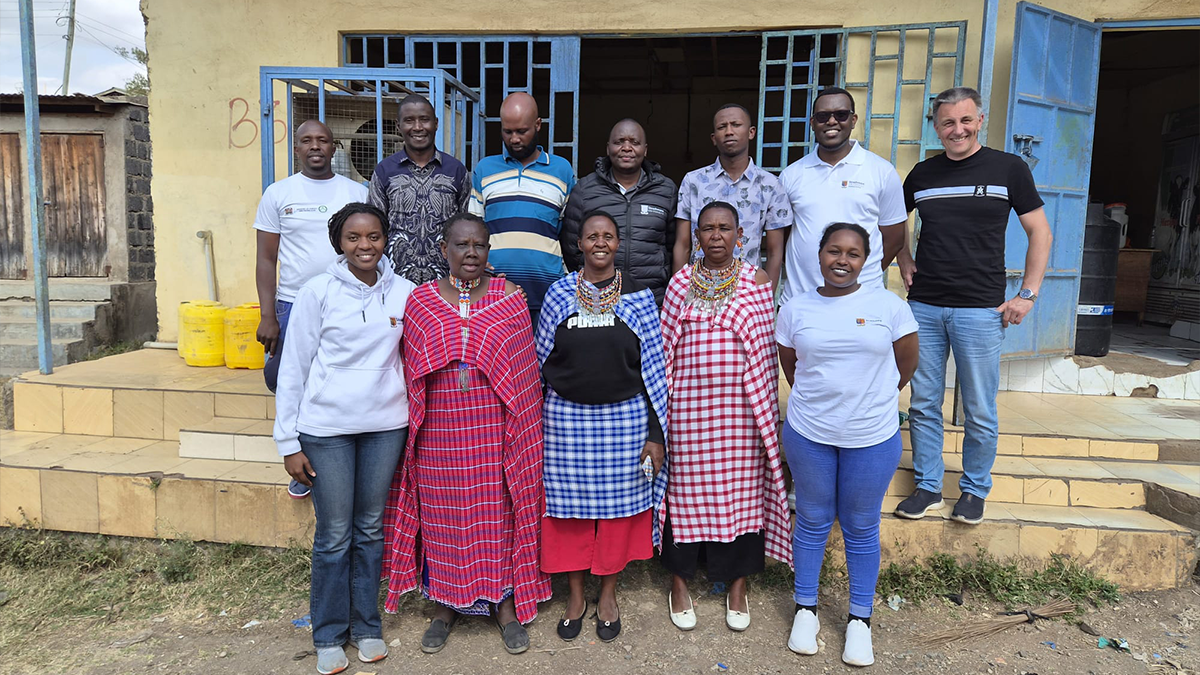
As part of ongoing fieldwork ahead of the CEPREC Kenya Summit, the Circular Economy Powered Renewable Energy Centre (CEPREC) Kenya team spent a day on the ground exploring how energy, agriculture and livelihoods intersect in practice. The field visits were undertaken by Dr. William Murithi, Ms. Gladys Ombati, Mr. Andrew Adwera, and Ms. Sheila Chepkorir from CEPREC, together with Mr Roman Inzko from Barren Green Energy. The visits to Enaidurra Dairy Farmers Cooperative Society in Bisil and Farm Share Kenya Limited offered two different perspectives on a shared challenge: how access to appropriate, reliable and sustainable solutions can help smallholder farmers and agricultural enterprises reduce losses, strengthen value chains and improve livelihoods.
As part of ongoing fieldwork ahead of the CEPREC Kenya Summit, the CEPREC Kenya team spent a day on the ground exploring how energy, agriculture and livelihoods intersect in practice. The visits to Enaidurra Dairy Farmers Cooperative Society in Bisil and Farm Share Kenya Limited offered two different perspectives on a shared challenge: how access to appropriate, reliable and sustainable solutions can help smallholder farmers and agricultural enterprises reduce losses, strengthen value chains and improve livelihoods.
Enaidurra Dairy Farmers Cooperative: Milk, Motorbikes and Blackouts
Enaidurra Dairy Farmers Cooperative is a Maasai women-led cooperative established to empower local smallholder pastoralists by streamlining milk collection, reducing reliance on exploitative middlemen, and improving household incomes.
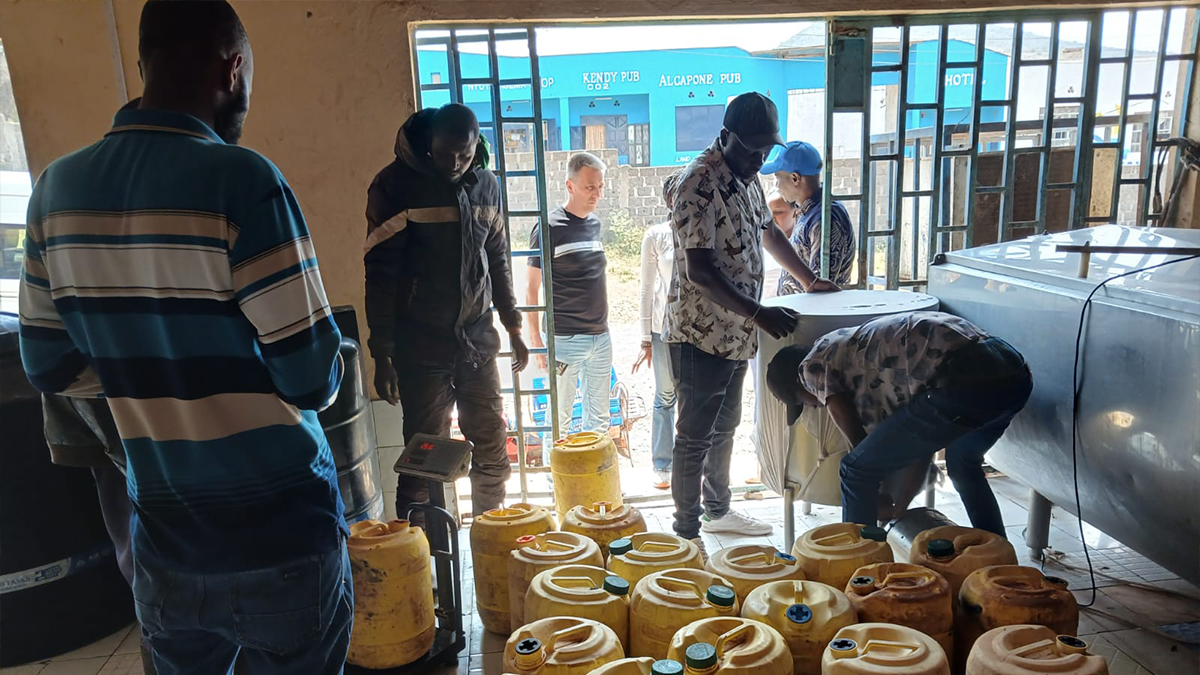
At Bisil, dairy farmers travel significant distances – many by motorbike – to deliver their milk each day. Collection takes place once daily, with every delivery weighed and quality-checked on arrival. During our visit, some milk arrived as late as midday, with one motorbike carrying up to ten 20-litre jerricans collected from different homesteads. It was a striking reminder of the distance farmers travel to get their milk to market.
For the cooperative, access to reliable electricity is one of the biggest challenges. Frequent power outages mean the cooperative often has to rely on generators simply to keep operations running, including the cooling systems needed to preserve milk between collection and processing. The team explored the cooperative’s cooling requirements in detail, including batches of approximately 130–230 litres requiring regular cooling. Discussions also considered whether reliable power is needed only during collection and processing hours or throughout the night.
Farmers were candid about the pressures of working through aggregators and middlemen, and about the difference greater independence across the value chain could make to their livelihoods.
The visit was more than an opportunity to listen. It also brought CEPREC’s research directly into the field, providing an opportunity to pilot the WP6 survey with cooperative members and gather first-hand data on the realities, challenges and opportunities shaping their livelihoods.
Farm Share Kenya Limited: Rethinking the Farming Ecosystem
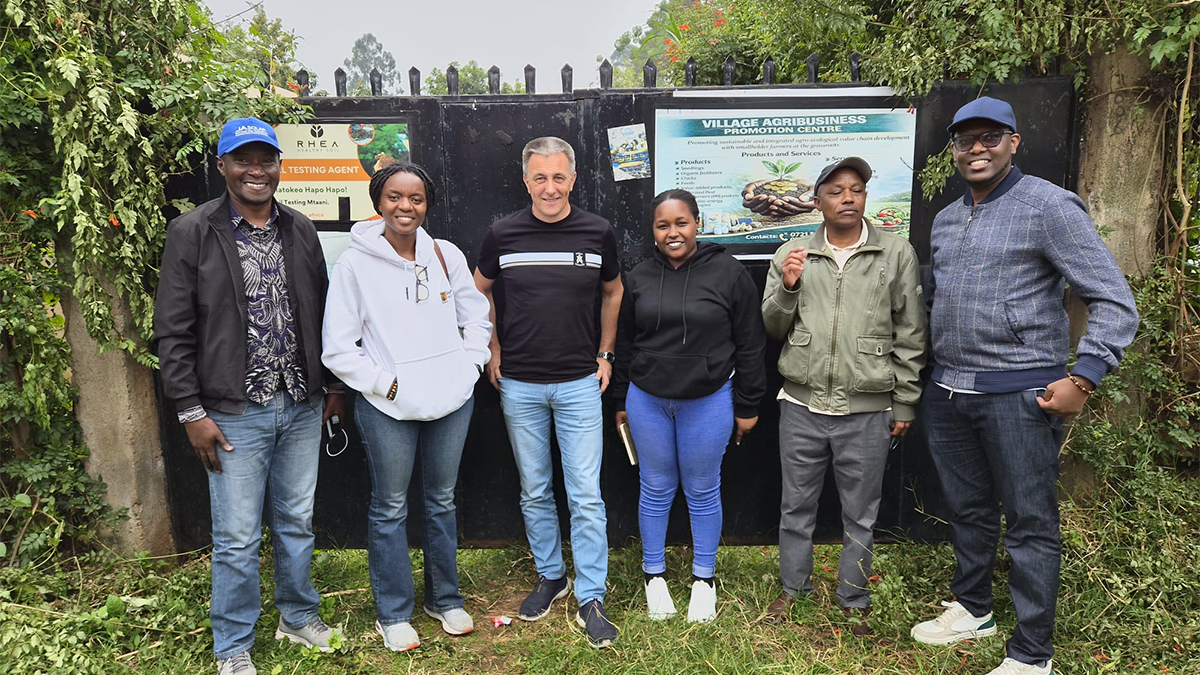
Earlier in the day, the team visited Farm Share Kenya Limited, an SME working with smallholder farmers through an integrated value-chain model designed to strengthen livelihoods and improve access to markets. Its approach spans the agricultural value chain – from inputs and production support to aggregation, post-harvest handling, value addition, marketing and distribution. Farm Share also operates Village Agribusiness Promotion Centres, bringing support closer to farming communities.
A key focus of the visit was the challenge of post-harvest losses and the role that better storage, handling and value addition can play in helping farmers retain more of the value of what they produce. Farm Share’s model incorporates post-harvest handling and storage, while its plans include expanding collection centres, cold storage and packhouses to provide more integrated support to producer groups.
The discussion also explored practical, context-appropriate approaches to reducing losses and adding value without assuming that every solution requires high levels of electrification. Options such as drying and other low-energy preservation approaches could help extend shelf life, improve marketability and reduce waste, while creating opportunities for clean and circular energy solutions.
For CEPREC, the visit highlighted an important connection between energy, agriculture and livelihoods. The right energy solutions are not an end in themselves; they are tools that can help farmers preserve what they produce, access better markets, reduce waste and capture more value across the agricultural value chain.
Why It Matters
Both visits reinforced a common thread: reliable, appropriately scaled power and cooling infrastructure is not simply a technical requirement for Kenya’s dairy and agricultural sectors – it can directly influence livelihoods. From keeping milk fresh to reducing post-harvest losses and enabling value addition, energy can play a critical role in helping farmers and cooperatives build more resilient and productive businesses.
For CEPREC, getting out of the conference room and into the field is an essential part of understanding where these opportunities lie. The experiences in Bisil offered a tangible reminder that the most meaningful clean and circular energy solutions begin with understanding the people, livelihoods and everyday challenges they are intended to serve.
Share This Story, Choose Your Platform!
Your journey to business excellence starts here. Subscribe today and be at the forefront of innovation and leadership.







 English (United States)
  English (UK)
  French